
This has gone down as one of the most lopsided trades in baseball history. While Spring and Toth turned out to be all but meaningless to the Cards, the addition of Brock is widely credited as being the catalyst to their 1964 Pennant run, and to winning 3 of the next 5 National League Pennants. Brock went on to set records for stolen bases in a season and in a career, and still holds the NL records in each case. He also collected over 3,000 hits, and is in the Hall of Fame.
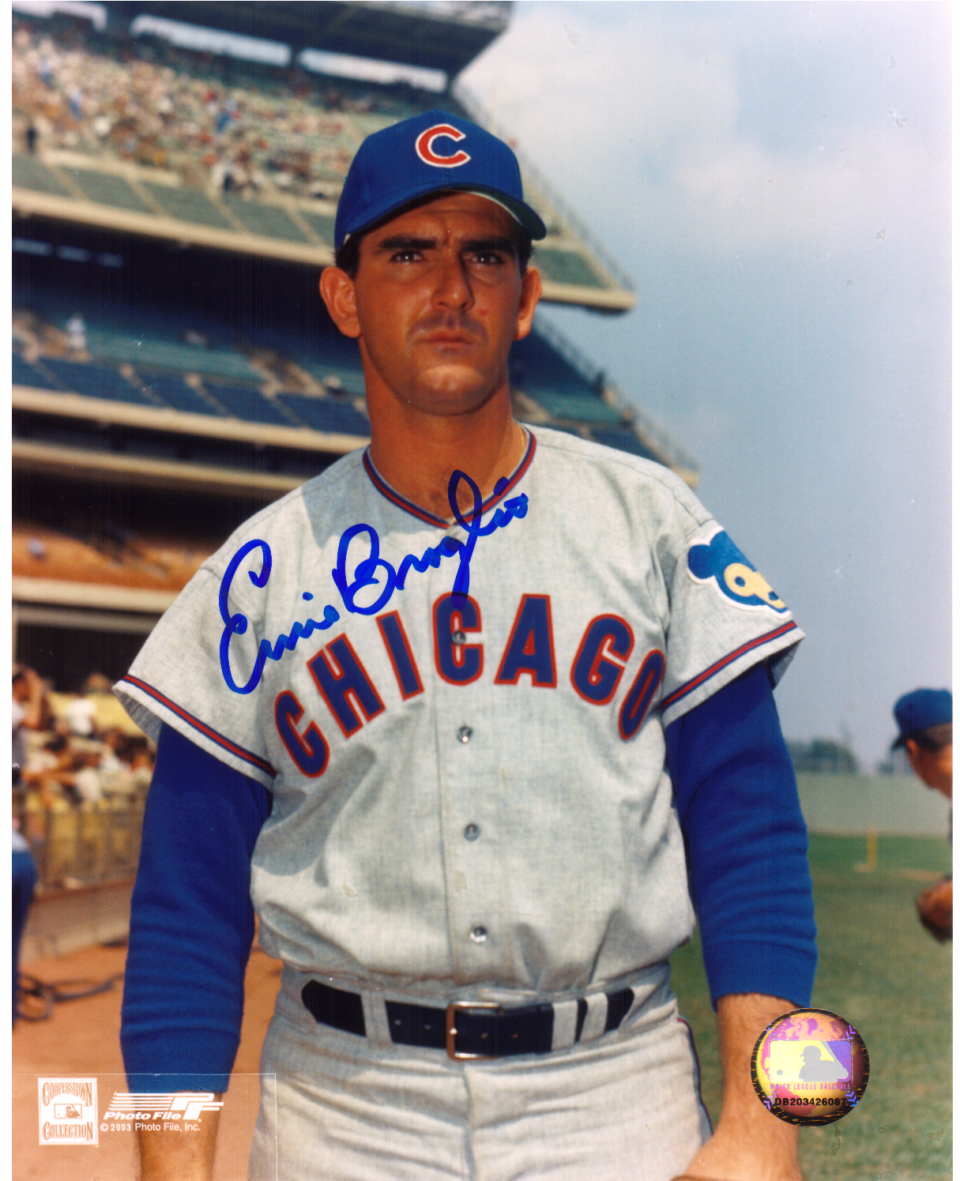
Clemens didn't do much for the Cubs. Nor did Shantz, once a very good pitcher, now at the end of a fine career. The key was Broglio, who went 4-7 for the Cubs the rest of the way in 1964, went 7-19 total after the trade, and was finished just 2 years later -- at which point Brock had 13 more seasons in him.
A typical dumb Cub trade, one that deserves to be remembered as one of the worst ever? Not so fast.
Jimmy Stewart -- no, not the It's a Wonderful Life actor -- a rookie 2nd baseman, was the Cubs' leadoff hitter in 1964. He stole 10 bases for the Cubs that year, and 13 the next, and had a good glove. The Cubs probably thought they had a 2nd baseman and leadoff man for the next 10 years, and that they didn't need a player like Brock.
By 1967, however, Stewart had proven to be an awful hitter, and was traded, with Glenn Beckert taking his place at 2nd base, and shortstop Don Kessinger his place at the top of the order. He did revive a bit later, and helped the Cincinnati Reds win the Pennant in 1970.
By 1967, however, Stewart had proven to be an awful hitter, and was traded, with Glenn Beckert taking his place at 2nd base, and shortstop Don Kessinger his place at the top of the order. He did revive a bit later, and helped the Cincinnati Reds win the Pennant in 1970.
In 1962, Brock famously hit a ball into the center-field bleachers at the Polo Grounds in New York -- one of only 4 players ever to do so. But he wasn't really a power hitter, having hit 20 in 1,308 plate appearance for the Cubs before the trade.
Because of the wind blowing out at Wrigley Field, the Cubs have perennially been built around power hitters, and Brock simply wasn't looking like a power hitter hitter. Because of the wind blowing in at Wrigley half the time, this strategy wasn't especially smart, and they should instead have been built around pitching.
Brock ended up hitting 149 home runs in his career, peaking at 21 and only that once topping 16. Even so, the Cubs already had Ernie Banks, Billy Williams, Ron Santo and Billy Cowan in their lineup. Power was not a problem for them.
In contrast, for about 90 years now, the Cardinals have been built around pitching, defense, contact hitting and baserunning. Speed, speed and more speed was a Redbird hallmark at Sportsman's Park and Busch Memorial Stadium, long before Whitey Herzog came along.
True, the Cards have had some big boomers, such as Rogers Hornsby, Joe Medwick, Johnny Mize, Stan Musial, Roger Maris at the end of his career, Jack Clark, and more recently Albert Pujols and Matt Holliday.
But when you think of offensive players for the St. Louis Cardinals, you think of "Gashouse Gang" players like Pepper Martin, the scrappy, hard-charging "Wild Hoss of the Osage"; and guys who followed in that tradition. Guys like Enos Slaughter and Marty Marion.
At the time Brock arrived, they had Curt Flood, Julian Javier, and the veteran former MVP winner Dick Groat. As Groat faded, Bobby Tolan took his place on the basepaths (if not in his exact position). Later on, there were the Whitey Herzog speedsters, such as Ozzie Smith, Willie McGee and Vince Coleman.
An exception to this was their 1997-2001 interlude with Mark McGwire, and they paid for it by being a very mediocre ballclub, although they did reach the NL Championship Series in 2000, though this proves my point because McGwire was hurt a lot that season.
Lou Brock was not a good stylistic fit for the Cubs. He was an excellent one for the Cardinals.
Brock's only real position was left field, and the Cubs already had an All-Star, a future Hall-of-Famer, in left field: Billy Williams. A prospect is not going to force someone like that out. Perhaps, if Brock (or Williams) had been taught how to play center field, instead of having a parade of not very good players there, the Cubs might have put themselves in better position to win the 1969, 1970 and 1973 National League Eastern Division titles.
Indeed, one of the reasons cited for the Cubs' 1969 September Swoon was the defense of center fielder Don Young. Brock wasn't going to move the fine-fielding Curt Flood out of center field in downtown St. Louis, but he would have been a better choice for the North Side of Chicago than Young.
Broglio was 27 years old, almost 28, and had already won 70 games in the major leagues, against just 55 losses, all for the Cardinals. He led the NL with 21 wins against just 9 losses for a rather ordinary Card team in 1960, finishing 3rd in the voting for the Cy Young Award behind Vernon Law of the World Champion Pittsburgh Pirates and future Hall-of-Famer Warren Spahn of the Milwaukee Braves -- and remember, that was an award for the most valuable pitcher in both leagues at the time. The year before the trade, 1963, he went 18-8 for an improving Cardinal team.
Because of the wind blowing out at Wrigley Field, the Cubs have perennially been built around power hitters, and Brock simply wasn't looking like a power hitter hitter. Because of the wind blowing in at Wrigley half the time, this strategy wasn't especially smart, and they should instead have been built around pitching.
Brock ended up hitting 149 home runs in his career, peaking at 21 and only that once topping 16. Even so, the Cubs already had Ernie Banks, Billy Williams, Ron Santo and Billy Cowan in their lineup. Power was not a problem for them.
In contrast, for about 90 years now, the Cardinals have been built around pitching, defense, contact hitting and baserunning. Speed, speed and more speed was a Redbird hallmark at Sportsman's Park and Busch Memorial Stadium, long before Whitey Herzog came along.
True, the Cards have had some big boomers, such as Rogers Hornsby, Joe Medwick, Johnny Mize, Stan Musial, Roger Maris at the end of his career, Jack Clark, and more recently Albert Pujols and Matt Holliday.
But when you think of offensive players for the St. Louis Cardinals, you think of "Gashouse Gang" players like Pepper Martin, the scrappy, hard-charging "Wild Hoss of the Osage"; and guys who followed in that tradition. Guys like Enos Slaughter and Marty Marion.
At the time Brock arrived, they had Curt Flood, Julian Javier, and the veteran former MVP winner Dick Groat. As Groat faded, Bobby Tolan took his place on the basepaths (if not in his exact position). Later on, there were the Whitey Herzog speedsters, such as Ozzie Smith, Willie McGee and Vince Coleman.
An exception to this was their 1997-2001 interlude with Mark McGwire, and they paid for it by being a very mediocre ballclub, although they did reach the NL Championship Series in 2000, though this proves my point because McGwire was hurt a lot that season.
Lou Brock was not a good stylistic fit for the Cubs. He was an excellent one for the Cardinals.
Brock's only real position was left field, and the Cubs already had an All-Star, a future Hall-of-Famer, in left field: Billy Williams. A prospect is not going to force someone like that out. Perhaps, if Brock (or Williams) had been taught how to play center field, instead of having a parade of not very good players there, the Cubs might have put themselves in better position to win the 1969, 1970 and 1973 National League Eastern Division titles.
Indeed, one of the reasons cited for the Cubs' 1969 September Swoon was the defense of center fielder Don Young. Brock wasn't going to move the fine-fielding Curt Flood out of center field in downtown St. Louis, but he would have been a better choice for the North Side of Chicago than Young.
Broglio was 27 years old, almost 28, and had already won 70 games in the major leagues, against just 55 losses, all for the Cardinals. He led the NL with 21 wins against just 9 losses for a rather ordinary Card team in 1960, finishing 3rd in the voting for the Cy Young Award behind Vernon Law of the World Champion Pittsburgh Pirates and future Hall-of-Famer Warren Spahn of the Milwaukee Braves -- and remember, that was an award for the most valuable pitcher in both leagues at the time. The year before the trade, 1963, he went 18-8 for an improving Cardinal team.
True, he was just 3-5 at the time of the trade, but at the time, trading for him made sense: The Cubs needed to improve their pitching, and Broglio was a proven major league winner. So was Shantz, once a terrific starter, and one of the game's top relievers the preceding few years, although he was 38, and ended up retiring after the season.
Broglio didn't tell anyone at the time, but he was suffering from an injured elbow since the 2nd half of the 1963 season. He had to have his ulnar nerve reset after the 1964 season. If the Cubs had known about his injury, chances are, they wouldn't have traded for him.
Wait a minute: Tim McCarver was one of the smartest guys in baseball (just ask him, he'll tell you) -- and he didn't know a lot about Lou Brock in June 1964? How could that be? Well, at the time, Brock didn't look like a future Hall-of-Famer: Career-wise, he had a .257 batting average, .306 on-base, .383 slugging, and 88 OPS+, 20 home runs, 50 stolen bases, and had not yet appeared in an All-Star Game or a World Series. He was 3 days away from turning 25, a point at which most guys who end up becoming baseball stars have already begun to show that they will do so.
But check out his numbers for his entire career: BA, .297; OBP, .347; SLG, .414; OPS+, 109; hits, 3,023; homers, 149; steals, 938, still a National League career record; All-Star appearances, 6; World Series appearances, 3.
Would Brock have had career stats like those if he'd stayed with the Cubs? There's no way to know. But then, there was no way to know that an additional 2,700 hits and nearly 900 stolen bases were coming after June 15, 1964.
In case you're wondering, although he was generally regarded as a good fielder, he never won a Gold Glove.
Why didn't the Cubs organization -- or, to be fair, the Cardinals' players -- see that coming? It was 1964. There was no ESPN to show you highlights of every game played on a given day. There was no Internet to give you freshly-updated stats within seconds. In those days, doing research on a baseball player consisted of doing 3 things: Reading The Sporting News, waiting for a player to appear on TV on The NBC Game of the Week, or getting off your ass and going to watch him play live. And even TSN didn't have the kind of specialized stats we have now, which might shed more light on what kind of player you had.
Why didn't the Cubs organization -- or, to be fair, the Cardinals' players -- see that coming? It was 1964. There was no ESPN to show you highlights of every game played on a given day. There was no Internet to give you freshly-updated stats within seconds. In those days, doing research on a baseball player consisted of doing 3 things: Reading The Sporting News, waiting for a player to appear on TV on The NBC Game of the Week, or getting off your ass and going to watch him play live. And even TSN didn't have the kind of specialized stats we have now, which might shed more light on what kind of player you had.
There was no way to tell that Lou Brock was going to become a Hall-of-Famer. And Ernie Broglio looked like a good acquisition. That he wasn't one wasn't his fault, and it wasn't really the Cubs' fault, either.
*
June 15, 1964 was a Monday. Friends actress Courteney Cox and Danish soccer star Michael Laudrup were born that day. And, by an interesting coincidence, so was August Anheuser Busch IV, grandson of Cardinals owner August Anheuser Busch Jr., a.k.a. Gussie Busch.
There were only 4 games were played in Major League Baseball that day:
* The Chicago White Sox beat the Baltimore Orioles, 9-1. Eddie Fisher (not the singer) won it, former Philadelphia Phillies legend Robin Roberts lost it. Brooks Robinson went 1-for-4.
* The Washington Senators beat the Los Angeles Angels, 3-2 at District of Columbia Stadium in Washington. (It was renamed Robert F. Kennedy Memorial Stadium in 1969.)
* The Houston Colt .45s beat the St. Louis Cardinals, 9-3 at Colt Stadium in Houston. Brock hadn't yet reached the Cards, although the man who did play left field for them that night, Bob Skinner, had an RBI single. (The Colts became the Houston Astros the next season.)
* And the San Francisco Giants beat the Cincinnati Reds, 6-5 at Candlestick Park in San Francisco. This was a wild one. The Reds led 3-0, before the Giants scored a run in the 7th and 3 in the 8th. The Reds tied the game in the top of the 9th. But... Cliché Alert: Walks can kill you, especially
the leadoff variety. Bill Henry walked Willie McCovey and then Orlando Cepeda to start the bottom of the 9th, and then Jim Ray Hart singled McCovey home.
Willie Mays went 1-for-5 with an RBI. Frank Robinson went 1-for-4. Pete Rose only appeared as a pinch-runner.


No comments:
Post a Comment