It established the President's Committee on Equal Employment Opportunity (PCEEO), which was chaired by then-Vice President Lyndon Johnson. Vice Chair and Secretary of Labor Arthur Goldberg was responsible for the "general supervision and direction" of the Committee's operations. Ten other senior executive appointees also sat on the Committee. This first implementation of affirmative action was intended to give equal opportunities in the workforce to all U.S. citizens, not to give special treatment to those discriminated against.
Following passage of the Civil Rights Act of 1964, President Johnson's Executive Order 11246, which was signed on September 24, 1965, divided the Committee's functions between the Equal Employment Opportunity Commission (EEOC) and the Office of Federal Contract Compliance.
Affirmative action is intended to alleviate under-representation and to promote the opportunities of defined minority groups within a society to give them equal access to that of the majority population. The philosophical basis of the policy has various rationales, including but not limited to compensation for past discrimination, correction of current discrimination, and the diversification of society.
It is often instituted for government and educational settings to ensure that certain designated groups within a society are able to participate in all provided opportunities including promotional, educational, and training opportunities.
Liberals, naturally, loved it. Conservatives, even more naturally, hated it. In 1978, the Supreme Court ruled, in Regents of the University of California v. Bakke, in a dispute of whether preferential treatment for minorities could reduce educational opportunities for whites without violating the Constitution. It upheld affirmative action, allowing race to be one of several factors in college admission policy. However, the court ruled that specific racial quotas, such as the 16 out of 100 seats then set aside for minority students by the University of California, Davis, School of Medicine, were impermissible.
One of the Republican Party's themes from then onward was ending affirmative action. They won control of Congress in the 1994 elections, and said they wanted to end it. President Bill Clinton, in one of his typical "triangulation" moves, admitted that there was some excess, but that was no reason to junk the idea entirely: He used the line, "Mend it, but don't end it." (The line's rhyme led to suggestions that it came from the Rev. Jesse Jackson, a civil rights legend.)
It used to be that conservatives didn't want white people to know is that affirmative action helps more white women than it does black people of either gender. By the time of the Trump Administration, they may have stopped caring, and may want women to be hurt by ending affirmative action as well.
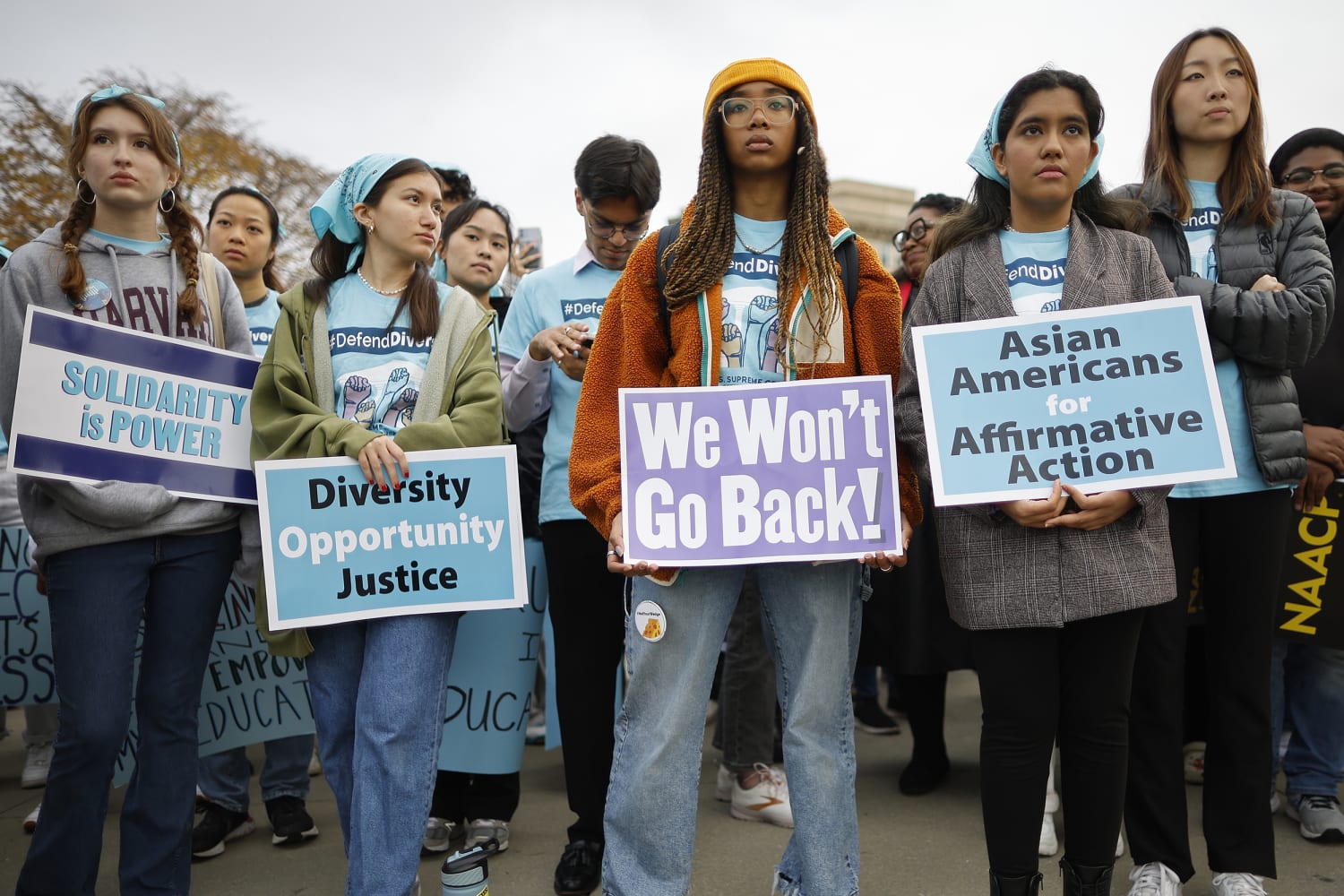
UPDATE: In 2023, in Students for Fair Admissions v. Harvard, the Supreme Court overruled Bakke, holding that race-based affirmative action programs in college admissions processes violate the Equal Protection Clause of the 14th Amendment to the Constitution. It doesn't: This was a 6-3 right-wing supermajority lying to the American people, choosing ideology over established law. As the liberal reaction to this ruling has shown, the fight is far from over.
*
March 6, 1961 was a Monday. Baseball was in Spring Training. Football was out of season. And neither the NBA nor the NHL had games scheduled. So there were no scores on this historic day.


No comments:
Post a Comment