
August 2, 1948: Fanny Blankers-Koen wins her 4th Gold Medal of the 1948 Olympics, at the original Wembley Stadium in London.
At the time, she was 30 years old, married, with 2 children. Today, such a performance in the Olympic Games by a woman who met that description would not be considered a big deal. At the time, it was staggering.
Francina Elsje Koen was born on April 26, 1918 in Lage Vuursche, Utrecht, the Netherlands. The Netherlands has 12 Provinces, including North Holland, which includes Amsterdam; and South Holland, which includes Rotterdam and The Hague. But only those 2 Provinces are properly called "Holland." Telling someone living in Eindhoven they live in "Holland" would be like telling someone in Glasgow they live in "England." Don't do it.
"Fanny" excelled in several sports, including swimming. However, in her youth, the Netherlands had several successful female swimmers, so she turned to a sport they were not as strong in, one her father had competed in: Track and field. At age 17, she set a national record in the 800 meters. But races longer than 400 meters had been removed from the Olympics for women, as it was decided that women couldn't handle running for longer than that. This would later be proven to be ridiculous, and longer races were reintroduced.
Fanny was coached by Jan Blankers, who had competed in the Olympics on home soil in Amsterdam in 1928. Despite his being 15 years older, they would eventually marry. (In some European countries, a woman's married name comes first in the hyphenated form. This would also be true of another Olympian, the great Austrian skier Annemarie Moser-Pröll.) Jan encouraged Fanny to try for the 1936 Olympics in Berlin. At age 18, She finished 5th in both the high jump and as a member of the Dutch 4x100-meter relay team. The highlight of her Olympic experience was getting Jesse Owens' autograph.
She set some world records, and was considered a favorite to win a Gold Medal at the 1940 Olympics in Helsinki, Finland. But World War II led to the cancellation of those Games, and those of 1944, set for Axis nation Japan.
Fanny and Jan married on August 29, 1940, 3 months after the Nazi takeover. Their son, Jan Jr., was born in 1942. The European sports media presumed that, between having become a mother and not knowing when the war would end, Fanny's sports career was over. It wasn't: From 1942 to 1944, she set 6 world records. She had daughter Fanneke in 1945, and the war ended. This didn't end her career, either: She won 2 Gold Medals at the 1946 European Championships.
Two months before the 1948 Olympics, she broke her own world record in the 80-mter hurdles. Despite this, the sports journalists of the time ignored recent performance, and said that, at 30, she was too old to win. She didn't listen. She won the 100 meters, making her the 1st Dutch athlete, male or female, to win an Olympic Gold Medal in track and field. She won a photo finish for the 80-meter hurdles.
She got homesick, and broke down in tears, and refused to run in the 200 meters. Jan consoled her, and talked her into running, and won it. And she anchored the Dutch women's team in the 4x100-meters, taking them from 3rd place when she took the baton to 1st.
There were 9 women's track and field events at the 1948 Olympics, and she won 4 of them. The media called her "The Flying Dutchmam" (as opposed to "Dutchman") and "The Flying Housewife." Queen Juliana made her a knight of the Order of Orange Nassau, the country's highest honor. The City of Amsterdam gave her a new bicycle, "so she need not run so much."

She won 3 more Gold Medals at the 1949 European Championships, and in 1952, she finally made it to an Olympics held in Helsinki. But time caught up with her, and she won no medals. In 1955, she won her last victory, the Dutch national title in the shot put.
In retirement, Fanny served as team Captain of the Dutch track and field team from the 1958 European Championships through the 1968 Olympics. Jan died in 1977. Since 1981, the annual Fanny Blankers-Koen games have been held in Hengelo, in the Province of Overijssel.
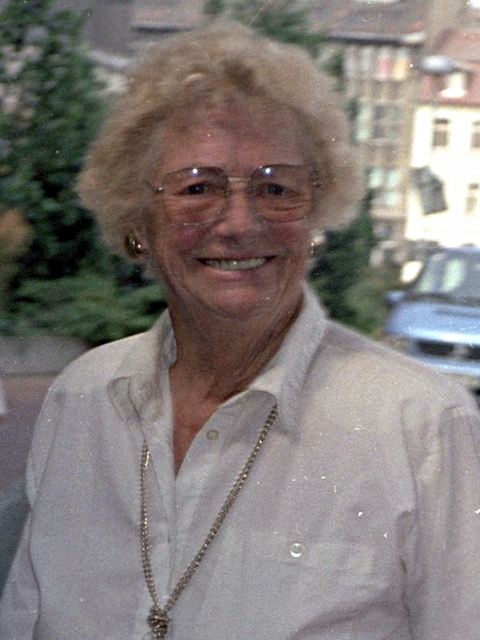
In 1999, the IAAF, the world governing body for track and field, declared her the Female Athlete of the Century. She attended the awards ceremony in Moscow. However, by then, she was already deaf and in the early stages of Alzheimer's disease. She died on January 25, 2004. She was 85 years old.
One more note: The old Wembley Stadium is 1 of 3 stadiums to have hosted an Olympic Games, a World Cup Final and a UEFA European Cup/Champions League Final. The others are the Olympiastadions in Berlin and Munich. In 2024, the Stade de France outside Paris will make it 4.
*
August 2, 1948 was a Monday. There were 4 baseball games were played:
* The New York Giants lost to the St. Louis Cardinals, 21-5 at the Polo Grounds. Stan Musial, having the best season of his career, went 2-for-6 with a home run, a walk and an RBI. And he wasn't even close to being the star of this game. Del Wilber went 3-for-6 with 5 RBIs. Whitey Kurowski went 2-for-4 with home run, a walk and 4 RBIs. Enos Slaughter went 3-for-5 with 2 walks and 3 RBIs. Marty Marion went 2-for-5 with a home run, a walk and 3 RBIs. And Erv Dusak went 2-for-7 with a home run and 2 RBIs.
* The Brooklyn Dodgers weren't as badly beaten as their arch-rivals, but it counted the same in the standings: They lost to the Chicago Cubs, 4-2 at Ebbets Field. Jackie Robinson went 1-for-5. In the top of the 10th inning, Eddie Waitkus doubled home the go-ahead run, and future Dodger Andy Pafko drove in another with a sacrifice fly.
* The Cincinnati Reds beat the Boston Braves, 3-1 at Braves Field in Boston. Johnny Vander Meer, 10 years after pitching the 1st of his back-to-back no-hitters against the Braves, outpitched Vern Bickford.
* And in the only American League game of the day, the St. Louis Browns beat the Washington Senators, 7-5 at Sportsman's Park in St. Louis.


No comments:
Post a Comment