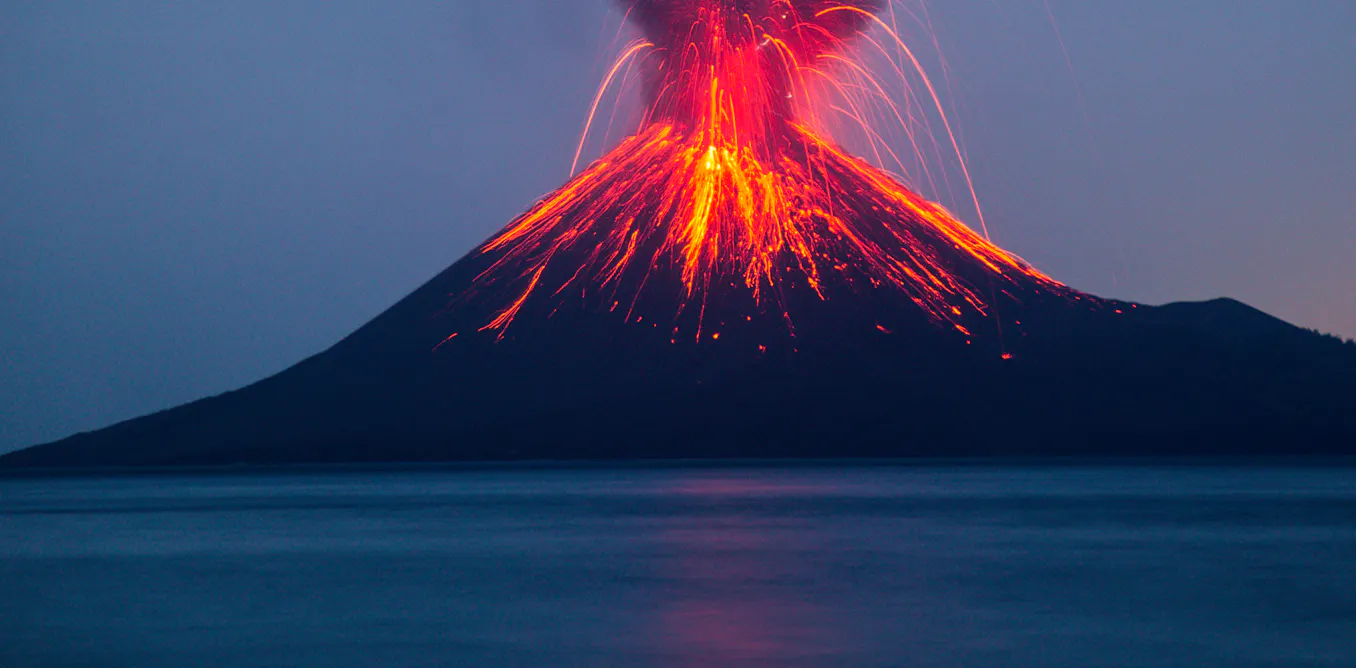
A more recent eruption of Krakatoa.
August 27, 1883: Krakatoa, a volcano on an island between the larger islands of Sumatra and Java, erupts. It is one of the biggest volcanic eruptions ever, equivalent to 200 megatons of TNT. In comparison, it was 13,000 times the yield of the bomb dropped on Hiroshima, Japan in 1945; and 4 times that of the most powerful nuclear device ever detonated, the 1961 Soviet test of "Tsar Bomba."
The explosion was heard in Alice Springs, Australia, 2,200 miles to the southeast; and on the island of Rodrigues off the coast of Madagascar, nearly 3,000 miles to the west.
Today, Krakatoa, along with Sumatra and Java, is part of the island nation of Indonesia. At the time, it was part of the Dutch East Indies, a colony of the Netherlands. Dutch authorities estimated that over 36,000 people died in the resulting lava flows, earthquake and tsunamis.
Enough ash was thrown into the air to create a "volcanic winter." Temperatures all over the world dropped in 1883 and 1884. It also created more rainfall than the world was used to: The California cities of Los Angeles and San Diego received the most rain in their respective histories.
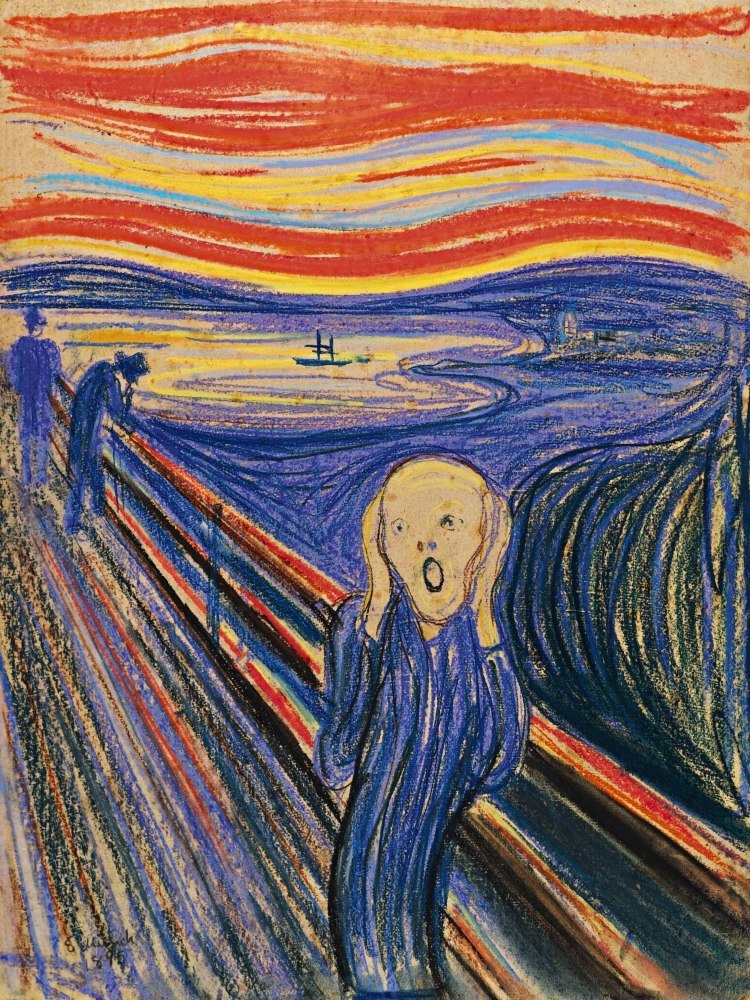
It also led to the world's skies being darker for a few years. People in several American cities saw orange skies, presumed there were fires, and called fire departments, who found no fires. It's been suggested that Edvard Munch's 1893 painting The Scream reflected the orange sky over his hometown of Oslo, Norway. This was 10 years after the eruption, although he wrote that the inspiration was closer in time to the eruption.
It has been postulated that a previous eruption of Krakatoa, in AD 535, was responsible for a global climate change that led to the period known as the Dark Ages. Ilopango, a volcano in El Salvador, has also been investigated as being the volcano responsible for that.
*
August 27, 1883 was a Monday. Baseball was the only real professional sport at this time, and 3 games were played:
* In the National League, the Cleveland Blues beat the Detroit Wolverines, 7-4 at Recreation Park in Detroit. The Blues only lasted one more season. The Wolverines won the Pennant in 1887, but found their title-winning players' salary demands too much, and folded after just 1 more season.
* In the American Association, the St. Louis Browns beat the New York Metropolitans, 8-3 at the original Polo Grounds. These "original Mets" won the AA Pennant in 1884, and lost a postseason series to the Providence Grays. But they went out of business after the 1887 season.
The Browns won the AA Pennant in 1885, 1886, 1887 and 1888. In 1892, they joined the NL. In 1900, they became the Cardinals, and an AL team would be named the St. Louis Browns. That team became the Baltimore Orioles in 1954.
* Also in the AA, the Philadelphia Athletics beat the Columbus Buckeyes, 13-8 at the Jefferson Street Grounds in Philadelphia. These Athletics would win the AA Pennant in 1883, but went out of business in 1890, and bear no relationship to the AL team of the same name, now in Oakland. The Buckeyes went out of business after the 1884 season.


No comments:
Post a Comment