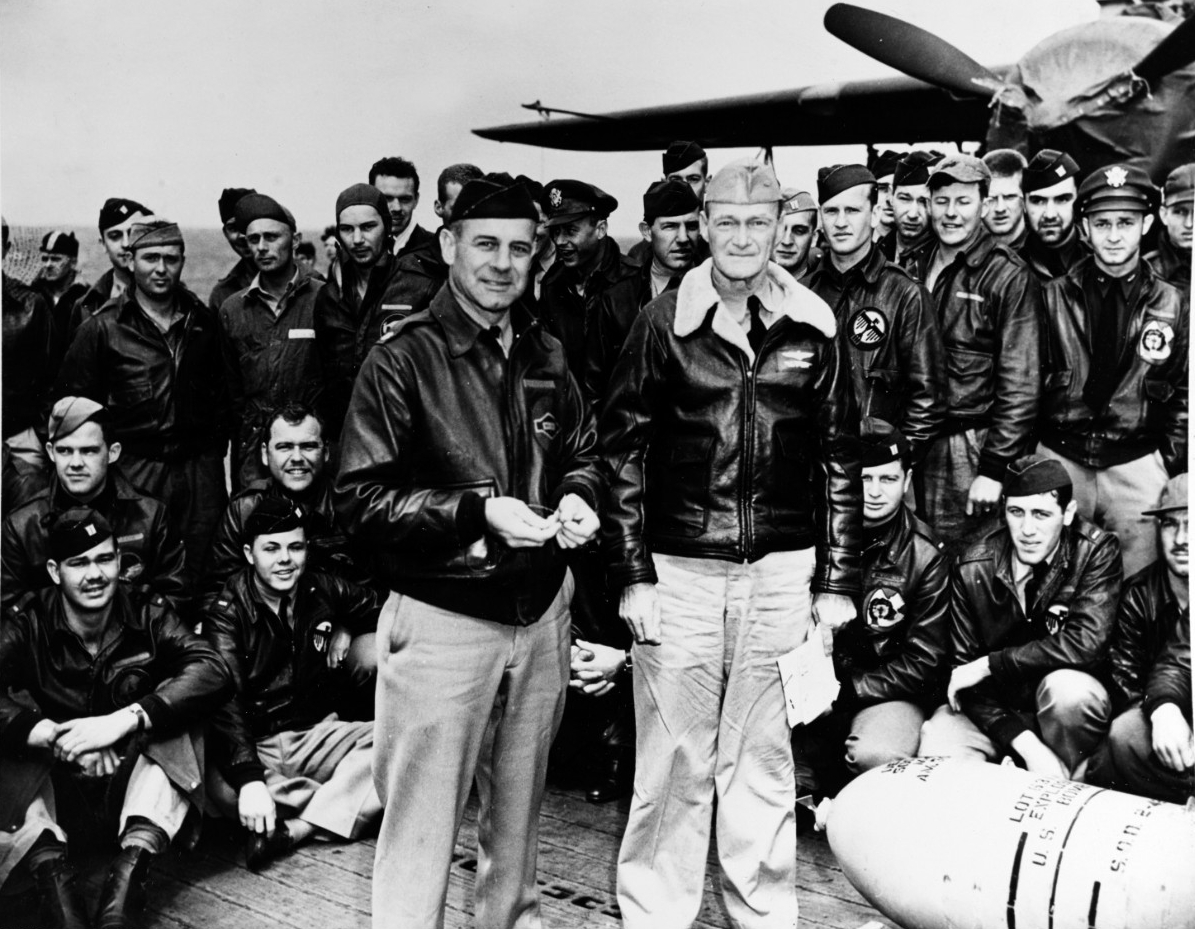
The raid, commanded by Lieutenant Colonel James H. Doolittle, was revenge for Japan's bombing of the U.S. naval base at Pearl Harbor, Hawaii, 4 months earlier.
That bombing was devastating, killing 2,403 people, sinking 4 battleships and destroying 188 aircraft. This one did far less damage, killing about 50 people, and providing little effect against Japanese military and industrial might.
But the real effect on each country was psychological. For the Japanese, the attack on Pearl Harbor was to show America that they could be hit at all. For the Americans, the "Doolittle Raid" was to show Japan that we could hit their capital, therefore we could hit anything of theirs, pretty much anytime we wanted.
It also led the Japanese to make a blunder that turned the tide of the Pacific Theater of World War II: Their Navy rushed plans to attack Midway Island, thinking they could take America by surprise again. The result was a battle in early June that was costlier for them than Pearl Harbor was for us. That was the beginning of the end of Japanese dominance of the Pacific. The Doolittle Raid set that in motion.
In 1944, with the outcome of The War still very much in doubt, the film Thirty Seconds Over Tokyo was released. Spencer Tracy played Doolittle.
Doolittle lived until 1993. The last surviving participant in the Doolittle Raid was Richard E. Cole, who lived until April 9, 2019, at age 103.
*
April 18, 1942 was a Saturday. And Game 7 of the Stanley Cup Finals was played that day. The Detroit Red Wings won the 1st 3 games, but the Toronto Maple Leafs won the last 4, the 1st-ever comeback in major league sports from three games to none down to win. Game 7 ended 3-1 in the Leafs' favor, at Maple Leaf Gardens in Toronto. I have a separate entry for that event.
The Major League Baseball season was wrapping up its 1st week, and these games were played:
* The New York Yankees lost to the Boston Red Sox, 5-1 at Yankee Stadium. The winning pitcher for the Sox was named Lancelot Terry. Ironically, his nickname was "Yank." He outpitched Atley Donald, allowing just 3 hits: An RBI double by Phil Rizzuto, and singles by Bill Dickey and Tommy Henrich. Joe DiMaggio went 0-for-4. Among the offense backing Terry was 2 hits, including an RBI single, from Ted Williams.
* The New York Giants beat the Boston Braves, 8-5 at Braves Field in Boston. Willard Marshall and Hank Lieber hit home runs. Mel Ott, in only his 5th game as the Giants' manager, went 2-for-3.
* The Brooklyn Dodgers lost to the Philadelphia Phillies, 2-1 at Ebbets Field.
* The Washington Senators beat the Philadelphia Athletics, 10-6 at Shibe Park.
* The Pittsburgh Pirates beat the St. Louis Cardinals, 3-0 at Forbes Field in Pittsburgh. Ken Heintzelman pitched a 5-hit shutout.
* The Cleveland Indians beat the Chicago White Sox, 1-0 at Cleveland Municipal Stadium. Fabian Gaffke singled Buster Mills home in the bottom of the 9th, preserving a 4-hit shutout for Jim Bagby Jr.
* The Detroit Tigers beat the St. Louis Browns, 4-0 at Sportsman's Park in St. Louis. Hal White pitched a 7-hit shutout.
* And the Chicago Cubs and the Cincinnati Reds were rained out at Wrigley Field in Chicago. The game was made up as part of a doubleheader on August 23. The Cubs won each game 3-0, on shutouts by Claude Passeau and Lon Warneke.
Football was out of season. The NBA hadn't been founded yet. And while England's Football Association had suspended Football League and FA Cup competition for the duration of World War II, the London Wartime Combination was contested. Arsenal defeated Sussex team Brighton & Hove Albion, 5-1 at White Hart Lane in Middlesex.
Yes, The Arsenal used the ground of their arch-rivals, Tottenham Hotspur, because their home, Arsenal Stadium, a.k.a. Highbury, in North London was appropriated by the government for defense purposes. The London Government Act 1963 redrew the boundaries of the city of London (not to be confused with "The City of London") so that White Hart Lane was inside the city for the first time.


No comments:
Post a Comment