
April 10, 1970: Paul McCartney announces that The Beatles have broken up. "The Long and Winding Road" has come to an end.
The warning signs were there, even though most of the band's fans refused to accept them:
* The Death of Brian Epstein. On August 27, 1967, the Beatles' manager died of a combination of sleeping pills and alcohol. He was only 32. He had guided the group through many highs and a few lows. Had he still been alive through mid-1970, there's a good chance he would have been able to smooth lots of things over, and keep them together.
Certainly, his continued life and presence would have prevented the entrance into their professional lives of...
* Allen Klein. Previously managing Rock and Roll Hall-of-Famer Sam Cooke, in 1965 he became co-manager of the Rolling Stones, and sole manager the next year. A bookkeeping wizard, he had impressed Stones lead singer Mick Jagger, who, whatever else he is, is no dummy. Klein had impressed Mick enough to recommend him to Paul in early 1969 as a permanent replacement for Epstein, whose brother Clive had been managing them in the interim. This led to the band's finances being totally, as they say in England, banjaxed.
Paul had wanted the new manager to be Lee Eastman -- Linda McCartney's father. The other three, thinking Lee would give Paul's ideas too much weight and theirs too little, put the kibosh on that. Who knows what would have happened if they'd taken Lee?
Well, as Billy Joel later found out, making your brother-in-law your manager could lead to problems. Maybe giving the job to your father-in-law would be equally problematic. After the breakup, though, Lee became the manager for Paul's ventures, including Wings, and Linda's brother John Eastman took over following Lee's death, and is still Paul's manager today. And Paul, if not the richest person in the music industry, is a contender for that title.
So, at the very least, Lee and John Eastman were honest men, or at least honest enough to keep Paul doing so well that he wouldn't suspect any wrongdoing on their part (or care if there was).
Shortly after Klein became the Beatles' manager, the Stones got tired of his dealings, and fired him. The price was giving him control over their early recordings, and it took about 20 years to get that control back. The Stones firing him so soon after the Beatles took him on should have been a red flag, especially to Paul, who was not only the most business-savvy of the Beatles (although, at that point, that wasn't saying much), but was also the only one to propose an alternative to the crooked Klein.

Allen Klein, John Lennon, Yoko Ono.
I don't know what Klein is smoking in that pipe,
but the real drug issue in this photo isn't anything John ever took,
but Klein's greed.
George, alone among the ex-Beatles, still trusted Klein enough to ask for his help in putting together the Concert for Bangladesh in 1971. But because of Klein's machinations, it took 10 years for the money to fully reach the intended charities. Finally, in 1979, Klein went to prison for tax evasion. It was a bit of an irony for a man with such a quick mind to fall victim to Alzheimer's disease, which eventually claimed his life in 2009.
* What's more, as Bob Dylan would say, "The times, they were a-changin'." When the Beatles made their 1st recording, the single "Love Me Do" backed with "P.S. I Love You," on September 4, 1962, here were their ages: Ringo, 22; John, about to turn 22; Paul, 20; George, 19. When the announcement of the breakup was made on April 10, 1970, Ringo and John were 29, Paul about to turn 28, and George 27.
That's a big difference: They started as idealistic kids, hoping for fame and fortune; and ended as jaded adults, who saw that fame and fortune had their downsides. As another Sixties icon known for, among other things, hair, a costume, and music, Vulcan lyrette player Leonard Nimoy, put it, "You may find that having is not so fine a thing as wanting."

Between them, the Fab Four went from having no marriages and no children (though John had one on the way) to having 5 marriages (John twice) and 4 children (5 if you count Linda's daughter from her 1st marriage, 6 if you also count a child of Ringo's who was about to arrive).
They had also matured in their songwriting. Paul may still have been (and still is) willing to write "silly love songs"... and, as he said, what's wrong with that? Well, John and George thought there should be something more. And with the world seemingly going to pieces in the late Sixties and early Seventies, it began to look like silly love songs were no longer enough.
It was more than that, though: The musical climate had changed. The Beatles had let the genie out of the bottle, and it was heavier bands, many of them British, who were now setting the pace. The Stones, certainly. Also The Who. The Kinks. Led Zeppelin had recently debuted. Black Sabbath soon would.
The leading American band of the 1970s would be the Eagles. Then there was Fleetwood Mac, with its distinctive mixes of nationality (British and American) and gender (with Lindsay Buckingham, Stevie Nicks and Christine McVie dividing the lead vocals).
The leading soloists of the Seventies were Britain's Elton John, who would never have become a big star without the Beatles' influence; and America's Paul Simon and Stevie Wonder, 2 men who would have made it without the Beatles, but wouldn't have stretched their songwriting "muscle" nearly as much without them.
Billy Joel (who may be the world's biggest Beatles fan) and Bruce Springsteen, both hitting the big time in 1973, were both capable of Paul-style sentimentality and John-style psychological-study music, and neither of their careers would have gone very far if there had never been a Beatles, but both were well beyond what the Beatles had done -- or even were doing with their solo careers.
Soul music was also moving forward in the early Seventies: James Brown went more topical and heavier than before, Marvin Gaye did What's Going On, and George Clinton created his "P-Funk Empire," taking the Beatles' idea of the concept album and launching it into space -- figuratively speaking, although there were times when George wanted us to think it was literal.
Face it: "The lovable Mop Tops" were only about 5 years in the past, but it might as well have been 50 years. There was a reason why the TV show The Monkees only lasted 3 seasons: Sure, there was a market for a group that looked and sounded like the Beatles but without all that weirdness, but it only went so far, until it went nowhere.
Although all 4 Beatles would have plenty of solo hits -- as late as 1989, Paul was in the U.S. Top 25, and as late as 2005 in the U.K.'s Top 25 -- the 1970s made the "boys" who sang, "She loves you, yeah, yeah, yeah" sound like relics, closer to the music of George Gershwin and Bing Crosby than that of David Bowie and Pink Floyd.
That's a big difference: They started as idealistic kids, hoping for fame and fortune; and ended as jaded adults, who saw that fame and fortune had their downsides. As another Sixties icon known for, among other things, hair, a costume, and music, Vulcan lyrette player Leonard Nimoy, put it, "You may find that having is not so fine a thing as wanting."
Far out, man.
(Leonard Nimoy as Spock, Nichelle Nichols as Uhura.)
Between them, the Fab Four went from having no marriages and no children (though John had one on the way) to having 5 marriages (John twice) and 4 children (5 if you count Linda's daughter from her 1st marriage, 6 if you also count a child of Ringo's who was about to arrive).
They had also matured in their songwriting. Paul may still have been (and still is) willing to write "silly love songs"... and, as he said, what's wrong with that? Well, John and George thought there should be something more. And with the world seemingly going to pieces in the late Sixties and early Seventies, it began to look like silly love songs were no longer enough.
It was more than that, though: The musical climate had changed. The Beatles had let the genie out of the bottle, and it was heavier bands, many of them British, who were now setting the pace. The Stones, certainly. Also The Who. The Kinks. Led Zeppelin had recently debuted. Black Sabbath soon would.
The leading American band of the 1970s would be the Eagles. Then there was Fleetwood Mac, with its distinctive mixes of nationality (British and American) and gender (with Lindsay Buckingham, Stevie Nicks and Christine McVie dividing the lead vocals).
The leading soloists of the Seventies were Britain's Elton John, who would never have become a big star without the Beatles' influence; and America's Paul Simon and Stevie Wonder, 2 men who would have made it without the Beatles, but wouldn't have stretched their songwriting "muscle" nearly as much without them.
Billy Joel (who may be the world's biggest Beatles fan) and Bruce Springsteen, both hitting the big time in 1973, were both capable of Paul-style sentimentality and John-style psychological-study music, and neither of their careers would have gone very far if there had never been a Beatles, but both were well beyond what the Beatles had done -- or even were doing with their solo careers.
The Piano Man, The Cute One, The Boss
Soul music was also moving forward in the early Seventies: James Brown went more topical and heavier than before, Marvin Gaye did What's Going On, and George Clinton created his "P-Funk Empire," taking the Beatles' idea of the concept album and launching it into space -- figuratively speaking, although there were times when George wanted us to think it was literal.
Face it: "The lovable Mop Tops" were only about 5 years in the past, but it might as well have been 50 years. There was a reason why the TV show The Monkees only lasted 3 seasons: Sure, there was a market for a group that looked and sounded like the Beatles but without all that weirdness, but it only went so far, until it went nowhere.
Although all 4 Beatles would have plenty of solo hits -- as late as 1989, Paul was in the U.S. Top 25, and as late as 2005 in the U.K.'s Top 25 -- the 1970s made the "boys" who sang, "She loves you, yeah, yeah, yeah" sound like relics, closer to the music of George Gershwin and Bing Crosby than that of David Bowie and Pink Floyd.
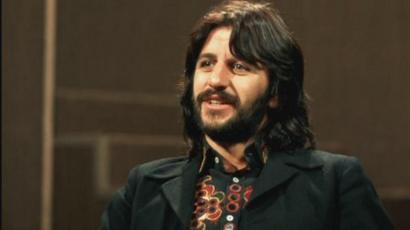
* Ringo Starr was the first member to quit the band, during the White Album sessions in the Summer of 1968. The other members had to talk him into coming back.
* George Harrison quit, too, during the Let It Be sessions in January 1969. As with Ringo, the others -- really, just John and Ringo -- had to talk him into coming back.
But it wasn't just that George had already quit once. Look at what he did from 1966 (on Revolver) through 1976 (well into his solo career). Especially by 1968, when he wrote "While My Guitar Gently Weeps," he was writing songs that would have been A-sides for just about any band on the planet that didn't have Paul McCartney deciding what the A-sides of their singles should be.
By 1969, when both Let It Be and Abbey Road were recorded, it was clear that being in the Beatles, which had made him fabulously wealthy, unbelievably famous, and quite respected by his peers, was holding him back. He began 1970 by playing on the last song the Beatles recorded together, his composition "I Me Mine," the last track chosen for Let It Be. He ended that year by becoming the 1st ex-Beatle to have a Number 1 hit, "My Sweet Lord," from his album All Things Must Pass.

Although John had also released Plastic Ono Band, which is still highly regarded, it looked for a moment that George had taken the lead. When George hit Number 1 again in mid-1973 with "Give Me Love (Give Me Peace On Earth)," it succeeded Paul's "My Love," and gave him 2 Number 1 hits on the U.S. singles charts -- at that point, as many as Paul, and thus as many as John, Paul and Ringo combined.
(John's "Imagine," though now the most-admired song ever written by any Beatle, only got to Number 3 in the U.S. And until Paul released Band On the Run at the end of 1973, it could be argued that he was having the least significant solo career of the ex-Beatles, behind even Ringo. Certainly, with John having done the One-to-One Concert and George, with Ringo's help, putting together the Concert for Bangladesh -- both shows at Madison Square Garden -- Paul was then having the least meaningful solo career.)
"Got to pay your dues if you wanna sing the blues,
and, you know, it don't come easy."
* George Harrison quit, too, during the Let It Be sessions in January 1969. As with Ringo, the others -- really, just John and Ringo -- had to talk him into coming back.
But it wasn't just that George had already quit once. Look at what he did from 1966 (on Revolver) through 1976 (well into his solo career). Especially by 1968, when he wrote "While My Guitar Gently Weeps," he was writing songs that would have been A-sides for just about any band on the planet that didn't have Paul McCartney deciding what the A-sides of their singles should be.
By 1969, when both Let It Be and Abbey Road were recorded, it was clear that being in the Beatles, which had made him fabulously wealthy, unbelievably famous, and quite respected by his peers, was holding him back. He began 1970 by playing on the last song the Beatles recorded together, his composition "I Me Mine," the last track chosen for Let It Be. He ended that year by becoming the 1st ex-Beatle to have a Number 1 hit, "My Sweet Lord," from his album All Things Must Pass.
"This time, I know it's real, the feelings that I feel."
(John's "Imagine," though now the most-admired song ever written by any Beatle, only got to Number 3 in the U.S. And until Paul released Band On the Run at the end of 1973, it could be argued that he was having the least significant solo career of the ex-Beatles, behind even Ringo. Certainly, with John having done the One-to-One Concert and George, with Ringo's help, putting together the Concert for Bangladesh -- both shows at Madison Square Garden -- Paul was then having the least meaningful solo career.)
* Then there was John Lennon. Since his death, John's fans have become more sanctimonious than Paul's ever were, and some would consider it blasphemy to blame him for the breakup. Well, they need to know: He does bear a great deal of the responsibility for it, much more than Yoko does.

Yoko would eventually say that John was one of those men around whom nothing got done unless there was a woman around. And Dylan, a great admirer of John's (and vice versa), once said, "No man has ever done anything that a woman hasn't allowed him to do."
But John was not an especially weak-willed individual. If Yoko had flat-out told him, "It's the band, or me," he could have said, "These guys loved me when nobody else did. You simply can't understand that. No one can, except them." He had a choice.
But he did make his choice. On September 20, 1969, not that the general public knew it at the time, he told Paul and Klein that he wanted to leave the group. And, unlike George and Ringo, talking him out of it was going to be pointless: As the Borg would say, resistance was futile. (Yes, 2 Star Trek references in a blog post about the Beatles. Don't look at me like that: William Shatner recorded "Lucy in the Sky with Diamonds.")
In Shout!, his biography of the Beatles, Philip Norman included a photo of John and Yoko, with a caption that included these words: "John Lennon has finally found a partner he needs more than he needs Paul McCartney."
Except for one thing. Maybe it wasn't futile to try to bring him back into the fold. If it's 1969, and John Lennon wants to move on, there's probably only one man who can talk him out of it. That one man didn't. Because, as Norman neglected to point out, John wasn't the only Beatle who married his soulmate in mid-March 1969, who found a partner he needed more than he needed the other.
 * Even if Linda McCartney were still alive, able to defend herself, and able to offer her thoughts on the subject, I wouldn't want it to look like I'm blaming her. But this much is irrefutable and inescapable: It was Paul who announced the breakup. And Linda, and the life they were beginning to build together, was a big reason why. And that was a completely justifiable reason for a man about to turn 28, with a wife and 2 kids, to want to take the next step forward in his life.
If either John or Paul was ready to move on, but not both, the band might have been saved, at least for a little while longer. But both were ready to do so, and from that fact, there was no turning back. Paul was the last of the Fab Four who was ready to move on; but, ready to move on, he was.

December 1980
But John was not an especially weak-willed individual. If Yoko had flat-out told him, "It's the band, or me," he could have said, "These guys loved me when nobody else did. You simply can't understand that. No one can, except them." He had a choice.
But he did make his choice. On September 20, 1969, not that the general public knew it at the time, he told Paul and Klein that he wanted to leave the group. And, unlike George and Ringo, talking him out of it was going to be pointless: As the Borg would say, resistance was futile. (Yes, 2 Star Trek references in a blog post about the Beatles. Don't look at me like that: William Shatner recorded "Lucy in the Sky with Diamonds.")
In Shout!, his biography of the Beatles, Philip Norman included a photo of John and Yoko, with a caption that included these words: "John Lennon has finally found a partner he needs more than he needs Paul McCartney."
Except for one thing. Maybe it wasn't futile to try to bring him back into the fold. If it's 1969, and John Lennon wants to move on, there's probably only one man who can talk him out of it. That one man didn't. Because, as Norman neglected to point out, John wasn't the only Beatle who married his soulmate in mid-March 1969, who found a partner he needed more than he needed the other.
If either John or Paul was ready to move on, but not both, the band might have been saved, at least for a little while longer. But both were ready to do so, and from that fact, there was no turning back. Paul was the last of the Fab Four who was ready to move on; but, ready to move on, he was.
Oh, by the way: John let his wife, who couldn't sing and couldn't play an instrument, into his band? Uh, hello? Remember Linda's keyboard playing in Wings?
Then there was the record on which only 2 Beatles played: John on guitars, and Paul on bass, piano, drums and maracas. Neither George nor Ringo was available, and John wanted it recorded immediately. At one point, while Paul was on drums, John said, "Go a bit faster, Ringo." And Paul said, "Okay, George." The song was "The Ballad of John and Yoko."
If Paul, who was soon to be exposed (through the film Let It Be) as a major control freak, especially in a recording studio, had a problem with John being with Yoko, do you think there's a chance in hell he would have participated in this? Not a chance. And yet, he did -- and, in return for this, John gave him shared writing credit (and the proceeds thereof), which he had no obligation to do.
But it goes beyond that: Despite years of antagonism, on and off, between Paul and Yoko, essentially, he recently exonerated her. Yes, I know, this link is to Fox News, which has as much to do with actual news as Yoko had to do with Wings, but Paul makes it pretty clear: Yoko should not be blamed:
She certainly didn’t break the group up. I don’t think you can blame her for anything.
And that's good enough for Yoko. If it's good enough for Paul, it should be good enough for his fans. As Chris Crocker would say, if he liked better music than Britney Spears, "Leave Yoko alone!”
Besides, Yoko almost 90 years old. Why pick on an old lady?
Then there was the record on which only 2 Beatles played: John on guitars, and Paul on bass, piano, drums and maracas. Neither George nor Ringo was available, and John wanted it recorded immediately. At one point, while Paul was on drums, John said, "Go a bit faster, Ringo." And Paul said, "Okay, George." The song was "The Ballad of John and Yoko."
If Paul, who was soon to be exposed (through the film Let It Be) as a major control freak, especially in a recording studio, had a problem with John being with Yoko, do you think there's a chance in hell he would have participated in this? Not a chance. And yet, he did -- and, in return for this, John gave him shared writing credit (and the proceeds thereof), which he had no obligation to do.
But it goes beyond that: Despite years of antagonism, on and off, between Paul and Yoko, essentially, he recently exonerated her. Yes, I know, this link is to Fox News, which has as much to do with actual news as Yoko had to do with Wings, but Paul makes it pretty clear: Yoko should not be blamed:
She certainly didn’t break the group up. I don’t think you can blame her for anything.
And that's good enough for Yoko. If it's good enough for Paul, it should be good enough for his fans. As Chris Crocker would say, if he liked better music than Britney Spears, "Leave Yoko alone!”
Besides, Yoko almost 90 years old. Why pick on an old lady?
*
April 10, 1970 was a Friday. The NFL was out of season. But there were 10 Major League Baseball games played:
* The New York Mets lost to the St. Louis Cardinals, 7-3 at Busch Memorial Stadium in St. Louis.
* The Chicago Cubs beat the Montreal Expos, 2-1 at Jarry Park in Montreal. Ernie Banks went 0-for-4.
* The Philadelphia Phillies beat the Pittsburgh Pirates, 2-0 at Connie Mack Stadium in Philadelphia. Roberto Clemente went 1-for-3 for the Bucs.
* The Baltimore Orioles beat the Detroit Tigers, 3-2 at Memorial Stadium in Baltimore. Brooks Robinson singled home the winning run off Mickey Lolich in the bottom of the 10th inning. Brooks went 3-for-4 in the game, Frank Robinson went 1-for-4, and Baltimore native Al Kaline went 0-for-4 for the Tigers.
* The Boston Red Sox beat the Washington Senators, 4-1 at Robert F. Kennedy Stadium in Washington. Carl Yastrzemski went 3-for-4 against the Red Sox. Ted Williams was managing the Senators.
* The Chicago White Sox beat the Milwaukee Brewers, 5-4 at Comiskey Park in Chicago.
* The California Angels beat the Kansas City Royals, 11-7 at Kansas City Municipal Stadium.
* The Atlanta Braves beat the Houston Astros, 5-0 at the Astrodome in Houston. Hank Aaron went 2-for-3 with a home run, the 556th of his career, and 4 RBIs.
* The San Diego Padres beat the Los Angeles Dodgers, 7-2 at Dodger Stadium in Los Angeles.
* And the San Francisco Giants beat the Cincinnati Reds, 4-3 at Candlestick Park in San Francisco. For the Giants, Willie Mays went 1-for-3, and Willie McCovey went 0-for-3. For the Reds, Pete Rose went 1-for-2 with 2 walks, while Johnny Bench went 0-for-4.
The Stanley Cup Playoffs were underway, but no games were played on this day. There were no games played in the NBA, either. But there were 3 in the American Basketball Association:
* The Pittsburgh Pipers beat the Washington Caps, 132-124 at the Civic Arena in Pittsburgh. John Brisker scored 45 for the Pipers.
* The Carolina Cougars beat the Indiana Pacers, 116-107 at the Charlotte Coliseum.
* And the Denver Rockets beat the Miami Floridians, 145-141 at the Auditorium Arena in Denver. Spencer Haywood scored 44 for the team that, in 1974, renamed itself the Denver Nuggets.


No comments:
Post a Comment