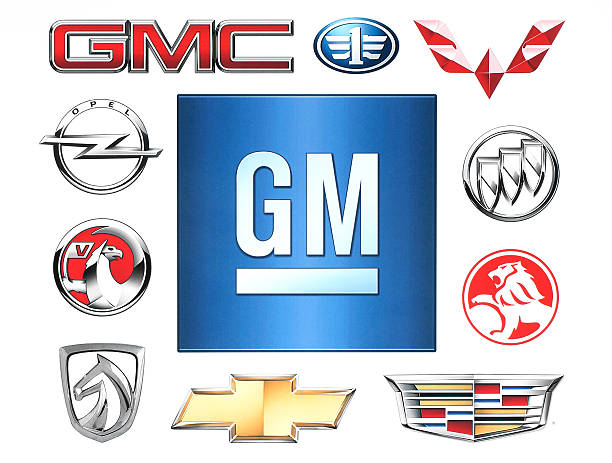
September 16, 1908: General Motors Company is founded in Detroit. From the beginning, it has been not so much a designer and builder of automobiles -- that's for its individual divisions -- but a seller of, advertiser of, and advocate for them.
William C. Durant was worried that automobiles would put his horse-drawn carriage company out of business. He remembered the old line, "If you can't beat 'em, join 'em." He had a better idea: "If you can't beat 'em, buy 'em out." In 1904, he bought the Buick Motor Company. It had been founded in 1899 by David Dunbar Buick.

William C. Durant
Durant founded GM as a holding company, naming it after General Electric. Two months after he did so, he bought the Olds Motors Works, makers of Oldsmobile, which Ransom Eli Olds had founded in 1897.
Olds had previously called his car a Reo, after his initials: REO. In 1987, Oldsmobile had an advertising campaign with America's favorite old person, comedian George Burns: "Burns and Olds. I get top billing: I'm older."
Cadillac was founded in 1902, by Henry Leland. He sold it to Durant in 1909. In 1917, he founded Lincoln, America's other well-known luxury car brand. In 1922, he sold it to Ford Motor Company. Also in 1909, Durant bought the Oakland Motor Car Company, headquartered in nearby Oakland County, Michigan. The division was renamed for a Native chief from the area: Pontiac.
In 1910, Durant tried to buy Ford from Henry Ford. But he had bought up so many small car companies -- eliminating them from existence, not just competition -- that he had several loans due, and the board of directors removed him.
In 1911, with Swiss auto racer Louis Chevrolet, he founded Chevrolet. The co-founders had a dispute in 1915, and Louis sold his share of the company that bore his name to Durant. By 1917, Chevrolet had become so successful that Durant bought GM out, and fired the board who fired him.
In 1918, he made his most important decision, as far as the company's future was concerned: He bought United Motors, maker of car parts, owned by Alfred P. Sloan Jr. In 1919, GM bought Frigidaire, makers of refrigerators. Why? Because enclosed cars were now more popular than convertibles, and Frigidaire made machinery that could air-condition the cars.
Durant had financed his financial comeback with the help of one of America's richest companies. duPont, which helped supply GM with cheap oil. By 1920, the post-World War I economic downturn was threatening to wreck the company. duPont leaned on the board of directors, and Durant was out again.
Sloan was in. In the 1930s, he became a big supporter of Franklin Roosevelt's New Deal. He established the best workers-pension plan in American labor history, and avoided violence in 1937 by recognizing the United Auto Workers, rather than fighting them, figuratively and literally. In 1939, GM put the 1st automatic transmissions in America in Oldsmobiles, which ended up making cars much easier to drive. And the Alfred P. Sloan Foundation was founded, and it remains one of America's leading charitable organizations.

Alfred P. Sloan
But Sloan was villain as well as hero: Under his leadership, GM supplied cars and their parts for both sides in World War II. America would not have won without GM's participation; but, through GM's Opel division, neither would Nazi Germany have gotten as far as it did.
In 1941, Charles Erwin Wilson was named President of GM. He became known as "Engine Charlie," to differentiate himself from Charles Edward Wilson, President of General Electric, who was known as "Electric Charlie." Too many similar initials: GM, GE, CEW, EC!
In 1953, President Dwight D. Eisenhower appointed "Engine Charlie" to be America's Secretary of Defense. During his confirmation hearings before the U.S. Senate, he was asked if he could make a decision as Secretary of Defense that would be adverse to the interests of General Motors. He said he could, but he added that he could not conceive of such a situation, "because, for years, I thought what was good for our country was good for General Motors, and vice versa."

That statement has frequently been misquoted as, "What's good for General Motors is good for America." Although Wilson tried to correct the misquote, he left office after Eisenhower's 1st term, and was reported at the time to have accepted the popular impression.
Under the Chevrolet banner, GM introduced America's most popular sports car, the Corvette, in 1953. The 1957 "Chevy" Bel-Air became the most memorial car of the 1950s. Other legendary GM cars of the postwar era included the 1951 Oldsmobile Delta 88 (a.k.a. the Rocket 88), the tailfinned Cadillacs (or "Caddies") of the 1950s, 1957 Buick Roadmaster, the 1964 Pontiac GTO, the 1968 Chevy Camaro, and GMC pickup trucks.
In 1996, GM bought the Renaissance Center, Detroit's tallest skyscraper and biggest office complex, from arch-rivals Ford. GM uses "the RenCen" as its headquarters.
Oldsmobile remained a popular brand into the 1980s. GM let Olds reach a 100th Anniversary in 1997, but declining sales led them to phase it out in 2004. The Pontiac brand was phased out in 2010.
David Buick died in 1929, Louis Chevrolet in 1941, William Durant in 1947, Ransom Eli Olds in 1950, Charles Wilson in 1953, Alfred Sloan in 1966.
In the post-World War II auto boom, a saying developed: "What's good for General Motors is good for America."
*
September 16, 1908 was a Wednesday. These baseball games were played:
* The New York Giants beat the St. Louis Cardinals, 6-2 at the Polo Grounds. James "Doc" Crandall went the distance pitching for the Giants, and also went 2-for-3 with a walk and an RBI at the plate.
* The Brooklyn Superbas beat the Cincinnati Reds, 3-0 at Washington Park in Brooklyn. The Superbas, named, while their manager was Ned Hanlon, for a circus troupe called Hanlon's Superbas, became the Dodgers in 1911.
* The Chicago Cubs beat the Boston Doves, 5-0 at the South End Grounds in Boston. Jack Pfeister pitched a 5-hit shutout. The Doves were named for their owners, the Dovey brothers. William H. Russell bought them in 1911, and renamed them the Boston Rustlers. He died after his first season, and they were bought by James Gaffney, who was an official, a "Brave," in New York's Tammany Hall political organization. He renamed the team the Boston Braves.
* The Philadelphia Phillies and the Pittsburgh Pirates split a doubleheader at National League Park (later renamed Baker Bowl) in Philadelphia. The Phils won the opener, 5-2. The Bucs won the nightcap, 2-0. Over the 2 games, Honus Wagner went 1-for-8 with an RBI.
* The Cleveland Naps beat the Chicago White Sox, 7-1 at South Side Park in Chicago. The Naps were named for their manager and 2nd baseman, Napoleon "Nap" Lajoie. He went 0-for-4 in that game. After he left in 1914, they changed their name to the Cleveland Indians.
* The Detroit Tigers St. Louis Browns, 4-1 at Sportsman's Park in St. Louis. Ty Cobb went 1-for-4 with an RBI.
* The New York Highlanders, renamed the Yankees in 1913, were not scheduled. Nor were the Boston Red Sox, the Philadelphia Athletics or the Washington Senators.


No comments:
Post a Comment