
The International Olympic Committee had awarded the 1936 Olympic Games to Germany in 1931, when it was still governed by the Weimar Republic. The Winter Games went to Garmisch-Partenkirchen, in Bavaria, on the nation's southern border, with Austria. The Summer Games went to the national capital, Berlin.
But in 1933, the National Socialist German Workers' Party -- Nationalsozialistische Deutsche Arbeiterpar, or "Nazi" Party -- came to power, and Adolf Hitler became Chancellor. Within another year, he had total control, and instituted the party's ideology, fascism: Nationalism, militarism, bigotry, and letting big business do whatever it wanted.
He also instituted his ideal of an "Aryan" "master race": White, blond hair, blue eyes, tall, physically strong. He, himself, was white, but not the other things.
And he falsely blamed Communists and Jews for Germany's defeat in World War I. Well before most people know what a "holocaust" was (originally, the word was used to mean a large fire), he was cutting Jewish people out of German society.
Like most dictators, he was not especially interested in sports. But, like many of them, someone talked him into using sports as propaganda for his ideals. And so, the 1936 Olympics, especially the Summer Games in Berlin, would be a spectacle celebrating "Aryan supremacy."
But a story which may be apocryphal (I hope it's true) shows that even his power was not absolute. In the Olympic Stadium (Olympiastadion) he had constructed for the Games, the restrooms had signs saying, "Dogs and Jews are not allowed." A representative of the International Olympic Committee told him to take it down.
Hitler: "When you come into a man's house, you don't tell him what he can and cannot put up!"
IOC official: "Excuse me, Mr. Chancellor, but when that five-ringed flag goes up over the stadium, it is no longer Germany. It is Olympia. And we are the masters there."
The signs came down.
*
James Cleveland Owens was born on September 12, 1913 in Oakville, Alabama. One thing Southern white people and Southern black people have in common is frequently addressing boys by their initials, so Owens was usually called "J.C."
When he was 9, the family moved north, as part of the "Great Migration" of African-Americans seeking to leave the segregated South in search of less prejudice and better jobs in the Northeast, the Midwest, and the West Coast. The fact that they moved to Cleveland, both his and his father's middle name (Henry Cleveland Owens), appears to have been a coincidence.
Upon arrival in school in Cleveland, the boy was asked his name. He said, "J.C. Owens." The teacher misheard this, and said, "Your name is Jesse?" Not wanting to contradict her, he said it was. And so he was Jesse Owens from then on.
He became Ohio's biggest high school track star. On May 25, 1935 -- the day after the 1st night game in Major League Baseball -- he competed for Ohio State University at the Big Ten Championships at Ferry Field, the former football facility at the University of Michigan in Ann Arbor.
He ran the 100-yard dash in 9.4 seconds, tying the world record. He set world records in the long jump (26 feet, 8 1/4 inches, a world record that would last for 25 years), the 220-yard sprint (20.3 seconds), and the 220-yard low hurdles (22.6 seconds). These 4 records were all set within a span of 45 minutes.
So when the U.S. Olympic Team set sail -- flying across the Atlantic Ocean was still too risky at that point -- for Germany in July 1936, Owens was considered one of the favorites in the 100 meters, the 200 meters, and the long jump. (Most of the world was now racing using the metric system, although the United States, as yet, was not.)
*
The Games began on August 1, and were the 1st sporting event ever televised, though only a few people in Germany had sets on which to watch it. The Nazis instituted many of the things we now associate with the Opening Ceremony of the Olympics, including the torch relay from Olympia, Greece into the stadium and the lighting of the cauldron; and the release of doves as a symbol of peace, although they used pigeons instead. When a cannon was fired as a salute, it literally scared the shit out of the pigeons, and many of the athletes got pooped on.
Established from the beginning in 1896 was the host country's head of state speaking before the crowd, and declaring the Games open. Hitler did this, in German, rather than French, the official language of the Olympics (he hated the French as much as he hated anyone else), or in English, by this point the semi-official language of the world. (As far as historians have been able to determine, German was the only language he spoke fluently.)
It's not always the head of state that does it. Sometimes, someone else is designated. In 1932, in Los Angeles, President Herbert Hoover sent Vice President Charles Curtis. In 1960, in Squaw Valley for the Winter Games, President Dwight D. Eisenhower sent Vice President Richard Nixon to his native California to do it. In 1980, President Jimmy Carter sent Vice President Walter Mondale. President Ronald Reagan did it himself in his adopted home State in Los Angeles in 1984, President Bill Clinton did it in Atlanta in 1996, and President George W. Bush did it in Salt Lake City in 2002.
When Britain has hosted: King Edward VII did it in 1908, King George VI did it in 1948, and Queen Elizabeth II did it in 2012, despite being 86 years old. When Australia hosted in 1956 and 2000, and when Canada did it in 1976 for the Summer Games, and 1988 and 2010 for the Winter Games, it was the Queen's representative, the Governor-General, who did it, even though the Queen was in attendance in Montreal in 1976, as her daughter, Princess Anne, was competing in the equestrian events.
The Parade of Nations had also been established from the beginning, and many of the countries' delegations followed the tradition of dipping their flag before the host nation's head of state. The American delegation refused to do this with the Stars & Stripes, and it had nothing to do with said head of state being a Fascist maniac. They were criticized for this, but stood their ground.
On August 2, Owens ran in the qualifying heats for the 100 meters. In the 1st, he tied the Olympic and world record. In the 2nd, he broke it. On August 3, the final was held, and Owens won it with a time of 10.3 seconds. Finishing 2nd was another black American, Ralph Metcalfe, who would later serve the South Side of Chicago in Congress from 1971 until his death in 1978.
Owens was now an Olympic Gold Medalist, and, by winning the Olympic 100-meter dash, he became recognized unofficially as "the fastest man in the world."
On August 4, Owens won the long jump, with 26 feet, 5 inches. Finishing 2nd was Luz Long of Germany, who did fit the Aryan profile. Owens was missing the tape and fouling, and, in a great display of sportsmanship, Long advised Owens to jump a bit short of the tape, just to be sure. It worked, and he had a 2nd Gold Medal.
On August 5, he won the 200 meters in 20.7 seconds. Finishing 2nd was a runner from UCLA, Matthew MacKenzie "Mack" Robinson. He had a younger brother, who went on to star in track, and other sports, at UCLA: Jack Roosevelt "Jackie" Robinson. So Owens now had 3 Gold Medals, fulfilling his goal.
On the 1st day, Hitler shook hands with the German victors only, and then left the stadium. International Olympic Committee president Henri de Baillet-Latour told him that he had to greet every medalist or none at all. Hitler opted for none at all, and skipped all further medal presentations.
His refusal to congratulate Owens had nothing to do with hating black people, or hating Americans. Nor was it personal. Owens was not "snubbed by Hitler." Owens responded to these claims at the time:
The final of the 4x100-meter sprint relay was to be held on August 9. The intended American competitors were Frank Wykoff (Des Moines, Iowa and of Dutch descent, having already taken Gold Medals in the event in 1928 and 1932), Foy Draper (from Texas and of English descent, and would be listed as missing in action in World War II), and 2 Jewish runners, Marty Glickman from New York and Sam Stoller from Cincinnati. (Glickman went on to become the 1st great New York sportscaster.)
But the President of the U.S. Olympic Committee was Avery Brundage, a racist and an anti-Semite, who was just fine with the Nazis. He decided that, since Hitler's boys had already been beaten by black men, it would be worse if they were beaten by Jews. So he benched Glickman and Stoller, and told Owens and Metcalfe that they would run in those men's places. Owens objected. Coach Dean Cromwell told him, "You'll do as you're told." With no recourse but to drop out, which would have been much worse, he ran the anchor leg, and the U.S. team won.
Owens had his 4th Gold Medal -- possibly the most unwelcome medal in Olympic history. This feat -- winning the Gold Medals of the 100 meters, the 200 meters, the 4x100-meter relay, and the long jump -- has only been done once since, by Carl Lewis in Los Angeles in 1984.
From a distance, Owens was hailed as a hero upon his return to America. Up close, he was still treated like any other black person in the 1930s. He found it difficult to make a living -- "You can't eat four gold medals," he said -- and took part in demeaning stunts to raise money. During World War II, the U.S. Office of Civilian Defense appointed Owens as director of a national fitness program for African Americans, but he lost this job when peace came. Like his contemporary, Joe Louis, the Heavyweight Champion of the World, he fell into trouble over his taxes. Unlike Louis, he eventually got out of it.
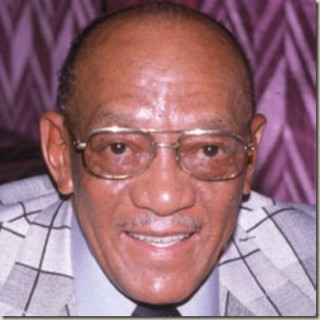
He became what he called "a professional good example." He became an American representative at the Olympics, and was particularly honored the next time a free and democratic Germany hosted, in Munich in 1972. He even did an American Express "Do you know me?" commercial. He died on March 31, 1980, of cancer, at age 66. He is buried at Oak Woods Cemetery in Chicago.
The Olympiastadion still stands, having undergone some renovations. It is the home of the biggest soccer team in the German capital, Hertha Berlin. It hosted 3 games in the 1974 World Cup, and 6 games in the 2006 World Cup, including the Final and a Quarterfinal. It hosted the 2015 UEFA Champions League Final, and is scheduled to host the Final of Euro 2024. Having seated over 100,000 upon its opening, renovations and wider seats have brought capacity down to 74,475, but it is still the largest stadium in any German-speaking country.

In fact, the Olympiastadion in Berlin is 1 of 3 stadiums to have hosted an Olympic Games, a World Cup Final and a UEFA European Cup/Champions League Final. The others are the Olympiastadion in Munich and the old Wembley Stadium in London. In 2024, the Stade de France outside Paris will make it 4.
*
August 3, 1936 was a Monday. It was the off-season for the NFL and the NHL, and the NBA hadn't been founded yet. And only 1 Major League Baseball game was played that day, as Monday is often a travel day. The Detroit Tigers beat the Cleveland Indians, 9-4 at Navin Field in Detroit. (The ballpark was renamed Briggs Stadium in 1938 and Tiger Stadium in 1961.) Tiger slugger Hank Greenberg got hurt on April 29, and missed the rest of the season.
Lynwood "Schoolboy" Rowe outpitched Mel Harder, and helped his own cause with 2 hits. Future Hall-of-Famers Charlie Gehringer and Al Simmons also got 2 hits for the Tigers, and Gerald "Gee" Walker got 3. Hall-of-Famer Hank Greenberg did not play in the game: He was injured on April 29, and missed the rest of the season.
Jerry G. Bishop was born on this day. He was the 1st actor to play the horror-themed TV show host Svengoolie, from 1970 to 1973. Rich Koz took over the role, and, as of August 3, 2022, still holds it.


No comments:
Post a Comment