Wednesday, June 1, 2022

June 1, 1943: The Murder of Leslie Howard

June 1, 1943: British actor Leslie Howard is killed when the Nazis shoot down his plane off the coast of Spain. He was just 50 years old.

He was born on April 3, 1893, in Forest Hill, Southeast London, with the name Leslie Howard Steiner. ("Leslie" is one of many names that are considered masculine in Britain but feminine in America.) Having a German surname did not protect him at the end. He was also Jewish, also it's not clear whether the Nazis knew that. 

One of the earliest literary characters who could be called a "superhero" was the Scarlet Pimpernel. Sir Percy Blakeney was an English aristocrat living in Paris when the French Revolution broke out in 1789, and he disguised himself and used his swordfighting skills to save his friends among the French aristocracy that were targeted for death by the revolutionaries. The character was created by Baroness Emma Orczy, a Hungarian-born British noblewoman, for a 1903 play. Howard starred in the 1934 film The Scarlet Pimpernel.

But he was already a star, having starred in Berkeley Square, and the film version of W. Somerset Maugham's Of Human Bondage. He later starred in the American crime film The Petrified Forest, where he met the film's (and previously the play's) star, Humphrey Bogart; and played Professor Henry Higgins in the 1938 film version of George Bernard Shaw's play Pygmalion, 18 years before Rex Harrison debuted in the role in the musical version, titled My Fair Lady. Most Americans, though, remember him for playing Ashley Wilkes in Gone with the Wind in 1939.

That film was released 3 months after Britain and France declared war on Nazi Germany, to start World War II. Howard made pro-British, anti-Nazi propaganda films, which which later led the British Film Yearbook to call his work "one of the most valuable facets of British propaganda."

He was rumored to have been working for British intelligence, which may have explained why he was killed. In May 1943, he traveled to Portugal -- which, like neighboring Spain, then had a Fascist government, but was neutral in the war, refusing to help fellow Fascists Germany and Italy -- to promote the British cause.

On June 1, 1943, he intended to head home, on a Douglas DC-3, co-operated by KLM Royal Dutch Airlines and BOAC (British Overseas Airways Corporation, which became British Airways in 1974), labeled Flight 777. It took off from the Portuguese capital of Lisbon, intending to fly to Bristol, in England's West Country.

The plane was intercepted by 8 Luftwaffe Junkers Ju 88 fighters, and was shot down over the Atlantic Ocean, off Cedeira, in northwestern Spain. There were 17 people on board, all killed, including Howard and 4 KLM flight crew members.

The Nazis knew Howard had made his propaganda films, but it's not clear whether they knew he was on the plane. One theory that has persisted is that they thought that Prime Minister Winston Churchill was on it. They had certainly targeted Churchill, but they never got him.

Howard left behind a wife, Ruth Evelyn Martin; and 2 children, Ronald and Leslie Ruth. Ronald became an actor, and in the 1954-55 television season, he became TV's 1st Sherlock Holmes. He lived on until 1996.

*

June 1, 1943 was a Tuesday. These baseball games were played that day:

* The New York Giants lost to the Cincinnati Reds, 3-1 at Crosley Field in Cincinnati. Giants player-manager Mel Ott went 2-for-3 with a walk.

* The Brooklyn Dodgers lost to the St. Louis Cardinals, 11-9 at Sportsman's Park in St. Louis. Stan Musial went 4-for-6 with a home run and 2 RBIs. Harry Walker won the game with a home run in the bottom of the 12th inning.

* The Detroit Tigers beat the Philadelphia Athletics, 5-3 at Shibe Park in Philadelphia.

* The Washington Senators beat the Cleveland Indians, 3-2 at Griffith Stadium in Washington. Ellis Clary singled home the winning run in the bottom of the 10th inning.

* The Pittsburgh Pirates beat the Boston Braves, 5-4 at Forbes Field in Pittsburgh. Eugene "Huck" Geary stole home plate in the bottom of the 14th inning.

* The Philadelphia Phillies beat the Chicago Cubs, 7-2 at Wrigley Field in Chicago.

* The Boston Red Sox and the St. Louis Browns were rained out at Fenway Park in Boston. The game was made up as part of a doubleheader the next day. The Browns won the opener, 7-4 in 12 innings. The BoSox won the nightcap, 3-2 in 10 innings.

* And the New York Yankees and the Chicago White Sox were rained out at Yankee Stadium. The game was made up as part of a doubleheader on July 24. The Yankees won the opener, 5-1. The ChiSox won the nightcap, 5-3.

June 1, 1927: The Hardy Boys/Nancy Drew Franchise Begins

June 1, 1927: The Tower Treasure is published, beginning the Hardy Boys/Nancy Drew franchise of mystery novels for children, teenagers, and "young adults."

Edward Stratemayer founded the Stratemeyer Syndicate, which published children's books, including several series, all of them published under pen names, which, essentially, were "franchise" as much as the characters themselves. Among them were the Bobbsey Twins, two sets of fraternal brother/sister twins, perpetually 12 and 6 years old, respectively; in 72 books under the name "Laura Lee Hope" from 1904 to 1979; and Tom Swift, a boy inventor, in 33 books under the name "Victor Appleton" from 1910 to 1941. Among the writers were Stratemayer himself, and his daughter, known after her marriage as Harriet Adams.

The Tom Swift books frequently had plays on words, such as, "'I lost my crutches,' said Tom lamely," and "'I'll take the prisoner downstairs', said Tom condescendingly." Such puns became known as "Tom Swifties," and, eventually, led to singer Taylor Swift's fans being called "Swifties." (So, as you can see, it all comes together, said Mike connectively.)

Eventually, unlike the other characters, the original Tom was allowed to reach full adulthood, was renamed "Tom Swift Sr.," and the adventures followed his son, Tom Swift Jr.

But it was the Hardy Boys, published under the name "Franklin W. Dixon," who caught the most imagination of the public. Older brother Frank starts out as 16 years old, and younger brother Joe as 15, but are later raised to 18 and 17. They live in Bayport, on Barmet Bay (the State is never specified), with their father, Detective Fenton Hardy; their mother, Laura; and their Aunt Gertrude.

In the older stories, starting in 1927 with The Tower Treasure, the Boys' mysteries are often linked to their father's confidential cases. He sometimes requests their assistance, while at other times they stumble upon relevant villains and incidents. The Hardy Boys are sometimes assisted in solving mysteries by their friends, and, less frequently, by their girlfriends.

Writing about them in 1971, Arthur Prager said:

Never were so many assorted felonies committed in a simple American small town. Murder, drug peddling, race-horse kidnapping, diamond smuggling, bank robbing, kidnapping, dynamiting, burglaries, medical malpractice, big-time auto theft, even (in the 1940s) the hijacking of strategic materials and espionage, all were conducted with Bayport as a nucleus.

In other words, people who later said that the small town of Cabot Cove, Maine, home of mystery writer Jessica Fletcher on the TV show Murder, She Wrote had an inordinate number of murders, well, the Hardy Boys stories were something of an inspiration.

Or maybe Jessica was inspired by Nancy Drew, created by Stratemeyer as a feminine counterpart to the Hardy Boys, who could appeal to girls. Her 1st story, The Secret of the Old Clock, was published on April 28, 1930, under the pen name "Carolyn Keene." At the time of the book's premiere, Nancy is 16, giving her a birth year of 1914. Which means, if she were real, she probably would have died early in the 21st Century. That's a lot longer than Stratemeyer lived: He died on May 10, 1930, just 12 days after the 1st Nancy Drew book was published, of pneumonia, at the age of 67.

The Stratemeyer Syndicate was taken over by Edward's daughters, Harriet Adams and Edna Squier. From 1959 to 1973, they extensively revised the Hardy Boys and Nancy Drew books, to remove social and ethnic stereotypes, modernize content, and shorten them for easier reading.

Edna lived on until 1974, Harriet until 1982. I was a kid at the time, and had read some of the Hardy Boys and Nancy Drew books, and was told that the authors were actually "little old ladies." That urban legend had some truth to it: Edna lived to be 79, and Harriet to 90.

Former First Ladies Hillary Clinton and Laura Bush, and Supreme Court Justices Sandra Day O'Connor and Sonia Sotomayor, cited Nancy as an influence on their lives. Without her influence, it's hard to imagine the later creations of such characters as Harriet the Spy by Louise Fitzhugh, Kinsey Millhone by Sue Grafton, and Stephanie Plum by Janet Evanovich.

Both the Hardy Boys and Nancy Drew were introduced in films in the 1930s, and have been occasionally used in film and on television ever since. And the Stratemeyer Syndicate survives, with the most recent Nancy Drew novel published in 2003, and the most recent Hardy Boys novel in 2005.

But it would take until the novel Super Sleuths! in 1981 for Nancy to team up with the Hardy Boys in a published story. Surely, there is fanfiction where either Frank or Joe marries Nancy -- or even where they fight over her.

*

June 1, 1927 was a Wednesday. This was also the day that the Peace Bridge opened between Buffalo, New York and Fort Erie, Ontario. I have a separate entry for that event.

These baseball games were played that day:

* The New York Yankees beat the Philadelphia Athletics, 2-1 at Shibe Park in Philadelphia. Myles Thomas outpitched Rube Walberg. Joe Dugan singled Ben Paschal home with the winning run in the top of the 9th inning. Mark Koenig, probably the least powerful of this legendary Yankee team that became known as "Murderers' Row," hit the game's only home run.

Babe Ruth went 0-for-4. Lou Gehrig went 2-for-3 with a walk. For the A's, Ty Cobb went 0-for-4, Eddie Collins went 1-for-4, Mickey Cochrane went 2-for-4, Al Simmons went 1-for-4, and Jimmie Foxx did not play.

* The Brooklyn Dodgers beat the Boston Braves, 6-2 at Braves Field in Boston.

* The Boston Red Sox beat the Washington Senators, 6-1 at Griffith Stadium in Washington.

* The Philadelphia Phillies beat the Pittsburgh Pirates, 7-4 at Forbes Field in Pittsburgh.

* The Cleveland Indians beat the Detroit Tigers, 14-1 at Navin Field (later Briggs Stadium and Tiger Stadium) in Detroit.

* The Cincinnati Reds and the St. Louis Cardinals were rained out at Sportsman's Park in St. Louis. The game was made up as part of a doubleheader on June 25. The Cards won the opener, 2-1. The Reds won the nightcap, 10-7. Grover Cleveland Alexander, 40 years old and still in the wake of his World Series heroics the year before, allowed 4 runs over the last 2 innings. Over the 2 games, Frankie Frisch went 5-for-8 with 2 RBIs.

* And the New York Giants, the Chicago Cubs, the Chicago White Sox and the St. Louis were not scheduled.

June 1, 1927: The Peace Bridge Opens

June 1, 1927: The Peace Bridge opens, connecting Buffalo, New York with Fort Erie, Ontario, at the American-Canadian border. It was constructed as a highway bridge to address pedestrian and motor vehicle traffic which could not be accommodated on the International Railway Bridge that was built in 1873.

Representing Canada, and the British Empire of which it was then a part, at the opening ceremonies were Prime Ministers William Lyon Mackenzie King of Canada and Stanley Baldwin of Britain; Prince of Wales, the future Edward VIII; and his brother, Prince George, Duke of Kent; and Premier Howard Ferguson of Ontario (the equivalent of a State's Governor). Representing the U.S. were Vice President Charles Dawes, Secretary of State Frank Kellogg, and Governor Alfred E. Smith of New York.

The Peace Bridge consists of five arched spans over the Niagara River and a Parker deck-type truss span over the Black Rock Canal on the American side of the river. Going into the U.S., the road is bannered as New York State Route 955B. Going into Canada, it is the Queen Elizabeth Way, named for the wife of King George VI, not their daughter, Queen Elizabeth II. 

*

June 1, 1927 was a Wednesday. This was also the day that 1st Hardy Boys novel was published. I have a separate entry for that event.

These baseball games were played that day:

* The New York Yankees beat the Philadelphia Athletics, 2-1 at Shibe Park in Philadelphia. Joe Dugan singled Ben Paschal home with the winning run in the top of the 9th inning. Myles Thomas outpitched Rube Walberg. Babe Ruth went 0-for-4, and Lou Gehrig went 2-for-3 with a walk. Ty Cobb, running out the string with the A's, went 0-for-4.

* The Brooklyn Dodgers beat the Boston Braves, 6-2 at Braves Field in Boston.

* The Boston Red Sox beat the Washington Senators, 6-1 at Griffith Stadium in Washington.

* The Philadelphia Phillies beat the Pittsburgh Pirates, 7-4 at Forbes Field in Pittsburgh.

* The Cleveland Indians beat the Detroit Tigers, 14-1 at Navin Field (later Briggs Stadium and Tiger Stadium) in Detroit.

* The Cincinnati Reds and the St. Louis Cardinals were rained out at Sportsman's Park in St. Louis. The game was made up as part of a doubleheader on June 25. The Cards won the opener, 2-1. The Reds won the nightcap, 10-7. Grover Cleveland Alexander, 40 years old and still in the wake of his World Series heroics the year before, allowed 4 runs over the last 2 innings. Over the 2 games, Frankie Frisch went 5-for-8 with 2 RBIs.

* And the New York Giants, the Chicago Cubs, the Chicago White Sox and the St. Louis were not scheduled.

June 1, 1925: Lou Gehrig's Streak Begins

June 1, 1925: The New York Yankees lose to the Washington Senators, 5-3 at Yankee Stadium. Walter Johnson outpitched Sad Sam Jones. Sam Rice, the Senators' center fielder and leadoff hitter, headed for the Hall of Fame, went 5-for-5.

Despite their frequent billing as "Washington: First in war, first in peace, and last in the American League," there was no shame, at that time, in losing to the Senators. They had won the World Series the year before, and would fall just 1 game short of doing it again. But after staying in the Pennant race late in 1919 and 1920, winning the American League Pennant in 1921 and 1922, winning the World Series in 1923, and finished only 2 games behind the Senators in 1924, the Yankees were a mess.

Babe Ruth had only recently made his season debut, after an illness that still baffles baseball historians to this day. And a bunch of the players who had helped them win those 3 straight Pennants simply weren't hitting: 1st baseman Wally Pipp was batting .244, 2nd baseman Aaron Ward was at .255, shortstop Everett Scott was at .224, center fielder Whitey Witt was at .194, and catcher Wally Schang was at .247.

Scott didn't play in this game. Paul "Pee Wee" Wanninger did. He was the 1st New York-based shortstop nicknamed Pee Wee, but he was no Harold "Pee Wee" Reese.

Pipp. Ward. Scott. Witt. Schang. All 5 of these players would be replaced as starters by the time the 1926 season began. And the players they got would help them win another 3 straight Pennants, losing the World Series in 1926, but sweeping it in 1927 and 1928.

Schang wasn't exactly replaced. The Yankees tried Benny Bengough, Mike Gazella and Pat Collins, but it would take until Bill Dickey became the starter in 1929 for them to again have an elite catcher. It is an oddity that the 1927 Yankees, known as "Murderers' Row," have often been considered the greatest team in baseball history without having a great catcher.

But Witt had already been replaced in center field by Earle Combs, who would go on to became a Hall-of-Famer. Ward was replaced at 2nd base by Tony Lazzeri, who also went to the Hall of Fame. Scott was replaced at shortstop by Mark Koenig, a decent player.

As for Pipp... He was batting .244 after going 1-for-4 in this game. That's why he was replaced. Yes, later in the year, he was hit in the head by a batting-practice pitch, as the myth says. But he had already been replaced as the starting 1st baseman by that point. It's also not true that Pipp never played again. He did play, and well -- but for teams other than the Yankees.

His replacement, who had previously made only 34 major league appearances, pinch-hit for Wanninger with 1 out in the bottom of the 8th inning. He flew out to left fielder Goose Goslin, and replaced Pipp at 1st base in the 9th inning.

The next day, he started at 1st base, going 3-for-5. Bob Meusel hit 2 home runs, and the Yankees beat the Senators, 8-5. It was the 2nd of what would turn out to be 2,130 consecutive games. His name was Lou Gehrig. He became the greatest first baseman in the history of baseball.

*

June 1, 1925 was a Monday. These other games were played in what would later be called Major League Baseball:

* The New York Giants beat the Brooklyn Dodgers, 8-4 at Ebbets Field. Actually, from 1914 to 1931, because they were managed by Wilbert Robinson, the Dodgers were known as the Brooklyn Robins.

* The Boston Red Sox beat the Philadelphia Athletics, 5-3 at Fenway Park in Boston.

* The Philadelphia Phillies beat the Boston Braves, 12-10 at Baker Bowl in Philadelphia.

* The St. Louis Browns beat the Cleveland Indians, 10-2 at League Park in Cleveland.

* The Detroit Tigers beat the Chicago White Sox, 8-6 at Navin Field in Detroit. It would be renamed Briggs Stadium in 1938 and Tiger Stadium in 1961.

* The Chicago Cubs beat the Pittsburgh Pirates, 6-5 at Cubs Park in Chicago. It was renamed Wrigley Field the next year.

* And the St. Louis Cardinals beat the Cincinnati Reds, 5-3 at Sportsman's Park in St. Louis.

June 1, 1918: America Finally, Truly Enters the Great War

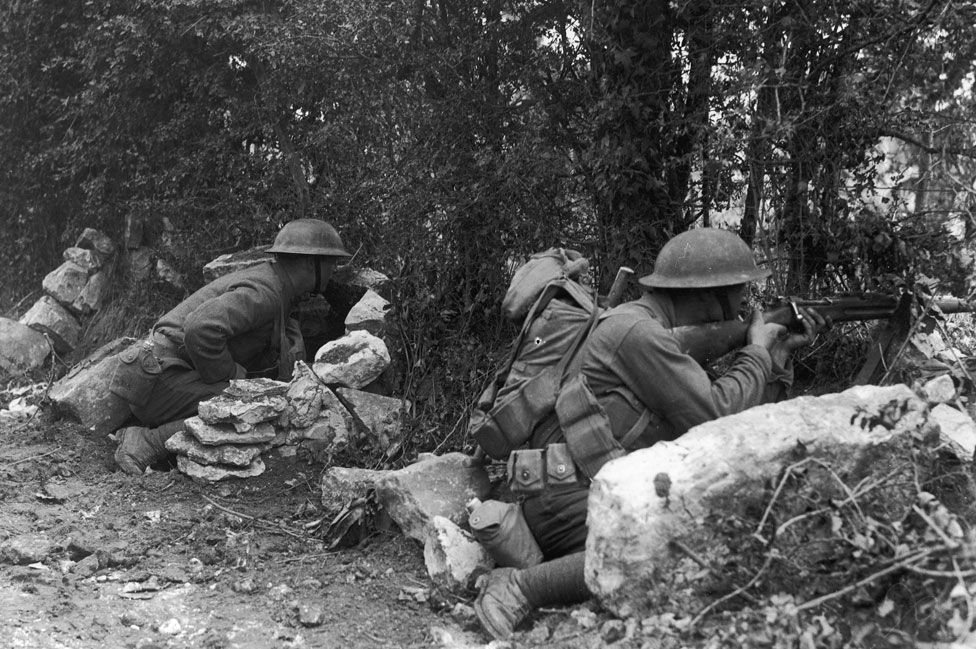
June 1, 1918: The Battle of Belleau Wood begins. It is the 1st land battle of World War I to feature American soldiers, and the 1st battle fought by American troops on the European continent.

The war had been going for nearly 4 years. Although Imperial Germany had provoked America into declaring war on April 6, 1917, it had taken until now for American troops to be properly trained and transported over to Europe, and ready to enter battle.

The timing was just right. Russia's exit from the war following the Bolshevik Revolution ended the Eastern Front on March 3, 1918. The troops of Kaiser Wilhelm II would now focus on the Western Front. Until then, they had been on the verge of collapse, and so had their country, as the U.S. Navy and Britain's Royal Navy had effectively blockaded them, starving them out. But, no longer having to fight Russia, Germany now had the numbers to militarily overwhelm the depleted, tired troops of France and Britain. And so, it looked like they might win the war, after being on the verge of having to surrender.

But, as George M. Cohan sang in his song, "Over There," the Yanks were coming. When they arrived on French soil, their training still wasn't complete. On July 4, 1917, the commander of the American Expeditionary Forces, General John J. Pershing, visited the Paris tomb of the Marquis de Lafayette, a hero of the American and French Revolutions. He reported that his chief disbursing officer, Lieutenant Colonel Charles E. Stanton, had said to the tomb, "Lafayette, we are here," as if America had come to pay the debt it owed to the Marquis for his assistance in the War of the American Revolution -- even if, this time, the British were on the same side as the Americans and the French.
General John J. Pershing

(The quote has been misattributed, in both source and timing: It entered the public memory as the words of Pershing himself, as he disembarked from his ship and first set foot on French soil.)

On June 1, German troops, under the personal command of Kronprinz Wilhelm -- the man who would have been Kaiser Wilhelm III had the throne still existed for him to take -- began an advance into Belleau Wood, near the River Marne, about 50 miles northeast of Paris. But they were every bit as tired and ill-supplied as the British and French men they were fighting.
Kronprinz Wilhelm

In contrast, the Americans were fresh, well-supplied, not yet disillusioned by the horrors of war, gung-ho as hell, and ready for a fight. The Army's 2nd and 3rd Infantry Divisions, and the 6th Marine Regiment, went into the Wood, and repelled "the Hun." By the time the battle ended on June 26, the Germans had lost 5,450 men, the Americans 1,811.

For the Germans, it was a fiasco: They pretty much remained in retreat thereafter, until signing the Armistice on November 11. For the Americans, it was a bloody nose, but a triumphant one, especially for the U.S. Marine Corps: Belleau Wood became a byword for them, part of their mythos, their defining battle of World War I, much as Iwo Jima was for World War II.

Pershing, known as "Black Jack," never wore more than 4 stars, as a man with the rank of full General is entitled to do. However, in 1919, Congress created the rank of General of the Armies for him -- effectively, a 6-star General. He is the only living soldier ever to receive this rank: George Washington and Ulysses S. Grant have received it posthumously. He was the only General of World War I to receive the equivalent of a 5th star, or "General of the Army," as was given to, among others in World War II, Dwight D. Eisenhower and Douglas MacArthur. Pershing saw the rise of the Nazis coming, and advocated for American opposition to them. He was too old to command troops in World War II, and died in 1948.

Kronprinz Wilhelm, like his father, left Germany in exile in the final days of World War I. He returned to Germany in 1923, supported the Nazis, became the pretender to the throne when his father died in 1941, fell out with Adolf Hitler, and died in 1951, no closer to becoming the Emperor of Germany than he was 10, or 33, years earlier.

*

June 1, 1918 was a Saturday. These baseball games were played that day:

* The New York Yankees beat the Chicago White Sox, 6-3 at Comiskey Park in Chicago. Herb Thormahlen was the winning pitcher. Former Athletics star Frank "Home Run" Baker went 3-for-5 with an RBI, although none of his hits were home runs. Another former A's star, Eddie Collins, 2-for-3 with a walk for the White Sox. Shoeless Joe Jackson had already played his last game of the season on May 11, having gone to work in a shipyard for the war effort.

* The New York Giants beat the Pittsburgh Pirates, 2-0 at the Polo Grounds. William "Pol" Perritt pitched a 3-hit shutout.

* The Brooklyn Robins (as the Dodgers were known from 1914 to 1931, under the managing of Wilbert Robinson) lost to the St. Louis Cardinals, 9-2 at Ebbets Field. Ivan "Ivy" Olson went 3-for-4 for Brooklyn. Rogers Hornsby went 0-for-4 with a walk for St. Louis.

* The Chicago Cubs beat the Boston Braves, 4-3 at Braves Field in Boston.

* The Philadelphia Phillies beat the Cincinnati Reds, 5-2 at Baker Bowl in Philadelphia.

* The Washington Senators beat the Cleveland Indians, 11-6 at League Park in Cleveland. Tris Speaker went 1-for-5.

* The Detroit Tigers beat the Boston Red Sox, 4-3 at Navin Field in Detroit. (The ballpark would later be renamed Briggs Stadium and Tiger Stadium.) The game went 13 innings, although I don't have a record of how the winning run was scored. Ty Cobb only appeared as a pinch-hitter, and drew a walk. Babe Ruth only appeared as a pinch-hitter, and struck out.

* And the St. Louis Browns beat the Philadelphia Athletics, 8-5 at Sportsman's Park in St. Louis. George Sisler went 4-for-4.

June 1, 1916: The 1st Jewish Justice On the U.S. Supreme Court

June 1, 1916: The U.S. Senate confirms Louis Brandeis to be a Justice of the U.S. Supreme Court, by a vote of 47 to 22. He is sworn in 5 days later, making him the 1st Jewish Justice on the highest court in the land.

He was the son of immigrants from Prague, then in the Austro-Hungarian Empire, who fled during the European Revolutions of 1848. His father, Adolph Brandeis, came to America first, and sent for the family, writing, "America's progress is the triumph of the rights of man."

Louis David Brandeis spent his life, beginning on November 13, 1856 in Louisville, Kentucky, trying to live up to his father's pronouncement. Admiring his uncle, Louis Dembitz, who was involved in the Zionist cause, and was a delegate for Abraham Lincoln at the 1860 Republican Convention, he changed his name to Louis Dembitz Brandeis.

He graduated from Harvard Law School with the highest grade point average the school had ever seen, a record that stood for 80 years. He practiced law in St. Louis and Boston, and so well argued a case before the U.S. Supreme Court that the Chief Justice at the time, Melville Fuller, called him the best attorney in the Eastern U.S. He married a 2nd cousin -- I wonder if Rudy Giuliani knew that -- and they had 2 daughters.

He was in favor of privacy and labor laws, and opposed to corruption. His establishment of the first savings bank insurance in 1907, a precursor to the FDIC, helped to make him known as "the people's lawyer." He said, "We want a government that will represent the laboring man, the professional man, the businessman, and the man of leisure. We want a good government, not because it is good business but because it is dishonorable to submit to a bad government."

Originally a progressive Republican, a supporter of Theodore Roosevelt and Robert La Follette, in 1912 he supported the Democratic nominee for President, Woodrow Wilson. After Wilson's election, he appointed Brandeis head of a new agency, the Federal Trade Commission. And on January 28, 1916, he appointed Brandeis to the Supreme Court. Despite already being known as a Southerner with antipathy toward black people, Wilson had no problem with being the 1st President to nominate a Jew to the U.S. Supreme Court.

Some people did have a problem with that. Justice James McReynolds, a Southerner, was very bitter about the possibility of sharing the Court with him. Former President William Howard Taft called him a "muckraker," and he didn't mean that as a compliment. Senator Elihu Root of New York, who had been Secretary of State under Roosevelt, called him unfit for the Court. Senator Henry Cabot Lodge of Massachusetts, another Roosevelt loyalist and a representative of the old Boston and Cambridge that Brandeis had tried to moderate, said, "If it were not that Brandeis is a Jew, and a German Jew, he would never have been appointed."

Nevertheless, the vote was 47-22 in his favor. He got 44 Democrats and 3 Republicans, including his former ally, La Follette of Wisconsin, to vote for him; with 21 Republicans and 1 Democrat, Francis Newlands of Nevada, a known bigot, against. He was sworn in 4 days later.

He became a great advocate for free speech and privacy. When Franklin D. Roosevelt was elected President, he generally supported the New Deal, but opposed FDR's "court-packing plan." He retired in 1939, due to ill health, and died on October 5, 1941, at age 84. He is often considered one of the best Justices in the Court's history.

Brandeis University, a school outside Boston, with a large Jewish contingent in its student body, and the law school at the University of Louisville, in his hometown, are named for him.

I wanted to have an entry for the 1st Catholic Justice on the Supreme Court, but that went further back than I thought: Roger Taney, appointed Chief Justice by President Andrew Jackson in 1836. He turned out to be the worst Justice in the history of the Court, with his ruling in Dred Scott v. Sandford in 1857. Both his appointment and the Dred Scott decision were before my cutoff date of 1869, the start of the era of professional sports.

*

June 1, 1916 was a Thursday. Football, basketball and hockey were out of season. These baseball games were played that day:

* The New York Yankees lost to the Philadelphia Athletics, 5-0 at the Polo Grounds. This was a particularly embarrassing loss, since the A's, broken up over high salaries a year and a half earlier, were on their way to a 36-116 record. The .235 "winning" percentage remains the worst in American League history, and the 116 losses have been surpassed only once, by the 2003 Detroit Tigers with 119.

Bullet Joe Bush pitched a 4-hit shutout. He would later pitch superbly well for the Yankees.

* The New York Giants lost to the Philadelphia Phillies, 4-2 at Baker Bowl in Philadelphia.

* The Brooklyn Dodgers were swept by the Boston Braves in a doubleheader at Ebbets Field, 6-1 and 2-1.

* The Boston Red Sox beat the Washington Senators, 1-0 at Fenway Park in Boston. Babe Ruth pitched a 3-hit shutout, to outdo Walter Johnson. The Bambino did not, however, get a hit, as the Big Train allowed only 4. The game's only run scored on a groundout by Dick Hoblitzell.

* The Pittsburgh Pirates beat the Cincinnati Reds, 8-4 at Forbes Field in Pittsburgh. Honus Wagner went 0-for-2, but Max Carey hit a home run.

* The Chicago White Sox beat the Detroit Tigers, 6-3 at Navin Field in Detroit. (It was renamed Briggs Stadium in 1938, and Tiger Stadium in 1961.) Shoeless Joe Jackson went 3-for-3 with an RBI. Ty Cobb went 2-for-4.

* A doubleheader was split at Sportsman's Park in St. Louis. The Cleveland Indians won the opener, 3-2. The St. Louis Browns won the nightcap, 6-5.

* And the Chicago Cubs and the St. Louis Cardinals were not scheduled to play.

Tuesday, May 31, 2022

June 1, 1889: The Orient Express

June 1, 1889: The most famous train route in human history, the Orient Express, begins full operations.

Well, not quite full. It opened on June 4, 1883, going from Paris, France to Vienna, Austria. Nobody would confuse Vienna with the Orient, not even if Mozart had written The Mikado 100 years before Gilbert & Sullivan had.
Gare de l'Est, Paris, opened in 1849

On October 3, 1883, the route was extended to Constantinople, the capital of the Ottoman Empire. In 1923, the Ottoman Empire became the Turkish Republic, "Türkiye" in their native language, "Turkey" in English; and the capital was moved to Ankara. In 1929, the national government told the world to start calling Constantinople "Istanbul."

Still, it wasn't a single train. The original trip required passengers to disembark in Romania, to be ferried across the Danube to Bulgaria, where they would catch another train to the Bulgarian city of Varna, followed by a 150-mile ferry ride to Constantinople. The final leg of the train ride to Constantinople wasn't finished until 1885. Finally, on June 1, 1889, a single train left Gare de l'Est (Station of the East) in Paris for Sirkeci Railway Station in what became Istanbul.
Sirkeci Station, Istanbul, opened in 1872

Connections were made from Paris to London via Calais and a ferry across the English Channel to Dover. The main route went from Paris to Lausanne, Switzerland; to Milan and Venice, Italy; to Belgrade, Yugoslavia (now in Serbia); to Sofia, Bulgaria; to Istanbul -- and, on the way back, in reverse. An average Paris-to-Istanbul, or Istanbul-to-Paris, ride took nearly 3 days: 2 days, 20 hours of what the standards of the time considered exceptional luxury.

There were alternate routes, from Paris through Strasbourg (France), Munich, Vienna, Budapest (Hungary) and Bucharest (Romania) to Istanbul; and from Paris through Zurich (Switzerland), Innsbruck (Austria) to Vienna, Budapest, Bucharest and Istanbul. All routes were shut down during the World Wars.

The ride became popular among writers. Agatha Christie's most famous story remains the 1934 Murder On the Orient Express, in which the train, heading for Paris, gets stuck in the snow in Yugoslavia, and Hercule Poirot must solve a murder. Other fictional characters known to have ridden the famed luxury train include Count Dracula in Bram Stoker's 1897 novel Dracula, and James Bond in the 1963 film From Russia with Love.
But, as in America, rail travel in Europe became superseded by air travel. The route stopped serving Istanbul in 1977, cut back to a through overnight service from Paris to Bucharest, which was cut back further in 1991 to Budapest, then in 2001 to Vienna, before departing for the last time from Paris on June 8, 2007. After this, the route, still called the Orient Express, was shortened to start from Strasbourg, leaving daily after the arrival of a TGV from Paris. On December 14, 2009, the Orient Express ceased to operate entirely, and the route disappeared from European railway timetables.

UPDATE: In late 2022, the hospitality company Accor announced plans to launch its own Orient Express from Paris to Istanbul, to start in mid-2026.

*

June 1, 1889 was a Saturday. There were 6 games that day in what would eventually be called Major League Baseball:

* In the National League, the New York Giants lost to the Washington Nationals, 9-5 at the Swampoodle Grounds in Washington. This version of the Nationals were dropped from the NL after the 1899 season, and the current team with the name has no connection to it.

* Also in the NL, the Boston Beaneaters beat the Philadelphia Phillies, 7-2 at the South End Grounds in Boston.

* In the American Association, the Philadelphia Athletics beat the Cincinnati Reds, 8-4 at the Jefferson Street Grounds in Philadelphia. These Athletics went out of business after the "Players' League War" of 1890. The Reds were admitted to the NL in 1892.

* Also in the AA, there was a doubleheader at Oriole Park in Baltimore. The Baltimore Orioles won the opener, 5-4. The Kansas City Cowboys won the nightcap, 10-8. The Orioles were admitted to the NL in 1892, but dropped after 1899, and the current team with the name has no connection to it.

* And, also in the AA, the Columbus Solons beat the Louisville Colonels, 8-3 at Recreation Park in Columbus, Ohio. The Colonels were admitted to the NL in 1890, but were dropped after the 1899 season. The Solons folded with the AA after the 1891 season.

December 31, 1999 & January 1, 2000: The Millennium

December 31, 1999:  The Millennium arrives. The people of planet Earth survived. At a terrible cost. But we hadn't destroyed ourselves. ...