Thursday, March 31, 2022

March 31, 1985: The 1st WrestleMania Is Held

Hulk Hogan (left) and Mr. T

March 31, 1985: The 1st WrestleMania is held. It marked the peak of fandom for what had come to be known as "professional wrestling."

The event -- I won't call it a "sport" -- was a natural for TV in its early days, the 1940s and '50s, because, like boxing, the size of the "playing field" was small enough that a camera could easily cover the whole thing. Men like "Gorgeous" George Wagner, Wladek "Killer" Kowalski and Bruno Sammartino became legends.

In 1984, Terry Bollea, using the name Hulk Hogan, became the heavyweight champion of the World Wrestling Federation. The year before, he had appeared in Rocky III, as a pro wrestler named Thunderlips. His blond hair, biker mustache, ripped physique, braggadocio, and 1980s-style patriotism -- his ring entrance song was "Real American" by McCoys singer Rick Derringer -- made him the most popular pro wrestler ever. He called the phenomenon of his fandom "Hulkamania."

Vince McMahon, president of the WWF, decided to strike while the iron was hot. So he set up WrestleMania for Madison Square Garden, which billed itself as "The World's Most Famous Arena." At the time, the biggest feud in the WWF was between Hogan and "Rowdy" Roddy Piper, a Canadian who played up his Scottish heritage.

So while there were several bouts on the undercard, here was the main event: Hogan, Jimmy "Superfly" Snuka and actor Lawrence "Mr. T" Tureaud, who had played the antagonist in Rocky III, and was there less for his skill than for his fame and his trash-talking; vs. Piper, Paul "Mr. Wonderful" Orndorff, and "Cowboy" Bob Orton, a.k.a. Bob Orton Jr., son of a legendary wrestler.

As the script usually called for him to do, Hogan looked for much of the match like he was going to lose. But, as usual, he did a Rodney Dangerfield-style eye bulge, signaling that he was switching to his A-game, and got better. But it wasn't his "Popeye eating his spinach" moment that decided the match: Orton made a mistake in interfering with the fight -- or, perhaps, he was told to, and followed orders -- and that led to Hogan pinning Orndorff.

It had to be Orndorff that Hogan pinned, not Piper, to keep the feud going, so that Piper could say, "You didn't beat me!" Of course, in professional wrestling, nobody stays a hero forever, and nobody stays a villain forever. This bout led to a rift between Orndorff and Piper, and eventually a teamup between Hogan and Orndorff. This didn't last, either, as Mr. Wonderful and the Hulkster started feuding again.

In 1988, Piper starred in the science fiction movie They Live, which included a WWF-style fight between him and Keith David. The film showed that Piper could be a hero, too. Hogan eventually "turned heel," and became a villain, "Hollywood Hulk Hogan," before going back to his former good-guy persona.

But his personal life got exposed on the MTV "reality show" Hogan Knows Best. As it turned out, most of the era's wrestling villains -- Piper; Orndorff; André René Roussimoff, a.k.a. André the Giant, who dethroned Hogan in 1988; Hossein Vaziri, a.k.a. the Iron Sheik; William J. Myers, a.k.a. George "The Animal" Steele; Christopher Pallies, a.k.a. King Kong Bundy; Ted DiBiase, a.k.a. the Million Dollar Man; and others -- were great guys in real life, loved by all who knew them in their true personalities, including their in-ring opponents; while Hogan was rotten.

In 2002, following a legal dispute with the World Wildlife Fund, the WWF was renamed "World Wrestling Entertainment." In 2011, the promotion ceased branding itself as World Wrestling Entertainment, and began solely branding itself with the initials WWE.

André the Giant died in 1993, Roddy Piper in 2015, Jimmy Snuka and George Steele in 2017, King Kong Bundy in 2019, Paul Orndorff in 2021. As of March 31, 2022, Vince McMahon, Hulk Hogan, Mr. T, Cowboy Bob Orton, the Iron Sheik, Ted DiBiase and Vince McMahon are still alive. (UPDATE: The Sheik died in 2023, Hogan in 2025.)

*

March 31, 1985 was a Sunday. Baseball was in Spring Training. The NFL was in its off-season, but there were 3 games played in the USFL, the United States Football League:

* The Baltimore Stallions beat the Houston Gamblers, 27-14 at the Astrodome in Houston.

* The Denver Gold beat the Orlando Renegades, 21-17 at Mile High Stadium in Denver.

* And the Oakland Invaders beat the Los Angeles Express, 30-6 at the Los Angeles Memorial Coliseum.

There were 4 games in the NBA:

* The Detroit Pistons beat the Boston Celtics, 113-105 at the Silverdome in the Detroit suburb of Pontiac, Michigan. WrestleMania III would be held at the Silverdome on March 29, 1987, with a paid attendance of 93,173. This set an attendance record that lasted until 2016, when WrestleMania 32 brought 101,763 to AT&T Stadium in Arlington, Texas. (From 2013 onward, the tendency has been to not use Roman numerals, but that's not set in stone.)

* The Washington Bullets beat the Indiana Pacers, 111-105 at the Market Square Arena in Indianapolis.

* The San Antonio Spurs beat the Los Angeles Clippers, 126-115 at the Los Angeles Memorial Sports Arena.

* And the Los Angeles Lakers beat the Phoenix Suns, 123-98 at The Forum outside Los Angeles in Inglewood, California.

And there were 5 games in the NHL:

* In an "Original Six" matchup, the New York Rangers beat the Toronto Maple Leafs, 7-5 -- at Madison Square Garden, earlier in the day.

* The Buffalo Sabres beat the Quebec Nordiques, 3-1 at the Buffalo Memorial Auditorium.

* The Montreal Canadiens beat the Pittsburgh Penguins, 4-2 at the Civic Arena in Pittsburgh.

* The Edmonton Oilers beat the Chicago Black Hawks, 7-3 at the Chicago Stadium.

* The Calgary Flames and the Winnipeg Jets played to a tie, 4-4 at the Winnipeg Arena.

* And the Vancouver Canucks beat the Minnesota North Stars, 3-2 at the Pacific Coliseum in Vancouver.

March 31, 1976: The Karen Ann Quinlan Case

March 31, 1976: The Supreme Court of the State of New Jersey rules in the case of In re Quinlan, that Karen Ann Quinlan, a hospital patient in a persistent vegetative state, can be disconnected from her ventilator.

Karen had been born on March 29, 1954 in Scranton, Pennsylvania, and grew up in Roxbury, Morris County, New Jersey. She graduated from Morris Catholic High School in Denville, and worked several jobs, moving to a house in Byram, Sussex County, with 2 roommates.

On April 15, 1975, she attended a friend's birthday party at a local bar. Having eaten almost nothing for 2 days, as part of a crash diet, she got drunk and took a Valium pill. Her friends took her home, and discovered her not breathing. She was taken to a hospital in Newton, Sussex County, but never regained consciousness. Unresponsive, she was taken to St. Clare's Hospital in Denville, which was better able to handle her condition: A persistent vegetative state.

After doctors refused the request of her parents, Joseph and Julia Quinlan, to disconnect her ventilator, her parents filed suit to get her disconnected. They believed that her still being connected constituted extraordinary means of prolonging her life.

Interestingly, both sides used Catholic theology to make their cases: The defense, that life must be preserved at all costs; the plaintiffs, that "extraordinary measures" to preserve life are a contradiction of God's will, citing a Papal message from Pope Pius XII in 1957.

The State Supreme Court ruled in the parents' failure, and the respirator was disconnected. Karen's feeding tube was not: Her parents did not consider that to be "extraordinary measures." As a result, Karen lived on until June 11, 1985. She had been in a coma for 10 years. Her case has affected the practice of medicine and law around the world. A significant outcome of her case was the development of formal ethics committees in hospitals, nursing homes and hospices.

*

March 31, 1976 was a Wednesday. Baseball was in Spring Training. Football was out of season. There were 6 games played in the NBA:

* The Boston Celtics beat the Phoenix Suns, 122-102 at the Boston Garden. This would turn out to be a preview of the NBA Finals, which would have the same result.

* The Philadelphia 76ers beat the Buffalo Braves, 107-103 at The Spectrum in Philadelphia.

* The Golden State Warriors beat the Washington Bullets, 95-88 at the Capital Centre in the Washington suburb of Landover, Maryland. This was a rematch of the previous season's NBA Finals, with the same result.

* The Cleveland Cavaliers beat the New Orleans Jazz, 110-101 at the Superdome in New Orleans.

* The Detroit Pistons beat their arch-rivals, the Chicago Bulls, 102-96 at Cobo Hall (now Huntington Place) in Detroit.

* And the Seattle SuperSonics beat the Los Angeles Lakers, 120-109 at the Seattle Center Coliseum.

There were 3 games in the American Basketball Association:

* The New York Nets lost to the Indiana Pacers, 116-106 at the Markets Square Arena in Indianapolis.

* The Kentucky Colonels beat the Virginia Squires, 111-103 at Freedom Hall in Louisville.

* And the San Antonio Spurs beat the Denver Nuggets, 117-110 at the HemisFair Arena in San Antonio.

There were 5 games in the NHL:

* The New York Rangers beat their new rivals, the New York Islanders, 3-1 at Madison Square Garden.

* The Montreal Canadiens beat the Pittsburgh Penguins, 7-3 at the Montreal Forum.

* In an "Original Six" matchup, the Toronto Maple Leafs and the Detroit Red Wings played to a tie, 4-4 at the Olympia Stadium in Detroit.

* The Chicago Black Hawks beat the Kansas City Scouts, 6-3 at the Chicago Stadium.

* And the Los Angeles Kings beat the St. Louis Blues, 2-1 at the St. Louis Arena.

And there were 3 games in the WHA: 

* The Cleveland Crusaders beat the New England Whalers, 5-1 at The Coliseum in the Cleveland suburb of Richfield, Ohio.

* The Phoenix Roadrunners beat the Cincinnati Stingers, 7-2 at the Riverfront Coliseum (now the Heritage Bank Center) in Cincinnati.

* And the Winnipeg Jets beat the Toronto Toros, 5-3 at the Winnipeg Arena.

March 31, 1975: The End of the John Wooden UCLA Dynasty

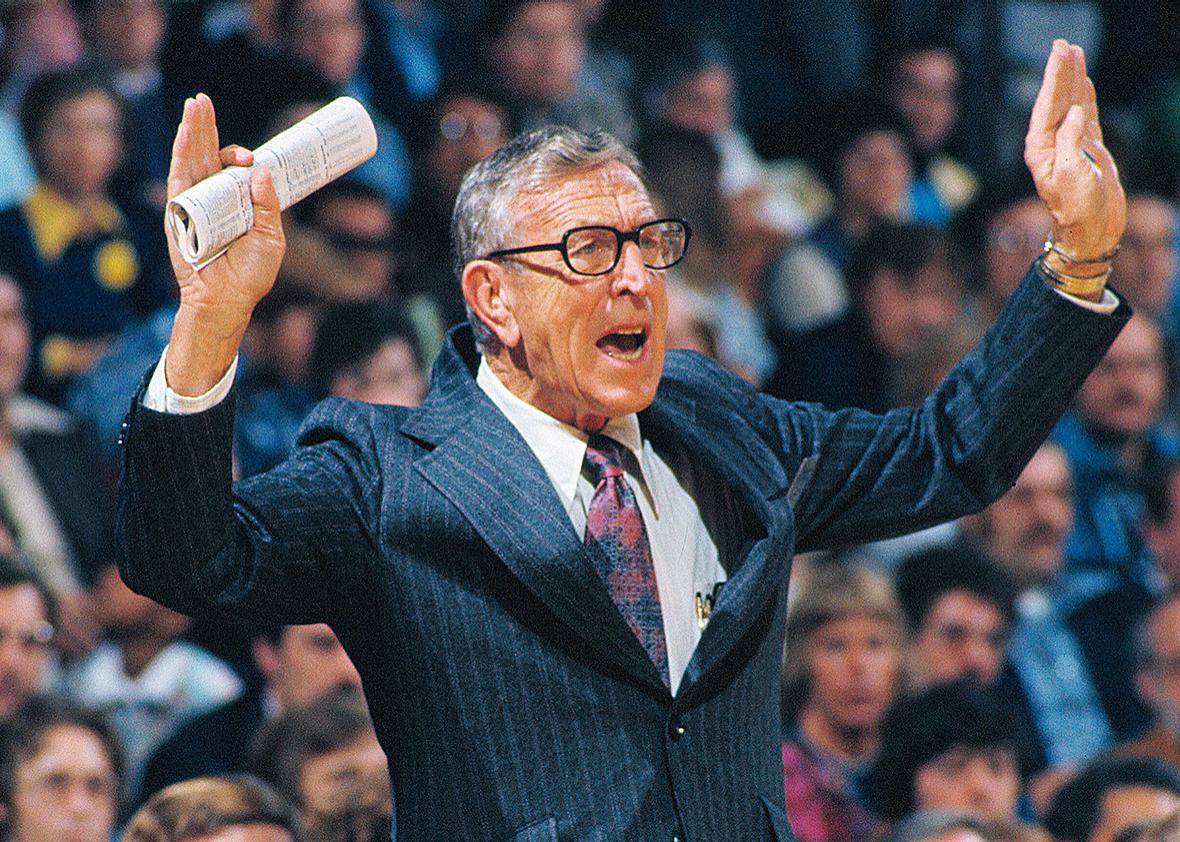
March 31, 1975: The Final of the NCAA Division I Men's Basketball Tournament is held at the San Diego Sports Arena. (It's now named the Pechanga Arena.)

The NCAA Tournament had varied from between 22 and 25 teams since 1953. For the 1974-75 season, due to the frustrations of teams unable to win the Conference Tournaments, and thus qualify for the NCAA Tournament, despite previously having exceptional seasons, the NCAA expanded the Tournament to 32 teams, and allowed teams that failed to win their conference in.

In the Mideast Regional Final, at the University of Dayton Arena in Dayton, Ohio, on March 22, Indiana, then undefeated at 31-0 and ranked Number 1 in the country, faced Number 5 Kentucky, who were 24-3, with 1 of their losses coming to Indiana in Bloomington. This time, Joe B. Hall's Wildcats beat Bobby Knight's Hoosiers, 92-90, and secure Kentucky's 1st berth in what would later be called "the Final Four" since losing the 1966 Final. This would be the only game that Indiana would lose between March 11, 1974 and December 1, 1976, a stretch over which they went 66-1.

The University of California at Los Angeles had won 7 straight titles, and 9 out of 10, under coach John Wooden, before losing in the 1974 Semifinal to North Carolina State. In 1974-75, the Bruins finished the regular season 23-3, losing only away to Stanford by 4 points, away to Notre Dame (again) by 6, and, in their only bad game of the season, away to Washington by 22.

At the time, the league then known as the Pacific-Eight Conference had no Conference Tournament, but UCLA easily won the regular-season title. The Bruins struggled in the NCAA Tournament: They needed overtime to beat Michigan, beat the University of Montana by only 3 points, beat Arizona State to get to the Final Four, and needed overtime to beat the University of Louisville, coached by Wooden's former assistant, Denny Crum.

After that Semifinal win over Louisville, Wooden announced his retirement: Win or lose, the Final against Kentucky would be his last game.
The San Diego Sports Arena,
now the Pechanga Arena

The game was tight. So were the Bruins, as if they were trying too hard to send Wooden out a winner. The lead changed hands several times in the 1st half, which ended with UCLA ahead, 43-40. Kentucky stayed close, and were within 76-75 with less than 7 minutes left.

Dave Meyers -- brother of UCLA women's star Ann Meyers -- was called for an offensive foul on a shot attempt during which he bumped into Grevey. Meyers yelled at referee Hank Nichols for this, and was assessed a technical foul. This led the normally mild-mannered Wooden to run onto the court, and call Nichols a "crook."

Maybe this shook the Wildcats up, because Kevin Grevey, their best player, missed all 3 free throws. Kentucky never recovered, and UCLA won, 92-85. Wooden and UCLA had their 10th National Championship, all within the last 12 years.

As with so many other great college coaches, Wooden cast a shadow that his successors found it difficult to get out of. The following year, Gene Bartow got UCLA back to the Final Four, but lost to Indiana, with Knight leading them to what remains the last undefeated season for an NCAA Division I men's basketball team.

In 1978, Hall led Kentucky to their 1st National Championship in 20 years, while Grevey helped the Washington Bullets win the NBA Championship. Under Larry Brown, UCLA got back to the Final in 1980, losing to Louisville and Wooden's former assistant Crum, who would win the National Championship again in 1986.

UCLA has won 1 National Championship without Wooden, in 1995, under Jim Harrick Sr. In 2006, Ben Howland took them to the Final, where they lost to Florida.

Of Wooden's '75 Bruins: Marques Johnson starred with the Milwaukee Bucks, becoming a 5-time NBA All-Star; Dave Meyers was his teammate on the Bucks; Andre McCarter played a season each with the Kansas City Kings and the Bullets; Ralph Drollinger played 1 season, the expansion season of the Dallas Mavericks, 1980-81; Brett Vroman, that same season, played 11 games with his home-State Utah Jazz, the extent of his NBA career, though he also played in Europe, mostly in Italy; Richard Washington, named the Tournament's Most Outstanding Player, played 6 seasons in the NBA, including 1 as a teammate of Johnson and Meyers, and another as a teammate of Drollinger; and Wilbert Olinde never played in the NBA, but starred in Germany's basketball league.

And then there was Gavin Smith. He transferred to the University of Hawaii, where he set the school's single-season scoring record, which still stands. He became a stuntman, an actor, and a film studio executive. In 2012, he disappeared after leaving a friend's house in the Los Angeles suburbs. Two years later, his remains were found, and a man was convicted of his murder.

John Wooden had been a star player at Purdue University in the early 1930s, before coaching at Indiana State (later the Alma Mater of Larry Bird) from 1946 to 1948, and then at UCLA until 1975. His career record was 664-162 -- including 335-22 from 1963 to 1975, for a percentage of .938.

He won National Championships in 1964, with Walt Hazzard and Gail Goodrich; 1965, with Goodrich; 1967 and 1968, with Lew Alcindor, who later changed his name to Kareem Abdul-Jabbar; 1969, with Kareem and Sidney Wicks; 1970 and 1971, with Wicks; 1972 and 1973, with Bill Walton and Keith Wilkes, who later changed his name to Jamaal Wilkes; and 1975, with Marques Johnson.

In 1972, Sports Illustrated split its Sportsman of the Year award for the 1st time, between Wooden and tennis star Billie Jean King. For King, it was a recognition of not just her performance in her sport, but her activism for it, including for female players to be paid as much as male players. For Wooden, who had won his 8th title, it seemed more like a lifetime achievement award.

It's worth noting that Wooden titled his autobiography They Call Me Coach. Even long after his retirement, his former players, even those who had gone into coaching themselves, still called him "Coach" rather than "John." It's also worth noting that Kareem only let 2 people continue to call him "Lewis": His father, Ferdinand Lewis Alcindor Sr.; and Wooden.

It's also worth noting that Wooden was just 64 when he retired, though he looked older. To put this in perspective: Dean Smith and Gary Williams each coached their last college game at 66, Bobby Knight and Jud Heathcote 67, Don Haskins 69, Roy Williams 70, Lute Olson 72, Denny Crum 74, Mike Krzyzewski and Larry Brown 75, Jim Calhoun 79, Rollie Massimino 83. As of March 31, 2022, Jim Boeheim and Tom Izzo are still coaching at 67, Rick Pitino at 69.

He was the 1st person elected to the Basketball Hall of Fame as both a player and a coach, the former in 1960 and the latter while still coaching in 1973. His success led to UCLA building the Edwin W. Pauley Pavilion in 1965. In 2003, the school named the playing surface the Nell and John Wooden Court. John insisted that, if he were going to be so honored, his late wife's name should go first. That same year, President George W. Bush awarded him the Presidential Medal of Freedom. He died in 2010, 4 months short of his 100th birthday.

In 1995, Marques Johnson's son, Kris Johnson, won a National Championship at Duke. The Johnsons are 1 of 4 father-son pairs to win National Championships, along with Henry and Mike Bibby, Scott and Sean May, and Derek and Nolan Smith; and the only pair to both win for the same school.

*

March 31, 1975 was a Monday. There were no games in the NBA. There were 2 in the American Basketball Association. The Kentucky Colonels beat the San Antonio Spurs, 103-89 at Freedom Hall in Louisville. Artis Gilmore had 36 pionts and grabbed 25 rebounds. And the Utah Stars beat the Virginia Squires, 103-97 at the Salt Palace in Salt Lake City, Utah. Ron Boone scored 36 points.

Baseball was in Spring Training. Football was out of season. There were no games in the NHL. There were 2 in the World Hockey Association. The Winnipeg Jets beat the Indianapolis Racers, 4-1 at the Winnipeg Arena. And the San Diego Mariners beat the Edmonton Oilers, 5-2 at the brand-new Northlands Coliseum in Edmonton.

March 31, 1968: LBJ Drops Out

March 31, 1968: President Lyndon Baines Johnson announces that he is dropping out of this year's Presidential election.

When President John F. Kennedy was assassinated on November 22, 1963, Johnson, as Vice President, became President. He inherited JFK's national security team: Secretary of State Dean Rusk, Secretary of Defense Robert McNamara, National Security Advisor McGeorge Bundy, and Bundy's brother, William Bundy, the Assistant Secretary of State for East Asian and Pacific Affairs. He also inherited JFK's problem in Vietnam.

We will never know for sure how JFK would have handled Vietnam. We know how LBJ handled it: Badly. In his State of the Union Address in January, he said, "The enemy has been defeated in battle after battle." And it was true. But this was one war where winning battles didn't make a bit of difference.

And the American people weren't buying it. By March 1965, the New York Herald Tribune -- always a Republican-friendly newspaper, but it went out of business the next year -- had introduced the expression "credibility gap" to describe the difference between what Johnson was saying about the war and what was actually happening.

On November 30, 1967, Senator Eugene McCarthy of Minnesota announced he was challenging Johnson in the Democratic Primaries for President. While the Vietnam War wasn't the only issue he mentioned in his announcement speech, it was the dominant issue of the speech. And Senator Robert F. Kennedy of New York, JFK's brother and Attorney General, was also facing questions about whether he would run, with antiwar and civil rights activists begging him to do so. For now, he refused, and said he would support Johnson for 1968.

In 1964, having won one of the biggest landslides ever, Time magazine named Johnson its Man of the Year. Its cover showed a flattering portrait of him, with his ranch in the background. In 1967, the magazine named him Man of the Year. This time, the cover image was not flattering. It showed him as William Shakespeare's King Lear, old and out of touch with the people, with three men dressed as women, Lear's daughters: Vice President Hubert Humphrey as loyal Cordelia, clinging to him; and RFK and the Republicans' Senate Leader, Everett Dirksen, as the scheming Goneril and Regan.
(The story of King Lear is based on the myth of Leir, who supposedly reigned over Britain in the 8th Century BC, around the time of the founding of Rome. It's not clear whether he actually existed: Early British history is so poorly recorded, we're not even sure if King Arthur, who supposedly reigned early in the 6th Century AD, was a real figure.)

On January 31, 1968, the Vietcong launched the Tet Offensive. In military terms, it was a massive bungle by the Communists. But in terms of perception, it was a victory for them: The American people saw the enemy overrun the Vietnamese capital of Saigon, and even get inside the U.S. Embassy. The fact that the U.S. won the battle could not be adequately shown on TV. Once again, image was everything.

The Battle of Khe Sanh was also underway, lasting from January 21 to July 9. The U.S. lost 274 men, while Vietcong losses may have been as high as 15,000 -- a ratio of 54 to 1. Still, U.S. troops withdrew from the area, and the Vietcong legitimately claimed victory.

A few days after the Tet Offensive, CBS Evening News anchorman Walter Cronkite went to Vietnam to personally see what was going on. He had dinner with General Creighton Abrams, who had become a friend of his in World War II, and was now the commander of all forces in Vietnam. Abrams told Cronkite a painful truth: "We cannot win this goddamned war, and we ought to find a dignified way out."

On February 27, 1968, back at the CBS News desk in New York, Cronkite told the nation this:

To say that we are mired in stalemate seems the only realistic, if unsatisfactory, conclusion. On the off chance that military and political analysts are right, in the next few months, we must test the enemy's intentions, in case this is indeed his last big gasp before negotiations.
But it is increasingly clear to this reporter that the only rational way out then will be to negotiate, not as victors, but as an honorable people who lived up to their pledge to defend democracy, and did the best they could.
Upon seeing this report, Johnson said, "If I've lost Cronkite, I've lost Middle America."

McNamara had recently resigned as Secretary of Defense, to accept the Presidency of the World Bank, a United Nations agency. Johnson's new SecDef was Clark Clifford, previously the Chairman of the President's Intelligence Advisory Board, and White House Counsel to President Harry Truman.

At the next meeting of the National Security Council, Clifford asked the various members -- including General Abrams, and the man he succeeded as commander of U.S. forces in Vietnam, now the Army's Chief of Staff, General William Westmoreland -- how close the war was to being won, and what had to be changed to make it happen. They all seemed to have the same answer: "We do not know."

On March 12, the New Hampshire Primary was held. Johnson had not officially announced that he was running for a 2nd full term. But he just barely won that Primary, as McCarthy (the Bernie Sanders of his time), having run solely on an antiwar platform, got 42 percent of the vote, to Johnson's 49.

On March 16, Bobby Kennedy announced he was getting into the race. He and LBJ had hated each other for years, and that was one of the worst-kept secrets in America. So it was imperative for RFK to say this: "I do not run for the Presidency merely to oppose any man, but to propose new policy. I run because I am convinced that this country is on a perilous course, and because I have such strong feelings about what must be done, and I feel that I'm obliged to do all that I can."

Now, LBJ was really up against it. There were 2 antiwar candidates in the race. One was a Kennedy, and the man LBJ hated the most. And he could not count on them splitting the antiwar vote, "canceling each other out." What had begun late the previous year as "the Dump Johnson movement," and seemed at first to be just students acting on their white middle-class-and-up privilege, angry and scared over the Vietnam War draft, now had to be taken seriously.

And the war was not going well. Johnson knew that, if he did not end the war before the election on November 5, the election would be a referendum on the war, and incredibly difficult for him to win.

So, on Sunday night, March 31, he spoke from the Oval Office of the White House:

Good evening, my fellow Americans. Tonight I want to speak to you of peace in Vietnam and Southeast Asia. No other question so preoccupies our people...

I am taking the first step to deescalate the conflict. We are reducing, substantially reducing, the present level of hostilities....

The area in which we are stopping our attacks includes almost 90 percent of North Vietnam’s population, and most of its territory. Thus there will be no attacks around the principal populated areas, or in the food-producing areas of North Vietnam...

There has been substantial progress, I think, in building a durable government during these last 3 years. The South Vietnam of 1965 could not have survived the enemy’s Tet offensive of 1968. The elected government of South Vietnam survived that attack, and is rapidly repairing the devastation that it wrought...

So tonight I reaffirm the pledge that we made at Manila, that we are prepared to withdraw our forces from South Vietnam as the other side withdraws its forces to the north, stops the infiltration, and the level of violence thus subsides.

Our goal of peace and self-determination in Vietnam is directly related to the future of all of Southeast Asia, where much has happened to inspire confidence during the past 10 years. We have done all that we knew how to do to contribute and to help build that confidence...

One day, my fellow citizens, there will be peace in Southeast Asia. It will come because the people of Southeast Asia want it: Those whose armies are at war tonight, those who, though threatened, have thus far been spared. Peace will come because Asians were willing to work for it, and to sacrifice for it, and to die by the thousands for it...

What we won when all of our people united just must not now be lost in suspicion, and distrust, and selfishness, and politics among any of our people. And, believing this as I do, I have concluded that I should not permit the Presidency to become involved in the partisan divisions that are developing in this political year.

With America’s sons in the fields far away, with America’s future under challenge right here at home, with our hopes and the world’s hopes for peace in the balance every day, I do not believe that I should devote an hour or a day of my time to any personal partisan causes, or to any duties other than the awesome duties of this office, the Presidency of your country.

Accordingly, I shall not seek, and I will not accept, the nomination of my party for another term as your President.

But let men everywhere know, however, that a strong, and a confident, and a vigilant America stands ready tonight to seek an honorable peace, and stands ready tonight to defend an honored cause, whatever the price, whatever the burden, whatever the sacrifice that duty may require.

Thank you for listening. Good night, and God bless all of you.

A President refusing to run for another term in office had been rare, especially in the 20th Century. Theodore Roosevelt in 1908 and Harry Truman in 1952 were eligible to run for what would have amounted to a 3rd term, but didn't. Calvin Coolidge refused to run for a 2nd full term in 1928. But that was it. In every election from 1972 to 2020, every President eligible to run for re-election did so. (UPDATE: In 2024, Joe Biden ended that streak in mid-campaign.)

The next day was April 1, and millions of people who hadn't seen the speech, and hadn't seen the 11:00 local news the night before, saw the headline in their local newspaper, and wondered if it might not be the biggest April Fool's joke of all time. It wasn't. Such a belief was possible in that pre-social media era.

Charles Kaiser, part of the Dump Johnson Movement and a McCarthy campaign worker, would later write in his book 1968 in America that it was a night that began a brief celebration: "We had four days." Then, on April 4, Dr. Martin Luther King was assassinated, and all good feeling over LBJ dropping out vanished.

Johnson did stay out of the race, and did devote the last 9 months of his Presidency to seeking a peace deal. He didn't get that deal. Why is a story for another time.

His successor, whoever that was going to be, could have ended the war any time he wanted. The man who became that successor ended it 3 days into his 2nd term, 1 day after Johnson died. A little more than 2 years after that, Vietnam was united, and it was Communist.

Kaiser also wrote in his book, "We haven't had any more Vietnams." That book was in 1988. As of March 31, 2022, he is still alive, and in a subsequent edition, he had to add an epilogue to say that Iraq was the next Vietnam.

*

March 31, 1968 was a Sunday. Baseball was in Spring Training. Football was out of season. There were 4 games played in the NBA that day:

* The New York Knicks lost to the Philadelphia 76ers, 123-105 at The Spectrum in Philadelphia.

* The Boston Celtics beat the Detroit Pistons, 110-96 at the Boston Garden.

* The St. Louis Hawks beat the San Francisco Warriors, 129-103 at Kiel Auditorium in St. Loius.

* The Los Angeles Lakers beat the Chicago Bulls, 122-99 at the Los Angeles Memorial Sports Arena.

And there was 1 game in the American Basketball Association: The Denver Rockets beat the New Orleans Buccaneers, 108-100.

* There were 5 games played in the NHL:

* The New York Rangers beat the Montreal Canadiens, 4-2 at the brand-news Madison Square Garden in New York.

* The Toronto Maple Leafs beat the Boston Bruins, 4-1 at the Boston Garden.

* The Pittsburgh Penguins beat the Philadelphia Flyers, 5-1 at The Spectrum in Philadelphia.

* The Detroit Red Wings and the Chicago Black Hawks played to a tie, 5-5 at the Chicago Stadium.

* The St. Louis Blues beat the Minnesota North Stars, 5-3 at the Metropolitan Sports Center in the Minneapolis suburb of Middletown, New Jersey.

March 31, 1943: "Oklahoma!" Premieres On Broadway

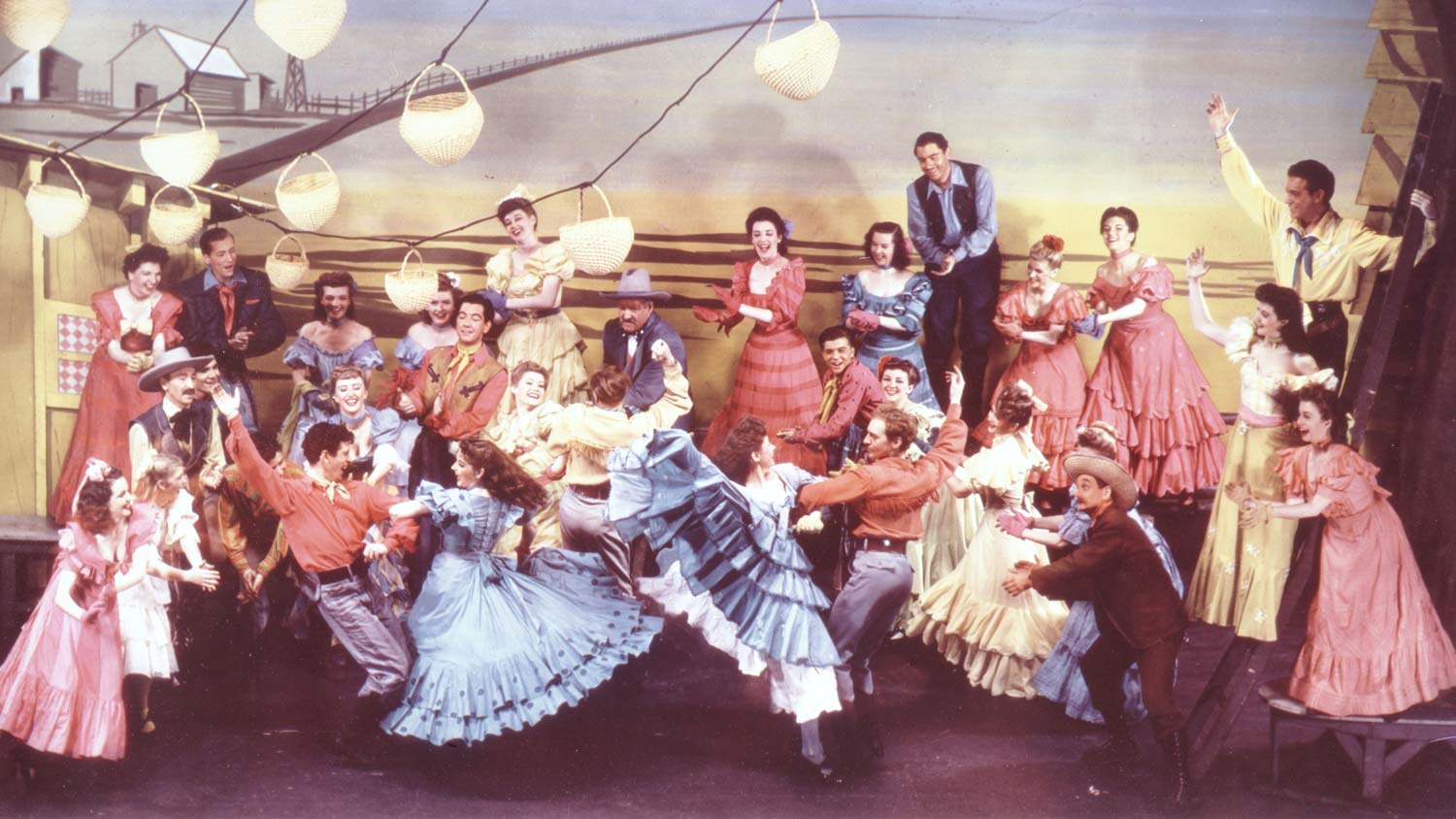
March 31, 1943: The musical Oklahoma! premieres on Broadway, written by Richard Rodgers and Oscar Hammerstein II, beginning one of the great partnerships in musical history -- but also ending another.

In 1919, composer Richard Rodgers began to write songs with lyricist Lorenz "Larry" Hart. It took them until 1925 to have their first Broadway success, The Garrick Gaeties. Over the next 15 years, they would produce many instances of what would later be called "standards" and "The Great American Songbook": "Thou Swell," "Ten Cents a Dance," "Isn't It Romantic?" "Blue Moon," "There's a Small Hotel," "Where Or When," "My Funny Valentine," "The Lady Is a Tramp," and "Bewitched, Bothered and Bewildered."

By 1942, Hart had fallen so deep into alcoholism that he had become unreliable. So when Rodgers wanted to write his next musical, he turned to Oscar Hammerstein II. Neither Hart nor Hammerstein's writing partner, Jerome Kern, objected.

Hammerstein, the grandson and namesake of an opera impresario, and Kern had changed Broadway forever with Show Boat in 1927, including "Old Man River." Later, they wrote "I Won't Dance," "The Way You Look Tonight," and "Smoke Gets In Your Eyes."

Before Show Boat, most musicals were light in tone, light in tune, and light on story. Much like a rock and roll album from the Beatle era onward, a 1920s musical would be lucky to have one of its songs remembered. But Show Boat began the era of the "book musical," a play where the story mattered, might be serious, and the songs and dances were fully integrated into it.

Oklahoma!, based on Green Grow the Lilacs, a 1931 play by Lynn Riggs, took this a step further, featuring musical themes, or motifs, that recurred throughout the show, to connect the music and the story, set in 1907, at the time of Oklahoma gaining Statehood.

And the show would be remembered for considerably more than one song: There would be the title tune, plus "Oh, What a Beautiful Mornin'," "The Surrey with the Fringe on Top," "Kansas City" (not the later Wilbert Harrison song: This is a comedy tune, about how "Everything's up to date" there in 1907), and "People Will Say We're In Love."

It premiered  on March 31, 1943, at the St. James Theatre, at 246 West 44th Street. (It is still in operation.) Rouben Mamoulian directed it, and Agnes de Mille choreographed it. The original stars were Alfred Drake as Curly McLain, Joan Roberts as Laurey Williams, Celeste Holm as Ado Annie Carnes, and Howard Da Silva as Jud Fry.

The show was an absolute smash, just what the public needed during those dark days of World War II. The Tony Awards didn't start until 1948, so it didn't win any. But it ran for 5 years, 2,212 performances, a record that stood until My Fair Lady surpassed it at the end of the 1950s.

Just 8 months after the premiere, Hart was dead, only 48 years old; 2 years after that, so was Kern, at 60. Hammerstein lived on until 1960, Rodgers until 1979.

It was filmed in 1955, with Gordon MacRae as Curly, Shirley Jones (his real-life wife at the time) as Laurey, Gloria Graham as Ado Annie, and Rod Steiger as Jud. The film also had Eddie Albert and James Whitmore.

*

March 31, 1943 was a Wednesday. Actor Christopher Walken was born. But there were no scores on this historic day. The baseball season hadn't yet begun. Football was in the off-season. The NBA hadn't been founded yet. And the NHL had no games scheduled: The Stanley Cup Semifinals had both ended the day before, and the Finals began the next day. The Detroit Red Wings ended up beating the Boston Bruins in 4 straight.

March 31, 1939: Basil Rathbone's Sherlock Holmes Films Begin

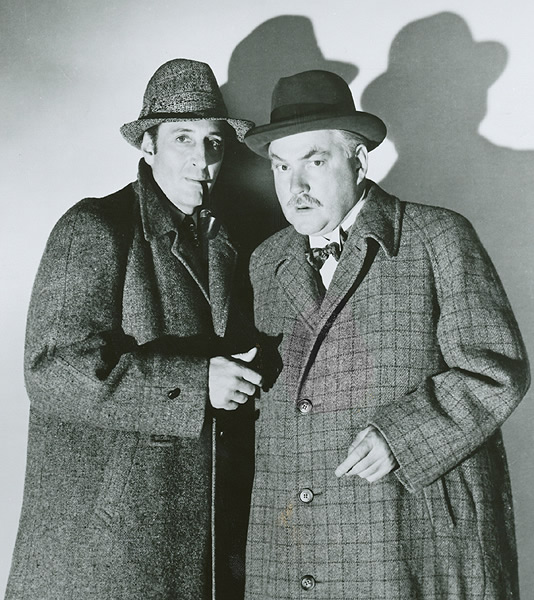
Basil Rathbone (left) and Nigel Bruce

March 31, 1939: The Hound of the Baskervilles premieres, the 1st of 14 films starring Basil Rathbone, coming off his villainous turn as Sir Guy of Gisbourne for the 1938 film The Adventures of Robin Hood, as "consulting detective" Sherlock Holmes, and Nigel Bruce as his partner in crime-solving, Dr. John H. Watson. The Rathbone/Bruce series has defined the characters of Holmes and Watson ever since.

Both characters were created by the man for whom Watson was a stand-in, Dr. Sir Arthur Conan Doyle, who had died in 1930, and thus had only seen stage plays and silent films based on the characters.

Based on Conan Doyle's 1902 novel, Holmes is called on by Sir Henry Baskerville, heir to a family's country estate, to find out about a large, vicious dog that has allegedly killed much of the family. Holmes discovers that the dog belongs to another heir, who wants the family fortune for himself.

This was followed later in 1939 by The Adventures of Sherlock Holmes, pitting the hero against his arch-enemy, Professor James Moriarty, "the Napoleon of Crime," played by George Zucco. Ida Lupino guest-starred.

The subsequent films are moved from the stories' native late Victorian era to the present day. Sherlock Holmes and the Voice of Terror was released in 1942, and was based on the story "His Last Bow," in which an aging Holmes solved a case for the British government on the eve of World War I. In this version, Holmes leaves behind his famed deerstalker cap for a fedora, and stops a Nazi agent from sabotaging Britain at a low point in World War II.

"The Adventure of the Dancing Men," from 1903, was adapted into Sherlock Holmes and the Secret Weapon, released at Christmas 1942, as Moriarty (now played by Lionel Atwill) is now working with the Nazis. Sherlock Holmes in Washington is an original story, and closes with Holmes and Watson riding down Pennsylvania Avenue toward the U.S. Capitol Building in an open convertible, a jarring thought to anyone used to his usual Victorian London setting.

"The Adventure of the Musgrave Ritual" became the 1943 film Sherlock Holmes Faces Death. The 1944 film The Spider Woman is a combination of "The Sign of the Four," "The Adventure of the Dying Detective" and "The Final Problem." The Scarlet Claw, released for Summer 1944, was an original story. "The Adventure of the Six Napoleons" became the 1944 film The Pearl of Death. "The Five Orange Pips" became the 1945 film The House of Fear. The Woman In Green, released for Summer 1945, was an original story, with Henry Daniell as Moriarty.

Pursuit to Algiers, released late in 1945, was an original story. "The Adventure of the Empty House" and "The Adventure of the Blue Carbuncle" were adapted for the 1946 film Terror By Night. The last film, Dressed to Kill, released on June 7, 1946, was an original story.

Despite many subsequent attempts, including the 21st Century films with Robert Downey Jr., and the present-day TV updates Sherlock with Benedict Cumberbatch and Elementary with Jonny Lee Miller, Basil Rathbone is still the defining Holmes for many fans of the character. Bruce died in 1953, Rathbone in 1967.

*

March 31, 1939 was a Friday. Baseball was in Spring Training. Football was out of season. The NBA hadn't been founded yet. And the Stanley Cup Playoffs were between rounds. So there were no scores on this historic day.

There was one noteworthy event connected with sports on this day, although no one would know it for many years: Karl-Heinz Schnellinger was born. The left back starred for German soccer team FC Köln and Italy's AC Milan, and was a member of the West Germany team that reached the 1966 World Cup Final, losing to England.

March 31, 1933: "Gabriel Over the White House" Premieres

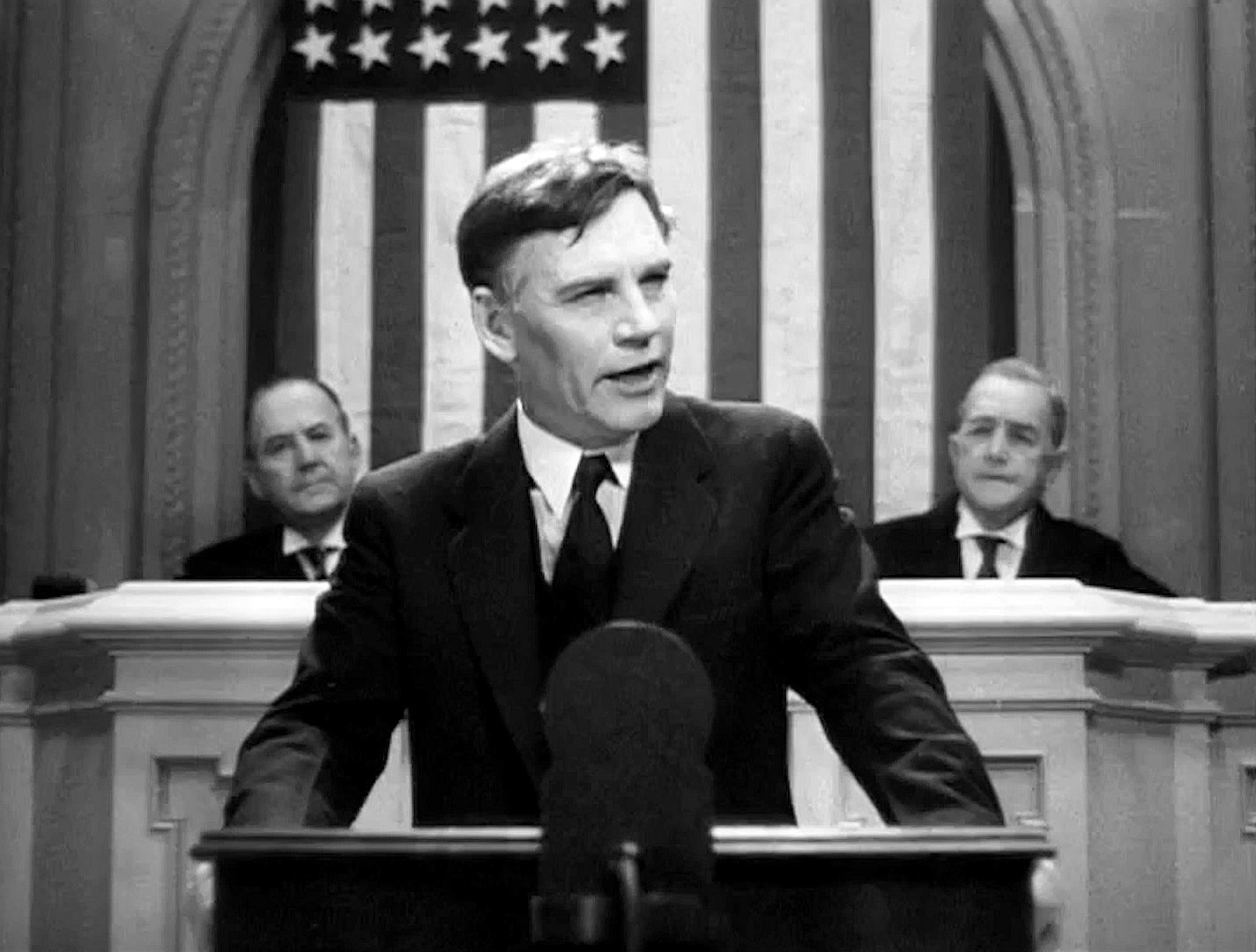
March 31, 1933: The film Gabriel Over the White House premieres, directed by Gregory LaCava, and written by Carey Wilson, based upon the recently-published novel Rinehard: A Melodrama of the Nineteen-Thirties by Thomas F. Tweed. (He was a British author and hero of World War I, and no relation to the legendary American political "boss" William M. Tweed.)

Walter Huston plays a corrupt and philandering President, Judd Hammond, who nearly dies in a car crash, and, believing himself to have been visited by the Archangel Gabriel, changes his ways, using broad executive power to solve the nation's problems, before dying of a heart attack.

The film was backed by media mogul William Randolph Hearst, whose own Presidential ambitions were thwarted about 30 years earlier. He thought, at the depth of the Great Depression, that America needed a dictator to get out of it.

President Franklin D. Roosevelt, in office for merely 27 days, is said to have seen and liked the film. He didn't go as far as Hammond, but he did take steps few Presidents before him would have. Among these was, on this day, the founding of the Civilian Conservation Corps.

The CCC, one of the "alphabet soup" programs of FDR's "New Deal," was not only a major blow against unemployment, it was also one of the country's earliest steps forward in environmental work. It ran until 1942, when World War II made the CCC's staffing impossible, and no longer necessary from a jobs standpoint.

*

March 31, 1933 was a Wednesday. Country singer Anita Carter was born. She was a member of the singing Carter Family. Through her sister June, she was a sister-in-law of Johnny Cash. And she was a distant cousin of later President Jimmy Carter.

Baseball was in Spring Training. Football was out of season. The NBA hadn't been founded yet. And the Stanley Cup Playoffs were underway, but no games were scheduled. So there were no scores on this historic day.

December 31, 1999 & January 1, 2000: The Millennium

December 31, 1999:  The Millennium arrives. The people of planet Earth survived. At a terrible cost. But we hadn't destroyed ourselves. ...