Saturday, October 1, 2022

October 1, 1979: Mean Joe Greene's Coke Commercial

October 1, 1979: The Green Bay Packers beat the New England Patriots, 27-14 at Lambeau Field, on ABC's Monday Night Football. During the broadcast, Coca-Cola first airs a commercial with Joe Greene, the All-Pro defensive tackle for the Super Bowl Champion Pittsburgh Steelers.

It is often called the greatest commercial, or at least the greatest sports-themed commercial, in TV history. Some people say the commercial revealed Greene as a nice guy, thus ruining his image as "Mean Joe Greene." The Steelers went on to win a 4th Super Bowl in 6 years anyway.

The boy's name was Tommy Okon. In 2022, he is 52 years old, lives in Yonkers, New York, and runs a landscaping business. He and Greene have been reunited a few times.
Other countries borrowed the idea, usually with soccer players: Argentina with Diego Maradona, Brazil with Zico, France with Michel Platini, Italy with Dino Zoff, and Germany with Harald Schumacher. Oddly, when Britain did it with David Beckham, it was for Coke's great rival, Pepsi. This is equivalent to Beckham's team, Manchester United, singing Liverpool's anthem, "You'll Never Walk Alone." But I prefer Pepsi to Coke, so maybe it isn't like that.

*

October 1, 1979 was a Monday. This was the only football game played that day. It was a day between the end of baseball's regular season and the start of its Playoffs. And it was too early for the NBA and NHL seasons to start. So this was the only score on this historic day. 

October 1, 1977: Pelé's Testimonial

October 1, 1977: Edson Arantes do Nascimento, a.k.a. Pelé, the greatest soccer player who ever lived, plays his last game at a sold-out Giants Stadium in East Rutherford, New Jersey. It is his testimonial, and he plays the 1st half for the New York Cosmos, with whom he recently won the North American Soccer League Championship, and scores a goal; and the 2nd half for Santos, for whom he starred so long in Brazil's São Paulo State. The Cosmos win, 2-1.

When it's over, he stands at midfield with a microphone, and asks the crowd, "Please, say with me, three times: Love! Love! Love!" They do.

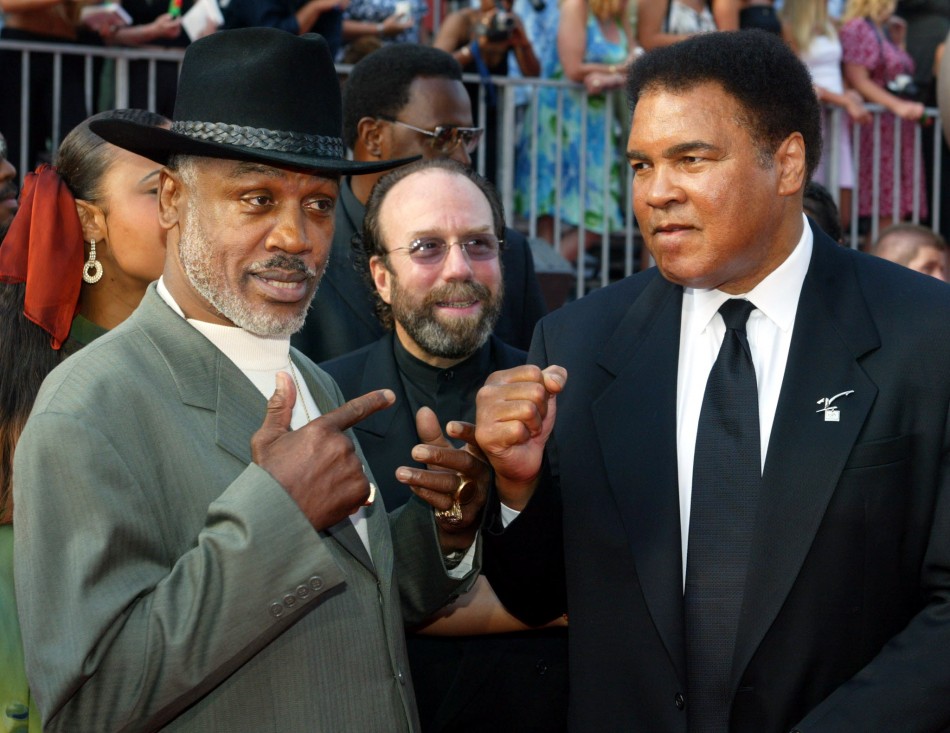
President Jimmy Carter attended. So did Muhammad Ali, the Heavyweight Champion of the World, who frequently called himself "the Greatest of All Time." This time, he says, "Now, I understand: He is greater than me."

*

October 1, 1977 was a Saturday. These Major League Baseball games were played that day:

* The New York Yankees lost to the Detroit Tigers, 10-7 at Yankee Stadium. Elrod Hendricks, briefly a Yankee in a long career mostly with the Baltimore Orioles, hit his only home run in Pinstripes. Reggie Jackson drew a walk in his only plate appearances, and was taken out for a pinch-runner.

The rain that fell on Pelé's testimonial at the Meadowlands comes down much harder on The Bronx, as the Yankees sit through a 2-hour, 42-minute rain delay. But the Yankees clinched the American League Eastern Division title anyway, because...

* The Baltimore Orioles beat the Boston Red Sox, 8-7 at Fenway Park in Boston. The Sox had eliminated the O's from the race the night before, and the Birds returned the favor on this day. Both teams would end up 2 1/2 games behind the Yankees.

* A doubleheader was split at Busch Memorial Stadium in St. Louis. The New York Mets won the 1st game, 8-4. The St. Louis Cardinals won the 2nd game, 4-2. Lou Brock went 2-for-8 with an RBI over the 2 games.

* The Montreal Expos beat the Philadelphia Phillies, 6-5 at Veterans Stadium in Philadelphia. The Expos scored 3 runs in the top of the 12th inning, and the Phillies could only come back with 2 in the bottom of the 12th. Mike Schmidt went 0-for-2 with a walk.

* The Cincinnati Reds beat the Atlanta Braves, 6-2 at Riverfront Stadium in Cincinnati. Pete Rose went 1-for-3, and did not finish the game. Johnny Bench did not start the game, and went 0-for-2.

* A doubleheader was split at Comiskey Park in Chicago. The expansion Seattle Mariners won the opener, 5-3. The Chicago White Sox won the nightcap, 6-1.

* The Minnesota Twins beat the Milwaukee Brewers, 9-1 at Milwaukee County Stadium. Rod Carew went 3-for-5 with an RBI, to raise his batting average to .386. He would finish the next day at .388, after having been above .400 in early September. Robin Yount went 1-for-4 with an RBI.

* The California Angels beat the Kansas City Royals, 4-1 at Royals Stadium (now Kauffman Stadium) in Kansas City. George Brett went 1-for-2 with a walk before being replaced by a pinch-runner. The Yankees would beat the Royals for the AL Pennant.

* The Texas Rangers beat the Oakland Athletics, 6-5 at Arlington Stadium in the Dallas suburb of Arlington, Texas.

* The Los Angeles Dodgers beat the Houston Astros, 4-3 at Dodger Stadium in Los Angeles. The Dodgers would beat the Phillies for the National League Pennant, but lose the World Series to the Yankees.

* The San Francisco Giants beat the San Diego Padres, 13-4 at Candlestick Park in San Francisco.

* The Cleveland Indians and the expansion Toronto Blue Jays were rained out at Exhibition Stadium in Toronto. They played a doubleheader the next day. The Jays won the 1st game, 2-1 in 11 innings. The Indians won the 2nd game, 5-4.

* The Chicago Cubs and the Pittsburgh Pirates were rained out at Three Rivers Stadium in Pittsburgh. They played a doubleheader the next day. The Pirates swept, 5-1 and 3-2.

There were also college football games played on this day, including the following:

* Number 1 Oklahoma beat Kansas, 24-9 at Owen Field in Norman, Oklahoma. Oklahoma won the Big Eight title. 

* The night before, Number 2 Southern California beat Washington State, 41-7 at the Los Angeles Memorial Coliseum.

* Number 3 Michigan beat Number 5 Texas A&M, 41-3 at Michigan Stadium in Ann Arbor.

* Number 4 Penn State were upset by Kentucky, 24-20 at Beaver Stadium in State College, Pennsylvania.

* Number 6 Ohio State beat Southern Methodist (SMU), 35-7 at the Cotton Bowl in Dallas.

* Number 7 Colorado beat Army, 31-0 at Michie Stadium in West Point, New York.

* Number 8 Texas beat Rice, 72-15 at Memorial Stadium in Austin. While the Longhorns had running back Earl Campbell, who went on to win the Heisman Trophy, the big story in this game was placekicker and punter Russell Erxleben, who set a record with a 67-yard field goal. The record would be tied twice within the next year and change, but never broken, partly because kicking tees have been banned.

Erxleben remains the only punter to be a 3-time All-American, and played 5 seasons for the New Orleans Saints, plus 1 as a "scab" for the Detroit Lions during the 1987 strike. He went into the securities business, and has twice served time in prison for fraud. His son, Ryan Erxleben, went into the family business -- punting, that is, not securities (fraudulent or otherwise), at Texas Tech, although he didn't make it to the NFL. 

* Number 9 Florida were upset by Louisiana State, 36-14 at Tiger Stadium in Baton Rouge, Louisiana.

* Number 10 Alabama beat Georgia, 18-10 at Bryant-Denny Stadium in Tuscaloosa, Alabama. 'Bama won the Southeastern Conference title, and beat Ohio State in the Sugar Bowl.

* Number 11 Nebraska beat Indiana, 31-13 at Memorial Stadium in Lincoln, Nebraska.

* Number 12 Arkansas beat Texas Christian (TCU), 42-6 at Amon G. Carter Stadium in Fort Worth, Texas. Arkansas went on to lose to Texas, costing them the Southwest Conference title, but beat Oklahoma in the Orange Bowl.

* Number 14 Notre Dame beat Michigan State, 16-6 at Notre Dame Stadium in South Bend, Indiana.

* Number 20 Arizona State were upset by Missouri, 15-0 at Sun Devil Stadium in the Phoenix suburb of Tempe, Arizona.

* The University of Washington lost to Minnesota, 19-17 at Memorial Stadium in Minneapolis. But Washington rebounded to win the Pacific-8 title, and beat Michigan in the Rose Bowl.

* Duke beat Navy, 28-16 at Wallace Wade Stadium in Durham, North Carolina.

* Columbia beat Pennsylvania, 30-18 at Baker Field in Manhattan.

* Among New Jersey's teams, Rutgers beat Cornell, 30-14 at Schoellkopf Field in Ithaca, New York. And Princeton lost to Brown, 10-7 at Brown Stadium in Providence, Thode Island.

Also on this day, the St. Louis Blues retired the Number 3 of Bob Gassoff, a defenseman who'd been with them since 1973. The preceding May 27, he was killed in a motorcycle accident in Gray Summit, Missouri. He'd been racing motorcycles with friends at a barbecue at the home of teammate Garry Unger, but had driven off the property, wasn't wearing a helmet, and was hit by a car. The native of Quesnel, British Columbia was only 26.

In high school football, my Alma Mater, East Brunswick High School in Central New Jersey, beat Madison Central, 28-0 at Vince Lombardi Field in Old Bridge. Madison Central is now named Old Bridge.

And in English soccer, Arsenal of North London beat West Ham United of East London, 3-0 at Highbury in North London.

October 1, 1975: The Thrilla In Manila

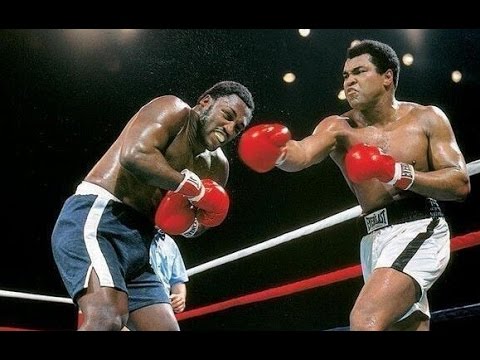
October 1, 1975: Heavyweight Champion Muhammad Ali fights former Heavyweight Champion Joe Frazier for the 3rd time, at the Araneta Coliseum in Quezon City, the capital of the Philippines. Quezon City is the national capital, and the arena is located about 5 miles east of the country's largest city, Manila.

Ali, under his birth name Cassius Clay, was an Olympic Gold Medalist in boxing, in 1960 in Rome. Frazier was as well, in 1964 in Tokyo. A man they would both memorably fight, George Foreman, followed them, in 1968 in Mexico City.

Ali first won the title in 1964 by knocking out Sonny Liston. He held it until he was stripped of it in 1967, for refusing to accept the U.S. military draft. Foreman won what was essentially a tournament for the title, ending in 1970 with a win over top contender Jimmy Ellis.

Ali got his conviction overturned by the Supreme Court, and his boxing license restored -- but not his title. That, he would have to win back. When he and Frazier met for "The Fight of the Century" at Madison Square Garden in 1971, it was the 1st time 2 undefeated Heavyweight Champions had ever met in the ring. It was a hard, even fight until the 15th and final round, when a classic Philly left hook floored the Louisvillian, and Ali received his first-ever knockdown, from which he got up to finish the fight, and his first-ever professional loss.

Ali got revenge in 1974, also at The Garden, although neither man was champion at the time. Frazier had lost the title in 1973 to Foreman, whom Ali subsequently beat to regain the title in Kinshasa, Zaire (now the Democratic Republic of the Congo), the fight known as "The Rumble In the Jungle."

Ali mocked Frazier for his fighting ability and his looks, saying, "It'll be a thrilla and a chilla and a killa, when I get the Gorilla in Manila!"

But it was intensely hot inside the Coliseum when "The Thrilla In Manila" was fought. Still, like the other 2 Ali-Frazier fights, it lived up to the hype. Ali led in the early rounds, but in the 5th round, Frazier began to turn the tide. At the end of the 6th, Ali, who'd been trash-talking (as we would say today) all the way, yelled, "They told me Joe Frazier was washed up!" Frazier yelled back, "They lied!"

Ali won the 8th round, but Frazier clobbered him in the 9th, leading him to go back to his corner and tell his trainer, Angelo Dundee, "Man, this is the closest I've ever been to dying." But Ali had landed so many punches that Frazier's face was swelling, and he was having trouble seeing.

Early in the 13th round, Ali hit Frazier in the jaw with a thunderous right hook, sending Frazier's mouthpiece flying out of his mouth and out of the ring. Ali dominated the 14th as well, because Frazier was too tired and having too much difficulty seeing. Ali was hitting Frazier with the same kind of punches that knocked out Foreman a year earlier. Except, when Ali knocked Foreman out, it took just a few seconds. He had been throwing these things at Frazier for the last 2 rounds, and Frazier simply would not go down.

Frazier had more courage and endurance than sense, and refused to go down, and refused to quit. As the 15th and final round approached, Frazier wanted to continue. His trainer, Eddie Futch, told him that he was going to stop the fight. Frazier said no: "I want him, boss." He was unable to talk Futch out of it: "The fight's over, Joe. No one will forget what you did here today." And he told the referee, Carlos Padilla, to stop the fight. Padilla did so.

Ali retained the crown, the belt, the title, whatever you want to call it. He got up off his stool, raised his right arm in victory... and collapsed. He had nothing left to give. If Futch had let Frazier fight the 15th round, he would have knocked Ali out.

It's been called the greatest prizefight in history. Today, most people know the name Manila for 3 things: The brown office folders that bear its name, its role in the Pacific Theater of World War II, and Ali-Frazier III.

Howard Cosell, who covered the fight for ABC Wide World of Sports, later said, "A big piece of Ali remained in that ring." Indeed, at age 33, with nothing left to prove, Ali probably should have retired right there. Instead, he kept fighting for 6 more years. So did Frazier. Both men would have their moments, but neither was ever so good again.
"The Greatest of All Time" developed Parkinson's disease as a result of his taking so many blows to the head. The big mouth that got him the early nickname "The Louisville Lip" was rendered mostly silent by the turn of the 21st Century. He died on June 3, 2016, at age 74.

"Smokin' Joe" would continue to alternately feud with Ali and reconcile with him, restart the feud, and reconcile again. Joe died of liver cancer on November 7, 2011, at age 67, after 30 years of training fighters at his gym in North Philadelphia.

One of the fighters he trained was his son Marvis, who, like Ali on that awful night in 1980, would get slaughtered by Larry Holmes in Las Vegas. His daughter Jackie Frazier-Lyde also fought professionally, as has Ali's daughter Laila Ali. (She went 24-0 with 21 knockouts, and won a majority decision against Frazier-Lyde in Verona, New York in 2001.) Another daughter of Ali's, Maryum, is a rapper using the name May May.

Opened in 1960, the Araneta Coliseum is still used for sporting events and concerts. A shopping center 2 blocks away is named Ali Mall.

*

October 1, 1975 was a Wednesday. Baseball was between the regular season and the Playoffs. The 1975-76 basketball and hockey seasons hadn't started yet. And the NFL was in midweek. But there was one score on this historic day, in the Canadian Football League: The Ottawa Rough Riders beat the Hamilton Tiger-Cats, 16-11 at Ivor Wynne Stadium in Hamilton, Ontario.


October 1, 1974: Harry Chapin Releases "Cat's In the Cradle"

October 1, 1974: Harry Chapin releases "Cat's In the Cradle," a single off his album Verities & Balderdash -- another way of saying, "Truths and Lies."

It was his biggest album ever, and "Cat's in the Cradle" turned out to be his biggest hit ever. It was an idea suggested to him by his wife Sandy, telling him that, because of all his touring, he wasn't around enough for the kids. Having seen his own parents split up when he was 7 years old, Harry got it, and he gave her a writing credit on the song.

In the 1st verse, a child is born, but the father is too busy to spend time with him. In the 2nd verse, the boy turns 10, but the father says he's got a lot to do. After both verses, the boy says, "I'm gonna be like him."

In the 3rd verse, the boy has come home from college. Now, the tables are turned: The father has time for the son, but the son doesn't have time for the father. In the 4th and last verse, the long-retired father calls the moved-away son on the phone, but the son still has no time for the father, citing that his own kids are sick. And as the father hangs up the phone, it occurs to him: "My was just like me."

Every verse ends with the same question, in the 1st 2 the son asking the father, in the last 2 the father asking the son, "When you coming home?" and the answer being, "I don't know when, but we'll get together then. We're gonna have a good time then." But the good idea never comes. The song doesn't say so, but it implies that the father will die having learned his lesson too late, and never will fully connect with the son.

The song resonated with people in those days immediately after Watergate and the Vietnam War, each of which often seemed like a clash between generations. It hit Number 1.

The album also included "Thirty Thousand Pounds of Bananas," an allegory about Vietnam. Harry is basically reciting the cold hard facts about a crash, including the statistics of the things the driver hit before he stopped,

While he based it on a real crash in Scranton, Pennsylvania in 1965, he based it on the way the story was told to him, not on how it actually happened. The driver, 33-year-old Eugene Sesky, was not only not "a young driver, just out on his second job," he was actually a hero: Knowing that he was doomed, he hung out of his truck cab and yelled and waved for people to get out of the way, much like train engineer Casey Jones in Mississippi in 1900. As a result, as in Jones' crash, he was the only person to die.

In spite of what "Cat's In the Cradle" suggested about his own family, Harry must have done something right: His son Josh helps his mother run the Harry Chapin Foundation, and his daughter Jen followed him both into professional music-making and hunger relief.

*

October 1, 1974 was a Tuesday. Football was in midweek. The NHL season started on October 9. The WHA season started on October 15. The NBA season started on October 17. The ABA season started on October 18. But these games were played in Major League Baseball, on the next-to-last day of the regular season:

* The New York Yankees lost to the Milwaukee Brewers, 3-2 at Milwaukee County Stadium. George Scott singled Jack Lind home with the winning run in the bottom of the 10th inning, stopping George "Doc" Medich from becoming a 20-game winner.

This loss eliminated the Yankees from the race for the American League Eastern Division title. They finished 2 games behind, their closest call to the postseason in 10 years, but it wasn't enough.

* The New York Mets lost to the Philadelphia Phillies, 2-1 at Shea Stadium. Jim Lonborg, the ace of Boston's 1967 "Impossible Dream," outpitched Tom Seaver, the ace of New York's 1969 "Miracle," though Seaver struck out 14. Ted Martínez doubled home the decisive run in the bottom of the 5th. Mike Schmidt went 0-for-3.

* The Montreal Expos beat the St. Louis Cardinals, 3-2 at Jarry Park in Montreal. Mike Jorgensen, later to play for the Cards, hit a home run in the bottom of the 8th inning to win it.

* The Boston Red Sox beat the Cleveland Indians, 7-4 at Fenway Park in Boston. Steve Barr made his major league debut, and went the distance for his 1st major league win. He would only win 2 more, and threw his last major league pitch at age 25. Carl Yastrzemski did not play, but Jim Rice hit the 1st of his 382 major league home runs.

Frank Robinson went 0-for-4 with a walk for the Indians. Two days later, team owner Ted Bonda fired manager Ken Aspromonte, and hired Robinson, making him MLB's 1st black manager.

* The Atlanta Braves beat the Cincinnati Reds, 7-1 at Atlanta Stadium. Buzz Capra pitched a complete-game victory, while Jack Billingham didn't even get out of the 1st inning.

Hank Aaron did not play. The next day was his last game for the Braves, having hit 733 home runs for them in Milwaukee and Atlanta. This was also the last game at the stadium under its original name: The next season, it became Atlanta-Fulton County Stadium.

For the Reds, Pete Rose went 1-for-3, and Johnny Bench went 0-for-4.

* The Pittsburgh Pirates beat the Chicago Cubs, 6-5 at Three Rivers Stadium in Pittsburgh. Bob Robertson won it with a 2-run home run in the bottom of the 8th inning. Willie Stargell went 0-for-3 with a walk. This win, and the Cardinals' loss, meant that the Pirates clinched the NL Eastern Division, and they won it by a game and a half.

* The Baltimore Orioles beat the Detroit Tigers, 7-6 at Tiger Stadium in Detroit. Jim Palmer and Joe Coleman Jr. started, but the game was decided in the top of the 9th, when Andy Etchebarren singled Brooks Robinson home with the winning run off John Hiller, making Grant Jackson the winning pitcher, and the O's the AL East Champions for the 5th time in the Division's 6 seasons to that point.

Robinson went 1-for-5. So did Tiger legend and Baltimore native Al Kaline. Bill Freehan went 3-for-3 with 2 home runs and 4 RBIs. The next night, Kaline played his last game.

* The Chicago White Sox beat the Kansas City Royals, 2-1 at Comiskey Park in Chicago. Jim Kaat won his 21st game, outpitching Doug Bird. For the Royals, rookie George Brett went 0-for-4.

* The Minnesota Twins beat the Texas Rangers, 6-0 at Metropolitan Stadium in the Minneapolis suburb of Bloomington, Minnesota. Dave Goltz pitched a 2-hit shutout, while the ill-handled David Clyde didn't get out of the 3rd inning. Rod Carew went 2-for-5. The Rangers finished 5 games behind the A's in the AL West. They would not do better than this in a full season, unaffected by a strike, until 1996.

* The California Angels beat the Oakland Athletics, 2-0 at Anaheim Stadium (now Angel Stadium of Anaheim). Frank Tanana pitched a 6-hit shutout. Jim "Catfish" Hunter was the starting pitcher for the A's, but was taken out after 3 scoreless innings, and Ken Holtzman turned out to be the losing pitcher. Reggie Jackson did not play.

Despite this defeat, the A's won the AL Western Division by 5 games over the Texas Rangers, for their 4th straight Division title. They beat the Orioles for their 3rd straight AL Pennant.

* The Los Angeles Dodgers beat the Houston Astros, 8-5 at the Astrodome in Houston. Don Sutton outpitched J.R. Richard.

The Dodgers finished with the best record in baseball, 102-60, but only won the NL Western Division by 4 games over the Reds. They beat the Pirates for the NL Pennant, and bragged about how they were a better team than the defending World Champion A's. The A's beat them in the World Series, clinching in Game 5. That should have shut the O'Malleys up, but they still said they were the better team. For all their talk between 1965 and 1981, they did not win a World Series between those seasons.

* And the San Francisco Giants beat the San Diego Padres, 7-2 at Candlestick Park in San Francisco. Willie McCovey appeared as a pinch-hitter for the Padres against his former team, but did not reach base. Rookie Dave Winfield did not play.

October 1, 1971: Walt Disney World Opens

October 1, 1971: Walt Disney World opens in Bay Lake, Florida, 15 miles southwest of Orlando. It had been 16 years since Disneyland opened outside Los Angeles in Anahein, California.

Why a 2nd park? Was "Uncle Walt" simply greedy? No: By 1959, he was seeing figures showing that, at the time, 75 percent of America's population lived east of the Mississippi River, but only 5 percent of Disneyland's visitors came from there. And he didn't like some of the businesses that were sprouting up near Disneyland.

So he wanted a place convenient to the East, but with more land, so he could control what went up around it. If there's one thing a rich man values more than money, it's control.

He had an idea he called "EPCOT": Experimental Prototype Community Of Tomorrow. In other words, while there would be a Main Street, U.S.A., a Fantasyland and a Frontierland, as with Anaheim, the place would be more about tomorrow than yesterday; about looking forward, not back; futurism, not nostalgia. Emblematic of this is the park's famed indoor roller coaster, Space Mountain.
The project was barely in the planning stage when Disney died from cancer on December 15, 1966. His brother Roy Disney saw it through, but only the original part of the park, known as the Magic Kingdom, opened in 1971.

"The Most Magical Place On Earth" was built over a series of tunnels that allowed employees or guests to move through the park out of sight. As with its California counterpart, the centerpiece is a castle, this one named Cinderella Castle, and reaching a higher peak, 189 feet.

All the water in the park is kept moving. Not having standing water nearly -- but not completely, as nothing is 100 percent effective -- eliminates one of the biggest problems with being in Florida: Disney World has hardly any mosquitoes.

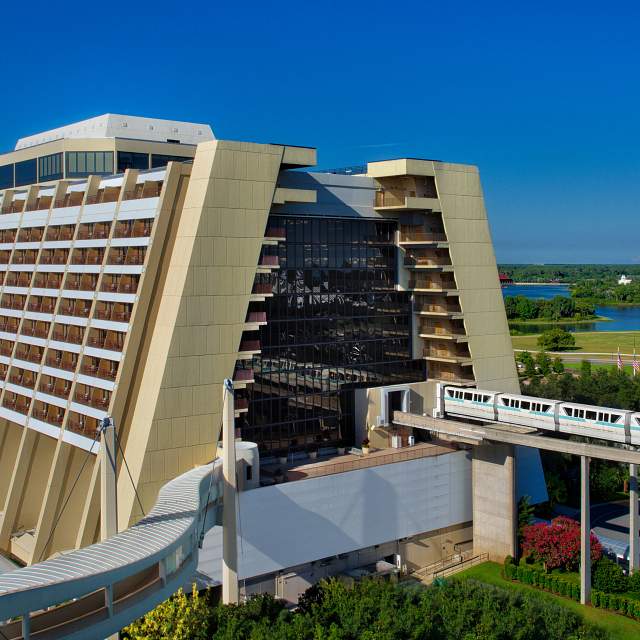
Disney's Contemporary Resort also opened on the Magic Kingdom's opening day. It is a hotel, and a terminus for the park's monorail system.
November 17, 1973: On vacation, trying to get away from the troubles of the Watergate scandal, and staying at the Contemporary Resort, President Richard Nixon decides to hold a press conference. He gets mad at the questions about his integrity, and finally says, "I welcome this sort of examination, because people have gotta know whether or not their President is a crook! Well, I'm not a crook! I've earned everything I've got!"

The line becomes remembered as "I am not a crook." And, technically speaking, he wasn't a "crook." He was an arch-criminal. His recently-resigned Vice President, Spiro Agnew, forced out over charges of bribery and tax evasion? He met the definition of a crook.

October 1, 1982: Epcot, as Walt imagined it, finally opened, crowned by a "Spaceship Earth." It included several sections devoted to various countries around the world, inspired by the Busch Gardens theme parks in nearby Tampa and in Williamsburg, Virginia.
March 8, 1983: Another Republican President took time off to go to Orlando -- although the speech in question was not given at the Disney World complex. Addressing the National Association of Evangelicals, 28 years after the former actor had helped open Disneyland, Ronald Reagan gave a speech appealing to the anti-atheist, and therefore anti-Communist, views of the attendees, attacking the Soviet Union -- not with bombs, but with words:

I urge you to beware the temptation of pride, the temptation of blithely declaring yourselves above it all and label both sides equally at fault, to ignore the facts of history and the aggressive impulses of an evil empire, to simply call the arms race a giant misunderstanding and thereby remove yourself from the struggle between right and wrong, and good and evil.

Uncle Walt would have approved.

November 4, 1986: I visited Disney World with my family. My parents had wanted to go for a long time, and could now afford it. I wasn't crazy about the idea, but my sister was then 7 years old, so it was more for her than for anything else.

The place quickly grew on me, and, despite the distaste I eventually developed for Disney the man, it was a great experience. At one point, I lost my wallet, and it was found and returned within 2 hours. At the time, I was relieved. As time went by, I become very impressed with the efficiency of the place.

My parents noticed just how much of it had been bought by Disney from the 1964-65 New York World's Fair. My grandmother was with us, and, remembering the 1939-40 edition, kept saying, "That wasn't the real World's Fair." But she enjoyed it, too. (We also visited nearby Sea World, the John F. Kennedy Space Center at Cape Canaveral -- my father and I, both science fiction fans, insisted -- and, at the other end of Florida, a cousin of my father's outside Tampa.)

January 26, 1987: The day after the New York Giants won Super Bowl XXI, a commercial began airing. To the tune of "When You Wish Upon a Star," from the 1940 Disney cartoon Pinocchio, highlights of the game were shown, mostly of the game's Most Valuable Player, Giant quarterback Phil Simms.

Halfway through, an unseen announcer said, "Phil Simms: You've just won the Super Bowl! Now, what are you going to do?" And Simms looked into the camera and said, "I'm going to Disney World!" Sure enough, Simms and his teammates attended a parade in their honor at Disney World, and a tradition was born: Not just for Super Bowl MVPs, but for other sports stars. (Mark McGwire did it after breaking * Roger Maris' home run record in 1998.)

What I didn't know for several years was that 2 versions had been filmed, one for the East, and one for the West, in which Simms said, "I'm going to Disneyland!" Since the game was played at the Rose Bowl, on the other side of Los Angeles, they went to Disneyland first.

May 1, 1989: Disney's Hollywood Studios opens on Disney World land, to compete with the nearby Universal Studios theme park.

June 1, 1989: Disney's Typhoon Lagoon, a water park, opens.

November 4, 1989: Orlando becomes a major league sports city, with the debut of an NBA team. It is named in honor of the Magic Kingdom: The Orlando Magic. The team has made the Playoffs 16 times in its 1st 32 seasons, including 2 trips to the NBA Finals. But it has never explained what "one Magic" is called. Then again, neither have their Florida arch-rivals, the Miami Heat said what one of them should be called.

April 1, 1995: Disney's Blizzard Beach, a water park with a contradictory name, opens.

April 22, 1998: Disney's Animal Kingdom opens, based on the safari at Six Flags Great Adventure in Jackson, New Jersey and the nearby Busch Gardens park in Tampa.

*

October 1, 1971, the day that Walt Disney World opened, was a Friday, and fell between the end of baseball's regular season and the start of its Playoffs, in an NFL midweek, and a little bit before the start of the 1971-72 basketball and hockey seasons. So there were no scores on this historic day.

October 1, 1970: The Riotous Finale of Shibe Park/Connie Mack Stadium

October 1, 1970: Twenty years to the day after the greatest day in Phillies history thus far (and it would remain such for another 10 years), perhaps the darkest day in Phillies history takes place -- and this was in a win.
The Phils play the final game at Connie Mack Stadium, formerly Shibe Park, and the irony of playing the Montreal Expos, a team that only began in 1969, at a stadium that opened in 1909 is felt. The Phillies gave out commemorative seat slats, made of wood, which became not souvenirs, but clubs to hit people over the head.
A surviving slat. That P logo was in use from 1970 to 1991.
The game goes to 10 innings, and Oscar Gamble singles home Tim McCarver with the winning run, as the Phils win, 2-1. Before McCarver can cross the plate, fans are already storming the field, and they tear the stadium apart. The grass is torn up. The scoreboard and the advertising signs are ripped out. Seats are unscrewed. According to a story I read, a man described as "one muscular miscreant" went into the men's room, ripped out a toilet bowl, carried it out of the park, and toted it down Lehigh Avenue and into the Broad Street subway.
Somehow, home plate was saved from the crowd, and was installed the next year before Veterans Stadium opened.
Built in 1909 as Shibe Park, by Ben Shibe, owner of the American League's Philadelphia Athletics, the A's played there until 1954, after which they moved to Kansas City. The National League's Philadelphia Phillies, unable to maintain their nearby ballpark, Baker Bowl, anymore, moved into Shibe Park in the middle of the 1938 season. In 1953, in honor of the man who still owned the A's (at least, for another year) and managed them for 50 years (1901-50), it was renamed Connie Mack Stadium.
Phillies Hall-of-Famer Richie Ashburn once said, "It looked like a ballpark. It smelled like a ballpark. It had a feeling and a heartbeat, a personality that was all baseball." But as North Philadelphia incurred white flight, urban decay, and the 1964 race riot, the demand for a new ballpark intensified. The Vet was supposed to open in 1968, but delays pushed it back to 1971. It lasted until 2003. The following season, the Phillies moved into Citizens Bank Park.

After the Phillies moved out of Connie Mack Stadium, 587 seats were transferred 600 miles south to the Phillies' Class A team in Spartanburg, South Carolina, and installed in Duncan Park before the 1971 Western Carolinas League season. They make up nearly 1/5th of the 3,000 seats at that 3,000-seat ballpark. The Phillies had a farm team there from 1963 to 1994, but it has hosted only amateur baseball since 2005.

A fire gutted Connie Mack Stadium on August 20, 1971, and it sat derelict, as a homeless encampment and a site for drug deals, largely because the responsibility for tearing it down belonged to whoever owned it -- and, with the Phillies having sold it, no one was sure who owned it.
Phillies player Tony Taylor,
surveying what was left of his former home park, 1974.
Incredibly, the scoreboard clock still worked to the end.

Finally, Mayor Frank Rizzo, in his usual bombastic style, hired the Geppert Brothers demolition company, and told them, "Tear the fucking thing down!" They did.
The bell tower at the home plate entrance,
including Connie Mack's old office, was the last part to go.

When I first visited the Shibe site in 1987, it was an empty lot, and the only evidence that baseball had been played there for 62 seasons was a strip mall across 21st Street, with a store called The Phillies Pharmacy. In 1992, the Deliverance Evangelistic Church was built on the site. A historical marker now stands on Lehigh Avenue, telling of the glory days of the A's and the Phils.
Deliverance Evangelistic Church

The Phillies played at Veterans Stadium until 2003. Once again, home plate was moved to the new park, Citizens Bank Park. So it is possible that, in the 2022 season, the Philadelphia Phillies are using the same home plate that the Philadelphia Athletics were using in 1909.

*
October 1, 1970 was a Thursday. These other Major League Baseball games were played that day:
* The New York Mets lost to the Chicago Cubs, 4-1 at Shea Stadium. Ken Singleton hit 2 doubles for the Mets, but those were the only hits that Fergie Jenkins allowed, as he outpitched Jim McAndrew. Ernie Banks did not play. Thus ended the Mets' defense of their World Championship, a far cry from revenge for the Cubs, whom they victimized for the National League Eastern Division title the season before.
* The Baltimore Orioles beat the Washington Nationals, 3-2 at Memorial Stadium in Baltimore. Frank Robinson went 1-for-3 with a home run. Brooks Robinson also went 1-for-3. Davey Johnson singled home the winning run in the bottom of the 9th inning, to make a winning pitcher of Jim Hardin, in relief of Jim Palmer.
* The Cincinnati Reds beat the Atlanta Braves, 4-1 at Riverfront Stadium in Cincinnati. Pete Rose went 0-for-4. Johnny Bench went 0-for-3 with a walk. Hank Aaron hit his 592th career home run.
* The Detroit Tigers beat the Cleveland Indians, 1-0 at Tiger Stadium in Detroit. John Hiller pitched a 2-hit shutout. Al Kaline did not play.
* The Minnesota Twins beat the Kansas City Royals, 4-0 at Metropolitan Stadium in the Minneapolis suburb of Bloomington, Minnesota. Jim Kaat pitched 7 innings and hit a home run, while Stan Williams and Ron Perranoski completed the 3-hit shutout. Harmon Killebrew went 0-for-2 before leaving the game. Rod Carew did not play.
* The Pittsburgh Pirates beat the St. Louis Cardinals, 9-5 at Busch Memorial Stadium in St. Louis. Roberto Clemente did not play. Willie Stargell went 0-for-3. Lou Brock only appeared as a pinch-hitter, but got a hit. Joe Torre went 4-for-4 with 2 RBIs.
* The Houston Astros beat the San Francisco Giants, 5-4 at the Astrodome in Houston. Willie Mays went 2-for-4 with a walk.
* The Los Angeles Dodgers beat the San Diego Padres, 7-4 at San Diego Stadium (later Jack Murphy Stadium and Qualcomm Stadium).
* The California Angels beat the Chicago White Sox, 5-4 at Anaheim Stadium (now Angel Stadium of Anaheim). Bill Melton hit a home run for the White Sox in the top of the 13th inning, but un the bottom of the 13th, the Angels got a walk from Mickey Rivers, a game-tying double from Billy Cowan, a walk from Chico Ruiz, and a game-winning single from Mel Queen.
* The Oakland Athletics beat the Milwaukee Brewers, 5-4 at the Oakland Coliseum. Bobby Brooks won it with a home run in the bottom of the 9th. Reggie Jackson went 2-for-5 with 2 RBIs.
* The New York Yankees and the Boston Red Sox had ended their seasons against each other the day before, with the Yankees winning, 4-3 at Fenway Park. The Yankees won 93 games, their highest total between 1964 and 1976, but they finished 15 games behind the eventual World Champion Baltimore Orioles.

October 1, 1965: The Indonesia Coup Attempt

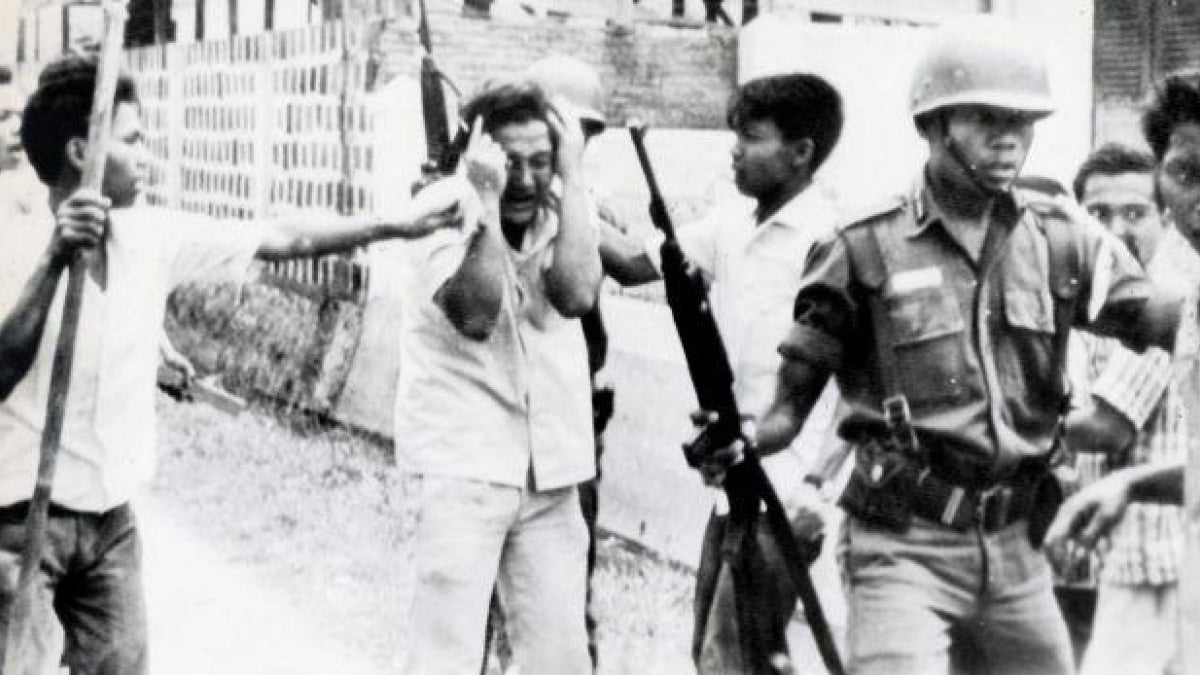
October 1, 1965: Members of the 30 September Movement assassinate 6 Indonesian Army Generals in an abortive coup d'état in the national capital of Jakarta.

At 7:00 AM, Radio Republik Indonesia broadcast a message from Lieutenant-Colonel Untung Syamsuri, the commander of the Presidential guard, stating that the 30 September Movement, an internal army organization, had taken control of strategic locations in Jakarta, with the help of other military units, in order to forestall a coup attempt by a "General's Council" aided by America's Central Intelligence Agency (CIA), intent on removing President Sukarno on 5 October, which Indonesia celebrates as "Army Day."

Sukarno took up residence in the Bogor Palace, a presidential palace in Bogor, East Java, while Omar Dhani and D.N. Aidit, implicated in the coup, fled the country. Led by Suharto, commander of the Army's Strategic Reserve, the army regained control of all the installations previously held by forces of the 30 September Movement.

In the days and weeks that followed, the army, socio-political, and religious groups blamed the coup attempt on the Communist Party of Indonesia (PKI). Soon, a mass purge was underway, which resulted in the imprisonment and deaths of actual or suspected Communist Party members and sympathizers. It is believed that at least 500,000 people were killed as a result of these reprisals. (The country's population was about 100 million at the time; in 2022, it's about 275 million.)

The United States and other Western states have steadfastly denied any responsibility for the terrible violence that followed the attempted coup of October 1, 1965. That violence, they have maintained, was the product of domestic political forces over which outside powers had little, if any, influence. Later evidence proved this to be a lie.

In 1978, Australian novelist Christopher Koch published The Year of Living Dangerously, about the experiences of his brother, journalist Philip Koch, during those events. In 1982, another Australian, director Peter Weir, filmed a movie version.

The legacy of Kusno Sosrodihardjo, a.k.a. Sukarno, the 1st President of Indonesia, is, to say the least, complicated. He sided with Japan in World War II, because they were fighting the natives' Dutch colonial overlords. Once The War ended, he declared independence, with himself as President, but it took 4 years for the Netherlands to agree to let what they called "the Dutch East Indies" go.

But it was hard to keep such a large, diverse, spread-out island nation together. In 1959, Sukarno introduced what he called "Guided Democracy," which was a lot more guided than democratic. The 1965 coup sent the nation into chaos. Finally, in 1967, General Suharto removed Sukarno from power, and he was still under house arrest when he was hospitalized prior to his death in 1970. Suharto was even worse, and had to resign under pressure in 1998, living until 2008.

*

October 1, 1965 was a Friday. Basketball and hockey seasons were a few days away. No games were played in the NFL or the AFL. There was 1 notable college football game played: The University of Southern California (USC) beat Oregon State, 26-12 at the Los Angeles Memorial Coliseum.

And these baseball games were played:

* The Pittsburgh Pirates beat the Chicago Cubs, 2-1 at Forbes Field in Pittsburgh. Roberto Clemente went 1-for-4. Ernie Banks went 0-for-4.

* A doubleheader was split at Cleveland Municipal Stadium. The Baltimore Orioles won the opener, 2-0. Dave McNally pitched a 2-hit shutout. The Cleveland Indians won the nightcap, 3-2. Between the 2 games, Brooks Robinson went 2-for-7 with a walk and an RBI.

* The Chicago White Sox beat the Kansas City Athletics, 6-1 at Comiskey Park in Chicago.

* The Houston Astros beat the St. Louis Cardinals, 4-2 at the Astrodome in Houston. Lou Brock went 0-for-4. Steve Carlton pitched a scoreless 8th inning.

* The Milwaukee Braves beat the Los Angeles Dodgers, 2-0 at Dodger Stadium in Los Angeles. Denny Lemaster pitched a 5-hit shutout. Hank Aaron went 0-for-1 with 2 walks. The next day, though, the Dodgers beat the Braves, and clinched the National League Pennant.

* The Cincinnati Reds beat the San Francisco Giants, 17-2 at Candlestick Park in San Francisco. A bad loss for the Giants, worse in terms of the Pennant chase than it was in terms of the final score. The Reds got home runs from Frank Robinson, Gordy Coleman, Deron Johnson and Pete Rose. 

For the Giants, Willie Mays went 1-for-3 with a walk. Warren Spahn pitched to 3 batters in the top of the 17th inning. He walked Johnny Edwards, Leo Cardenas reached on an error, and Sammy Ellis singled. Those would be the last batters Spahn ever faced, in the 750th and last game of his Hall of Fame career.

* The New York Mets and the Philadelphia Phillies were rained out at Shea Stadium. The game was made up as part of a doubleheader the next day. The Phillies won the 1st game, 6-0. Jim Bunning pitched a 2-hit shutout. The 2nd game went 18 innings, before the rain came back and the umpires called it. In other words, in 1 day, the Mets played 27 innings, and didn't score 1 single solitary run.

* The Detroit Tigers and the Washington Senators were rained out at District of Columbia Stadium in Washington. (It was renamed Robert F. Kennedy Memorial Stadium in 1969.) The game was made up as part of a doubleheader the next day. The Tigers swept, 9-1 and 6-2. Al Kaline was injured, and did not play in either game.

* And the New York Yankees, the Boston Red Sox, the Los Angeles Angels and the Minnesota Twins were not scheduled.

December 31, 1999 & January 1, 2000: The Millennium

December 31, 1999:  The Millennium arrives. The people of planet Earth survived. At a terrible cost. But we hadn't destroyed ourselves. ...