Saturday, July 2, 2022

July 2, 1973: "Match Game" Premieres

Gene Rayburn with the panel on February 15, 1974,
after one of the show's most famous moments.
Top, left to right: Steve Allen, Brett Somers, Charles Nelson Reilly.
Bottom, left to right: Fannie Flagg, Richard Dawson, Kaye Ballard.

July 2, 1973: Match Game '73 premieres on CBS. The addition of the year was necessary, because a previous version of the show had aired on NBC from 1962 to 1969. As each year changed, it became Match Game '74, Match Game '75, Match Game '76, Match Game '77, Match Game '78 and Match Game '79.

The 1960s version, filmed at NBC's studios at Rockefeller Center in New York, was hosted by Gene Rayburn, who had starred in the original Broadway production of Bye, Bye, Birdie, along with 2 other men who would become TV game show mainstays, Paul Lynde and Charles Nelson Reilly. Although Gene was happily married, he later developed an onscreen persona of a womanizer. Despite these facts, he remained friends with Lynde and Reilly, both of whom were gay (but never a couple), and hid this on TV to varying degrees.

The format of the original version of Match Game was similar to that of Password, in which there were two contestants and two "celebrity panelists." As host, Gene would read a card with a statement or phrase on it, with a blank space, which he pronounced with the word "blank," and the contestant had to try to match the word (or words) that the panelist had written down.

In 1973, CBS revived the series, videotaping it at Studio 33 at CBS Television City in the Los Angeles suburb of Burbank, California. By this time, Rayburn, a son of Croatian immigrants who grew up in Chicago, was living on Massachusetts' Cape Cod. So it went like this: He would drive to Boston on a Friday night, take the "redeye" out of Logan International Airport to Los Angeles, and tape 5 shows, an entire week's worth, on a Saturday; do this again on Sunday; and then fly back to Boston on Sunday night, arriving back home on Cape Cod on Monday morning.

This new version was broadcast in color, with a garish orange set. Gene would sometimes wear suits, supplied by Rubin Brothers International, that matched the set; other times, his suits would purposely clash. (Reilly liked to say that whenever Gene wore his green suit, the panelists were in trouble.) On occasion, he wore a tie that seemed to have bullseyes on it, which I initially mistook for CBS' familiar "Eye" logo. In 1978, a redesign of the set added a considerable amount of blue.

The panelists were arranged in two "tiers." From the TV viewer's perspective, the upper tier would be a male panelist, a female panelist, and another male; the lower tier would be female, male, female. The panelists on the 1st week of shows, from July 2 to 6, 1973 were as follows: Michael Landon, Vicki Lawrence, Jack Klugman, Jo Ann Pflug, Richard Dawson and Anita Gillette.

Landon had just wrapped up 14 years of playing "Little Joe" Cartwright on Bonanza, and would soon begin playing Charles Ingalls on Little House on the Prairie, enabling him to finally be called what he called Lorne Greene's Ben, "Pa."

Lawrence was a member of the cast of The Carol Burnett Show, which taped from the exact same studio. Klugman was then playing Oscar Madison on The Odd Couple. Pflug was then a part of the cast of Candid Camera. Dawson was an English actor who had been part of the casts of Hogan's Heroes and Rowan & Martin's Laugh-In. Gillette was an actress who was a regular panelist on game shows.

Most of the time, the contestants would be 1 man and 1 woman. Sometimes, it was 2 women, but never 2 men. The 1st contestants were 2 women: Joan Roselle, and Stanley Viltz, a black woman from Los Angeles, who explained that her mother had seen Bette Davis play a woman named Stanley in the 1942 film This Is Our Life, and liked it, and named her daughter that.

The 1st question was this: "The sexiest thing a woman can wear is (blank)." So, right off the bat, there was a hint that this was a game show for the post-Hays Code era. Joan said, "a negligee." Landon said, "Herself." Lawrence said, "Nothing." Klugman said, "With the exclusion of my wife: Nothing." Pflug said, "A long dress." Dawson said, "Perfume" -- referencing a question Marilyn Monroe was once asked about what she wore to bed, suggesting no clothes. Gillette said, "Nothing." So Joan got no matches. At the end of 2 rounds, Stanley was the winner, getting one match to Joan's none.

Speaking of his wife: Klugman was then married to actress and playwright Brett Somers, who played Oscar's ex-wife Blanche on The Odd Couple. Life was imitating art -- or was it the other way around? Although they raised 2 sons together, Jack and Brett were always fighting, though they respected each other's work. So when Brett said that Match Game looked like fun, Jack suggested to Gene, who suggested to co-creators and co-producers Mark Goodson and Bill Todman, that Brett be a panelist, too.

For one week, they were seated side-by-side on the stage's upper tier. And they went at it, zinger for zinger. Finally, it would be just Brett, and she and Jack split up in 1974. Brett developed a stage persona where she was mean to the other panelists, especially Charles Nelson Reilly, who began appearing regularly late in 1973, as she did. Each frequently accused the other of copying their answers.

Brett would also pretend to have antagonistic relationships with other panelists, including comedy writer Fannie Flagg (Brett often referenced Fannie's Southern roots and accent, and her large chest) and Mary Tyler Moore show actress Betty White (referencing her animal activism and her marriage to Password host Allen Ludden). Yet she was usually kind to the contestants, often apologizing for not matching when it looked like the contestant might lose.

Brett also developed a persona as a "dirty old lady," or a "cougar" as we would say now. Already 49 years old, and wearing wigs to hide her gray hair, when the show began, she would flirt with contestants, and sometimes with the male panelist to her right, saying, "I'm crazy about him," while insulting Charles, to her left. By July 1974, she and Gene had a running gag where, after a show, they would go to a cheap motel in the Los Angeles suburb of Encino.

Gene didn't help matters, hitting on contestants and panelists alike. By August 1975, he was placing rookie female panelists in the Number 4 seat, and saying, "We got a new kid on the block," and giving them the "proper welcome": He would spritz breath spray into his mouth, and kiss them on the lips. 

None ever objected, although Broadway star Elaine Joyce, a semi-regular in that seat, would often complain about Gene hitting on her. Vicki once sat in that seat, and as Gene was kissing her on the neck, said, "Boy, are you gonna get it!" He stopped. As Brett did with the other female panelists, he knew how far he could go, and went no further.

So a regular panel would be: A popular actor, Brett, Charles, a popular actress, Richard, and a female comedy star. That Number 6 seat, though, tended to produce, as Gene put it, "weirdo answers": Fannie, Betty, her fellow Mary Tyler Moore show castmember Joyce Bulifant, Bob Newhart Show castmember Marcia Wallace, and former Laugh-In writer and star Patti Deutsch would come up with answers that were, at times, barely comprehensible.

In her first appearance, on October 29, 1973, Fannie used the word "pee," and it was edited out. Goodson told her that the verb to use in such a situation was "tinkle," and that if she ever used the other one again, she would be banned from the show. She never used it again, and remained a regular to the end.

On that same show, a question began, "Bertha was so fat... " and panelist Bert Convy, himself an esteemed game-show host, asked, "How fat was she, Gene?" "How hot was it?" and "How dumb is he?" jokes became a running gag on the show, although they may have been started earlier by Johnny Carson on The Tonight Show.

The name "Dumb Dora" had been around since the 1920s, and Brett objected to the use of the name. Rather than get rid of good jokes on the basis of feminism, they gave Dumb Dora a masculine equivalent: Dumb Donald. There was also Weird Willie and Weird Wanda, Horrible Hank and Horrible Hannah, and Fat Fred and Fat Freida. Without gender counterparts were Skinny Minnie, Mean Marvin, Rodney Rich, Cheap Charlie, Absent-Minded Andy, and Muggsy, whose neighborhood was so tough!

Just as "tinkle" became the euphemism for urination, when the answer should have been "prostitute," Brett often said, "A rugmaker, or hooker." When the answer was "rear end," Richard Dawson would use the French "derriรจre," and, on at least 2 occasions, Betty wrote, "Dairy Air."

But you couldn't make reference to sex organs on Match Game. On September 13, 1973, just 2 months after the show began, this clue came up: "The Jolly Green Giant has a giant green (blank)!" Gene cracked up, dropped the card with the clue on it, and told everyone, "You're on your own!" Both Richard and comedian Stu Gilliam figured out that, having a garden, the JGG, mascot of Green Giant frozen foods, had a "green thumb."

And when the answer had to be "breasts," they got around it by saying, "bosoms" -- sometimes pronouncing it "ba-zooms." But on February 15, 1974, this clue came up: "The Big Bad Wolf said, 'I just came from this house, where this old lady had the biggest (blank)s I ever saw!'" And the contestant, Valerie Wood -- a woman, mind you -- said, "Boobs!"

The studio audience lost their minds. And every panelist except Richard walked off the stage, apparently afraid that the show was going to be canceled, and they wanted to show they weren't to blame. Gene brought them back, but Fannie walked over and politely slapped Valerie's hand. Brett reminded Fannie that she shouldn't object, "because you got the biggest ones in the room!" Fannie screamed, but what could she do? It was true: Never mind Raquel Welch, Fannie could give Dolly Parton a run for her money. (Ironically, given her stage name, she had no butt at all. She couldn't use her real name, Patricia Neal, because there was already an Oscar-winning actress with that name.)

Steve Allen did not match. Brett did. So did Charles, except he used the more genteel answer "Busts." Gene moved over to Fannie, and said, "Speaking of bazooms, Fannie, show us yours." And she shrieked again, and her answer was "Berries." Richard matched, and singer-actress Kaye Ballard said, "Feets." (It was, after all, "blanks" instead of "blank.") In spite of everything, CBS aired the episode, unedited, on March 4.

Gene called Steve's answer "pillows" a "rotten answer." He began using that term regularly, so that became the "hinge episode" of the show: From that point onward, almost anything went.

And Joyce Bulifant became the queen of rotten answers. On one 1975 episode, the question was, "The lady said to the bald man, 'I don't care if you are Allen Funt: Get your Candid Camera out of my (blank)!'" "Bedroom" and "bathroom" would both have been good answers, and the panelists were split between them -- except Joyce, who said, "Get your Candid Camera out of my pie." (Funt hosted Candid Camera. Fannie was a writer for that show, and, like Pflug, a frequent onscreen participant.)

Depending on the character in the questions -- "(Whoever it was) said... " -- Gene would sometimes do accents that bordered on what we now call "casual racism." His Godfather impression was bad, his French accent (when doing Jacques Cousteau) was worse, and his Chinese ("brank" instead of "blank") and Indian accents were atrocious.

And whatever impression he could do, Richard Dawson could it better, especially W.C. Fields, Bela Lugosi as Dracula, and Boris Karloff as Dr. Frankenstein or the Frankenstein Monster. (Richard also did Groucho Marx, and Stan Laurel of Laurel & Hardy, neither of which Gene did.)

In addition to the preceding, among the semi-regular panelists were Bob Newhart Show castmembers Bill Daily and Marcia Wallace. Marcia was, aside from Brett, the only female panelist who regularly returned Gene's flirting. It would bother her when she matched Bill. It would also bother her when she matched Brett, whom she sometimes called "the Somers Woman." And, once, in 1978, acknowledging a painful truth, she said that, when a panelist was stuck for an answer, you had a 50-50 shot at getting a match if you said, "Boobs," or, "Howard Cosell." 

Patti Deutsch also once called Brett "the Somers Woman." And, like many panelists, she despised Richard Nixon, who resigned as President shortly after the show's 1st anniversary. She called him "Private Citizen Nixon" and "the San Clemente Recluse."

But she wouldn't say, "Boobs." She would say, "Upper Frontals," or "Chestal Area." If the answer was, "Wife," she would say, "The Little Woman." And if the answer was some kind of food, she would add, "...To Go."

Star Trek star William Shatner was a panelist 3 times. Two former Miss Americas were semi-regular panelists: Lee Meriwether, 1955; and Mary Ann Mobley, 1959. Three Academy Award winners were panelists: Patty Duke (using her then-married name, Patty Duke Astin), George Kennedy and Rita Moreno. On occasion when Patty wasn't there, Brett would launch into some act, and Charles, an acting teacher and a director as well as an actor himself, would say, "It's a good thing Patty Duke isn't here to see such lousy acting!" One time, Brett tempted fate while Charles, Patty and George were all there, but only Charles called her out.

Three professional athletes were panelists: Baseball pitcher Don Sutton (available because he was then pitching for the Los Angeles Dodgers), and former football defensive linemen Rosey Grier and Alex Karras (both available because they had become actors by that point). Despite Richard's background, and some other natives of the British Commonwealth, only one panelist would ever be knighted by Queen Elizabeth II: Dame Joan Collins appeared for a week in 1975.

The oldest panelist ever was Arlene Francis, the former What's My Line? standby, who was 70 when she made her last appearance. The youngest panelist was Valerie Bertinelli, of the CBS sitcom One Day at a Time, who was 18 when she made her first appearance. (Her co-stars Bonnie Franklin and Pat Harrington also appeared.)

Actresses Brianne Leary and Kirstie Alley, talk-show host Jenny Jones, football coach Brian Billick, and advertising executive turned TV show host Donnie Deutsch were contestants before becoming famous. Leary, Alley and Deutsch each won 1 game, but Jones and Billick didn't. Deutsch survived blowing his 1st question, which was, as fate would have it, a Dumb Donald question. Just 3 years after her appearance, Leary was part of the cast of CHiPs, and became the only former Match Game contestant to become a panelist.

In 1976, Goodson and Todman created another game show, Family Feud, and named Richard the host. He became a bigger star than ever, but began to feel that he wasn't getting enough respect on Match Game. He left the show in August 1978, a few weeks after the set-design change.

The show never really recovered from his departure, and CBS canceled it early the next year. It returned in syndication, known as simply Match Game, without the year as a suffix, running until June 15, 1982. There was also a nighttime version, known as Match Game PM, that ran from 1975 to 1981, where there was a little more leeway with how explicit the answers could be.

It returned as the 1st half of The Match Game/Hollywood Squares Hour in 1983, with Jon Bauman, a.k.a. Bowzer of the music group Sha Na Na. They did Match Game first, with Bauman as a panelist, then he and Gene switched, and Jon would host Hollywood Squares while Gene was a panelist. But that only lasted 9 months. Another version, without Rayburn, lasted a little over a year, in 1990-91. Rayburn died in 1999, a few weeks after another revival ended after a year.

Among regular and semi-regular panelists, and others involved with the show: Producer Bill Todman died in 1979, Bert Convy in 1991, producer Mark Goodson in 1992, Mary Wickes in 1995, McLean Stevenson in 1996, David Doyle in 1997, Avery Schreiber in 2002, Debralee Scott and Nipsey Russell in 2005, Charles Nelson Reilly and Brett Somers within a few weeks of each other in 2007, Dick Martin in 2008, producer and judge (often infuriating people with deciding certain answers weren't matched) Ira Skutch in 2010, Richard Dawson in 2012, Marcia Wallace in 2013, Mary Ann Mobley in 2014, Patty Duke in 2016, Patti Deutsch in 2017, Bill Daily in 2018, Orson Bean in 2020, Betty White in 2021, and Scoey Mitchell in 2022.

As of July 3, 2022, semi-regular panelists still alive include Jo Anne Worley, Ann Elder, Lee Meriwether, Joyce Bulifant and Gary Burghoff.

Alec Baldwin hosted a new version on ABC, starting in 2016. This version lasted 5 years, and was considerably looser with the standards, and you could say almost anything. Valerie Bertinelli was the only panelist on the original show who became a panelist on this version, although former contestant Kirstie Alley became one as well.

UPDATE: In 2025, ABC brought it back, with Martin Short as host.

*

July 2, 1973 was a Monday. Betty Grable, the 1940s "pinup girl" with "the Million Dollar Legs," died on that day, of lung cancer, only 56 years old. A few weeks later, Charles Nelson Reilly paid a nice tribute to her on Match Game.

And these Major League Baseball games were played:

* The New York Yankees lost to the Boston Red Sox, 1-0 at Yankee Stadium. John Curtis pitched an 8-hit shutout. Fritz Peterson allowed only 2 hits, but 1 was a home run to Dwight Evans in the 5th inning.

* The New York Mets lost to the Montreal Expos, 2-1 at Jarry Park in Montreal. Charles "Boots" Day hit a home run in the bottom of the 10th inning. Buzz Capra gave up the homer, in relief of George Stone. Steve Renko pitched all 10 innings for the win. Despite being on the Mets' roster, Willie Mays, in his final season, did not play in the game.

* The Milwaukee Brewers beat the Baltimore Orioles, 5-3 at Memorial Stadium in Baltimore. Brooks Robinson went 0-for-3, but did draw a walk.

* The San Francisco Giants beat the Atlanta Braves, 9-5 at Atlanta Stadium (later Atlanta-Fulton County Stadium). Gary Mathews, Bobby Bonds and Chris Speier hit home runs for the Giants. Davey Johnson and Hank Aaron hit them for the Braves. For Aaron, it was the 694th of his career. Only 20 more to go. But he was beginning to get the hate mail.

* The Detroit Tigers beat the Cleveland Indians, 4-3 at Cleveland Municipal Stadium. Al Kaline did not play.

* The Cincinnati Reds beat the Los Angeles Dodgers, 4-2 at Riverfront Stadium in Cincinnati. Pete Rose and Johnny Bench each went 1-for-4.

* The St. Louis Cardinals beat the Philadelphia Phillies, 7-4 at Busch Memorial Stadium in St. Louis. Lou Brock went 1-for-4 with a walk and an RBI. Rookie Mike Schmidt went 0-for-3.

* The Minnesota Twins beat the Kansas City Royals, 5-2 at Royals Stadium (now Kauffman Stadium) in Kansas City. Harmon Killebrew did not play. Rod Carew went 4-for-5.

* The Chicago White Sox beat the Texas Rangers, 5-4 at Arlington Stadium in the Dallas suburb of Arlington, Texas.

* The San Diego Padres beat the Houston Astros, 8-5 at the Astrodome in Houston.

* The California Angels beat the Oakland Athletics, 4-2 at the Oakland Coliseum. Clyde Wright outpitched Vida Blue. Reggie Jackson went 1-for-3 with a walk and an RBI.

* And the Chicago Cubs and the Pittsburgh Pirates were not scheduled.

July 2, 1964: The Civil Rights Act Becomes Law

July 2, 1964: President Lyndon B. Johnson signs the Civil Rights Act of 1964 into law. Among those attending the signing ceremony is Dr. Martin Luther King Jr., then the nation's leading civil rights activist.

Angry over various events holding African-Americans back, President John F. Kennedy gave a nationally-televised speech on June 10, 1963, asking Congress for a bill that would ban racial and religious discrimination "in facilities which are open to the public: Hotels, restaurants, theaters, retail stores, and similar establishments."

There were 3 key hurdles to the bill's passage. Many Congressional committees were then chaired by powerful Southern Democrats, unwilling to help civil rights. The bill had to pass the House Judiciary Committee. Fortunately, it was then chaired by Emmanuel Celler, a Jewish New Yorker, who got it through. The next step was being passed by the House Rules Committee, then chaired by Howard W. Smith, a racist from Virginia.

And before that could happen, Kennedy was assassinated on November 22, 1963. Johnson, his Vice President and a Texan who favored the bill, became President, and demanded that the bill pass.

Smith knew the rules of the U.S. House of Representatives as well as anyone. But so did Celler, who had a plan: He filed a petition to discharge the bill from the Rules Committee, and move it directly to the House floor, for a vote by the full House. That required the support of a majority of House members.

When the Winter recess began, Celler was 50 votes short, but letters, telegrams and phone calls were coming in to members on the fence. Smith "read the room," and realized that he would be utterly humiliated if the bill was discharged, so he told the Rules Committee members they could vote their conscience, and it passed.

On February 10, 1964, the full House voted 290-130 to pass it. It went on to the Senate, and Southern Democrats filibustered it for 54 days. But Northern and Western Democrats, and Republicans who were conservative but believed that civil rights could be good for business, worked on breaking the filibuster.

In particular, 2 Senators led the way: Hubert Humphrey of Minnesota, the Democrats' "Whip"; and Everett Dirksen of Illinois, the Republicans' Leader. Each man's personal popularity was enough. Indeed, it was Humphrey, as Mayor of Minneapolis and a 1st-time candidate for the Senate, who had addressed the 1948 Democratic Convention, and said the Party should move on from States' rights to protecting human rights.

On June 19, 1964, the Senate passed the bill. The vote was 73-27. The Senators who voted No:

* Democrats: Lister Hill and John Sparkman of Alabama, William Fulbright and John McClellan of Arkansas, Spessard Holland and George Smathers of Florida, Richard Russell and Herman Talmadge of Georgia, Allen Ellender and Russell Long of Louisiana, James Eastland and John Stennis of Mississippi, Sam Ervin and Everett Jordan of North Carolina, Strom Thurmond and Olin Johnston of South Carolina, Albert Gore and Herbert Walters of Tennessee, Harry Byrd and Willis Robertson of Virginia, and Harry's cousin Robert Byrd of West Virginia. So, 21 "Dixiecrats."

* Republicans: Norris Cotton of New Hampshire, Bourke Hickenlooper of Iowa, Edwin Mechem of New Mexico, John Tower of Texas, Milward Simpson of Wyoming... and Barry Goldwater of Arizona.

The only Southern Senator of either Party to vote for the bill was Ralph Yarborough of Texas, an ally of LBJ's, who was with him in the car behind the one carrying JFK, Governor John Connally, and their wives when JFK was assassinated in Dallas. One of the reasons JFK went to Dallas in the first place was because, after Tower won LBJ's Senate seat, becoming the 1st Republican Senator in the South since Reconstruction, Texas' Democrats were split between factions led by Yarborough (a liberal) and Connally (a conservative who would later switch to the Republicans).

Robert Byrd, the Senate Majority Leader from 1977 to 1988, had belonged to the Ku Klux Klan during World War II, more for its opposition to Communism than its hatred of blacks, Catholics and Jews. He later called joining the KKK "the greatest mistake I ever made."

In his last book, the 2008 Letter to a New President -- he knew that fellow Senator Barack Obama was a rising star, but did not yet suspect that he would become said new President -- he wrote, "I know now I was wrong. Intolerance had no place in America. I apologized a thousand times... and I don't mind apologizing over and over again. I can't erase what happened."

Ervin never renounced his anti-civil rights votes, but redeemed himself somewhat with his Chairmanship of the Select Committee investigating Watergate in 1973 and '74.

Thurmond had been Governor of South Carolina in 1948, and briefly left the Democratic Party to run for President on the ticket of the States' Rights Party, all former Democrats. From that point onward, Southern Democrats who opposed civil rights were known as "Dixiecrats." Thurmond launched a filibuster designed to stop the Civil Rights Act of 1957, lasting a little over 24 hours, setting a record previously held by Huey Long of Louisiana, Russell's father. When the CRA of 1964 became law, Thurmond became the 1st major Democratic official in the South to switch to the Republican Party.

Gore was running for re-election, and was, by his own later admission, afraid to vote for the bill. He had previously voted for the Civil Rights Acts of 1957 and 1960. His re-election secure, he went on to vote for the Voting Rights Act of 1965, the confirmation of Thurgood Marshall as the 1st black Justice on the U.S. Supreme Court, and the Fair Housing Act of 1968. He lost his next bid for re-election in 1970, but that's been attributed to his opposition to the Vietnam War, rather than to his pro-civil rights votes. His son, usually known as Al Gore, would also be elected to both houses of Congress, serve as Bill Clinton's Vice President, and be the Democratic nominee for President in 2000.

Robertson was the father of Marion G. "Pat" Robertson, the Virginia Beach-based televangelist who ran for the Republican nomination for President in 1988, and has been a major figure in "Christian" conservatism ever since, often on the back of various forms of bigotry. (UPDATE: Pat died in 2023.)

Cotton -- no relation to current Republican Senator Tom Cotton of Arkansas -- also ended up voting for every other Civil Rights Act from 1957 to 1968, including the Voting Rights Act of 1965, as well as the 24th Amendment, banning poll taxes. (Gore was not present for the vote on that Amendment.) He voted against the Civil Rights Act of 1964, he said, on the grounds that part of it was unconstitutional.

Goldwater, like Cotton, claimed the bill was unconstitutional. Although he was the conservative movement's favorite son at the time, he had never previously been accused of racism. Indeed, in Arizona, a State then with few Black people, he had been praised by Hispanics and Native Americans for his efforts on their behalf.

Hickenlooper was the great-uncle of John Hickenlooper, now a Senator from Colorado, previously that State's Governor and Mayor of Denver -- and a Democrat. Simpson was the father of a later Senator from Wyoming, Alan Simpson.

The bill the Senate passed was slightly different from the one passed by the House, so the House had to approve it again. That took until July 2, and the vote was 289-126. Now, it headed to the President's desk, and LBJ wasted no time: He called in the media, and he called in key figures, including Dr. King, and the Attorney General, who was also the previous President's brother, Robert F. Kennedy.

It was Johnson who began the tradition of the President using a different pen to sign each letter of his name, including the period after the middle initial B. This way, he could give out 15 ceremonial pens -- 6 for "Lyndon," 2 for "B.," and 7 for "Johnson" -- and 15 different people could truthfully say, "I have the pen that made this bill a law."

On the film, he can be heard telling RFK to give pens to his deputies, Nicholas Katzenbach and Burke Marshall, as well as to take one for himself. The best-known photograph of the ceremony, shown above, shows LBJ giving a pen to MLK.

A generous gesture, given that LBJ and RFK couldn't stand each other, for reasons that don't matter here. RFK resigned as Attorney General on September 3 -- he probably would have if his brother lived, anyway, to run the re-election campaign -- and ran for a U.S. Senate seat from New York. He won it -- but won by a smaller margin than Johnson did in the State.

By this point, Goldwater had already secured the Republican nomination for President, beating out pro-civil rights candidates like Governors Nelson Rockefeller of New York and William Scranton of Pennsylvania, and former Senator Henry Cabot Lodge of Massachusetts.

But people who cared about civil rights -- for or against -- didn't care why Goldwater voted against the Act, only that he did. Southerners who would never have voted for the nominee of "the Party of Lincoln" before this voted for Goldwater, because he voted the way they wanted. And Midwesterners and Westerners that would have normally voted Republican went for Johnson.

On Election Day, November 3, Johnson won 61.0 percent of the national popular vote, still an all-time record, while Goldwater got just 38.4 percent. Johnson won 44 States with 486 Electoral Votes, Goldwater 6 with 52. Goldwater won Mississippi, Alabama, South Carolina, Louisiana and Georgia, all in the South; and his home State of Arizona, barely, with 50.4 percent, a winning margin of 4,782 votes.

He came close in some other Southern States. He got 48.8 percent in Florida, 46.1 in Virginia, and was the 1st Republican in the 20th Century to top 40 percent in Tennessee, Oklahoma, North Carolina and Arkansas.

He also got 49.1 percent in Idaho, 47.4 in Nebraska, 45.1 in Utah and 45.0 in Kansas. But if he had won every State where he got at least 45 percent, that still would have given him only 98 Electoral Votes. Even if he had won every State where he got at least 40 percent, including California (40.8, then with 40 EVs) and Illinois (40.5, 26), he still would have had only 199, well short of the necessary majority of 270.

To be fair, the false perception that Goldwater was racist was not the only reason he lost. But it didn't help. As no less than Jackie Robinson, a Republican who had worked for Rockefeller, put it, "It would make everything I worked for meaningless if baseball were integrated, but America's political parties were segregated."

Johnson knew it, too: "I think we have just given the South to the Republican Party for a generation." It's now been 3 generations. There have been blips since, but:

* Virginia has voted for the Democratic nominee for President in every election since 2008. But, before that, it hadn't voted for one since 1976, Jimmy Carter; and not for a non-Southern Democratic nominee since 1948, Harry Truman.

* Georgia voted for Joe Biden in 2020. Other than that, they haven't voted for the Democratic nominee since Bill Clinton in 1992.

* Florida last voted for the Democratic nominee in 2012, Barack Obama.

* North Carolina last voted for the Democratic nominee in 2008, Obama. Other than that, they haven't voted for the Democratic nominee since 1976; and not for a non-Southern Democratic nominee since 1948.

* Arkansas, Tennessee and Louisiana last voted for the Democratic nominee in 1996, Bill Clinton. Arkansas last voted for a non-Southern Democratic nominee in 1956, Adlai Stevenson; Louisiana in 1952, Stevenson; and Tennessee in 1948. Tennessee didn't even vote for native son Al Gore in 2000, although that's been attributed to guns as much as to race. This is also the case for West Virginia, which was a reliably Democratic State until 2000.

* Texas, Mississippi, Alabama and South Carolina last voted for the Democratic nominee in 1976, and haven't voted for a non-Southern Democratic nominee since 1960, John F. Kennedy.

* Oklahoma last voted for the Democratic nominee in 1976, and hasn't voted for a non-Southern Democratic nominee since 1948.

We will never know how many of the 21 Democrats who voted against the Civil Rights Act of 1964 would have done so if they weren't afraid of their respective electorates dumping them for more racist candidates in Democratic Primaries, or switching to Republican candidates. The two Mississippians, Eastland and Stennis, were true believers in segregation. Thurmond, however, did begin to hire black staffers in 1971.

What we do know is that racism, like all other forms of bigotry, is an inherently conservative trait, and the American Southeast remains conservative. And when conservatism meant switching from Democratic to Republican, they did, and have stayed as such.

And what has voting Republican gotten them? Extended poverty and lousy services.

Neil Young may be Canadian, and didn't gain American citizenship until 2020, specificially so he could vote against Donald Trump, but he was right: "Southern man, better use your head." And Lynyrd Skynyrd were wrong: A Southern man does need him around, anyhow.

The last serving Senator who voted for the Civil Rights Act of 1964 was Ted Kennedy, brother of Jack and Bobby, who died in office in 2009. The last surviving Senator who voted for it was Birch Bayh of Indiana, who lived until 2019. The last serving and the last surviving Senator who voted against it was Robert Byrd, who died in office in 2010.

*

July 2, 1964 was a Thursday. Scandal-ridden baseball star Jose Canseco, and his identical but far less successful twin brother Ozzie, were born on this day.

It was the off-season for the NFL, the AFL, the NBA and the NHL. But nearly a full slate of Major League Baseball games was played, with every team except the Chicago White Sox and the Washington Senators scheduled:

* The New York Yankees beat the Kansas City Athletics, 4-3 in 15 innings at Yankee Stadium. Despite the game's length, only 1 home run was hit, and not by somebody you might expect, like Mickey Mantle, Roger Maris or Joe Pepitone. It was Bobby Richardson. (Mantle and Maris did both get 2 hits in the game.)

Richardson led off the bottom of the 15th with a groundout. But Mantle hit a triple to left field. With the winning run on 3rd, and 1st and 2nd open, the A's intentionally walked Tom Tresh and then Pepitone, hoping for a forceout at any based, preferably an infield-to-home-to-1st double play. Instead, Hector Lopez -- appropriately for the day, both Black and Hispanic -- singled to left to bring Mantle home with the winning run. Rollie Sheldon started for the Yankees, but the winning pitcher was Steve Hamilton.

* The New York Mets lost to the Houston Colt .45s, 7-1 at Colt Stadium in Houston. The next season, the Colts moved into their new home, the Astrodome, and changed their name to the Houston Astros.

* The Minnesota Twins beat the Boston Red Sox, 15-9 at Fenway Park in Boston. Harmon Killebrew went 2-for-5. He didn't hit a home run, but Tony Oliva, Rich Rollins and Don Mincher did. For the Red Sox, Carl Yastrzemski went 3-for-4 with an RBI. Boston homers were hit by Felix Mantilla and Dick Williams -- who, 3 years later, would manage the Sox to the "Impossible Dream" Pennant, led by Yastrzemski's Triple Crown and Most Valuable Player performance.

* The Los Angeles Angels beat the Baltimore Orioles, 10-6 at Memorial Stadium in Baltimore. In defeat, Jackie Brandt hit 2 home runs, and Brooks Robinson went 1-for-5.

* The Cincinnati Reds beat the Chicago Cubs, 7-0 at Crosley Field in Cincinnati. Jim Maloney pitched a 4-hit shutout. Marty Keough hit a home run, Frank Robinson went 1-for-2 with 2 walks and 2 RBIs, and Pete Rose went 3-for-4 with 2 RBIs. For the Cubs, Ernie Banks went 1-for-4.

* The Detroit Tigers beat the Cleveland Indians, 9-1 at Tiger Stadium in Detroit. Al Kaline went 2-for-3.

* The St. Louis Cardinals beat the Milwaukee Braves, 4-3 at Milwaukee County Stadium. Hank Aaron went 1-for-4, and Joe Torre went 0-for-4.

* The Philadelphia Phillies beat the Los Angeles Dodgers, 3-2 at Dodger Stadium in Los Angeles.

* And the San Francisco Giants beat the Pittsburgh Pirates, 6-5 at Candlestick Park in San Francisco. Willie Mays drew a walk and scored in the 1st inning, but was injured, and had to leave the game. Roberto Clemente went 1-for-3.

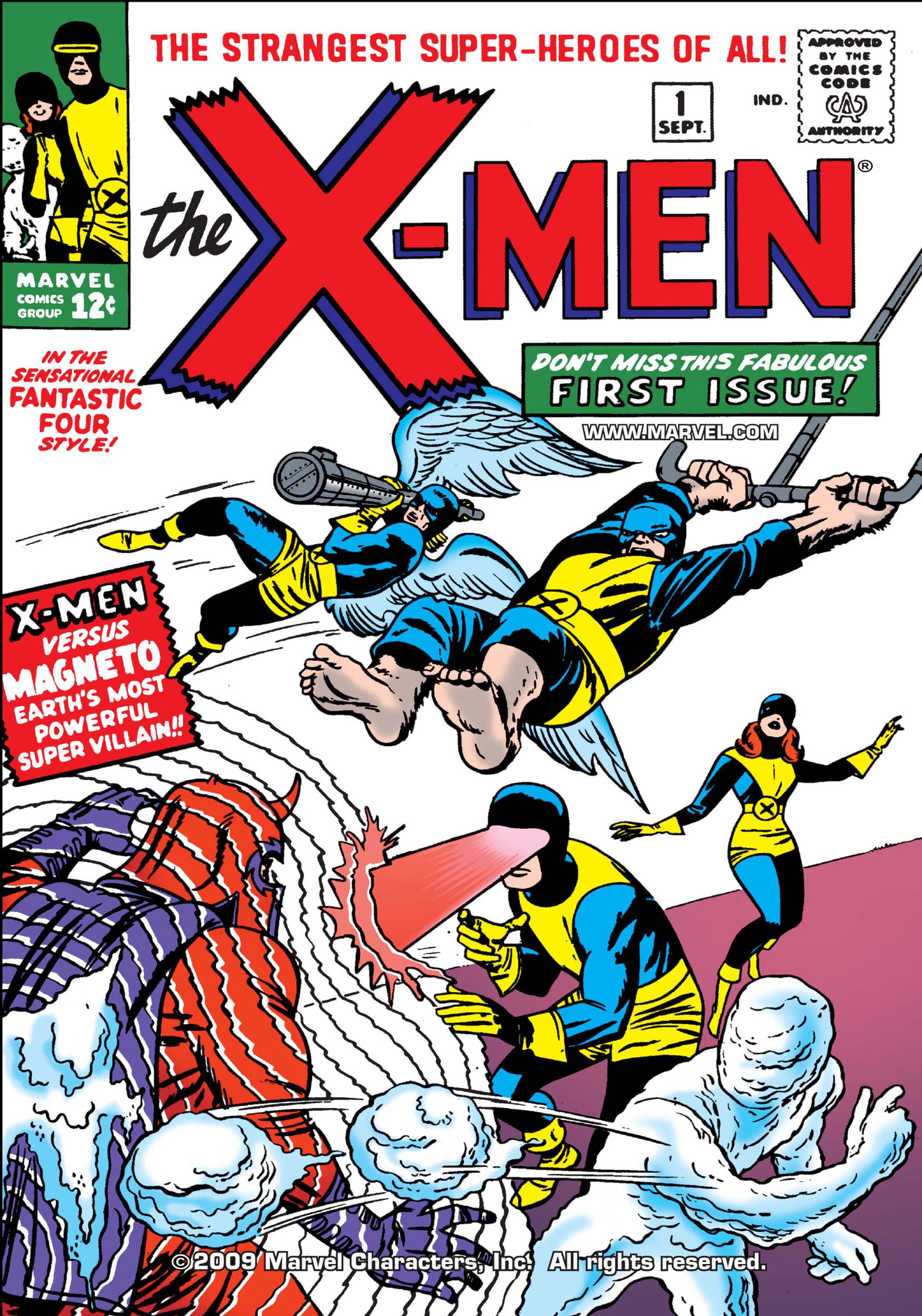
July 2, 1963: The X-Men Are Introduced

July 2, 1963: X-Men #1, with a date of September 1963, is published by Marvel Comics. The eponymous group eventually become the biggest-selling superhero team in comic books, surpassing Marvel's Avengers and Defenders, and DC's Justice League, Justice Society and Teen Titans.

In 1963, with the success of Spider-Man, the Hulk, and the Fantastic Four, Marvel's writing boss, Stan Lee, wanted to create another group of superheroes. But he did not want to have to write a story, multiple stories, explaining how each of them got their powers.

In 2004, Lee recalled, "I couldn't have everybody bitten by a radioactive spider, or exposed to a gamma ray explosion. And I took the cowardly way out. I said to myself, 'Why don't I just say they're mutants? They are born that way.'"

In a 1987 interview, the group's other creator, Jack Kirby, said:

The X-Men, I did the natural thing there. What would you do with mutants who were just plain boys and girls and certainly not dangerous? You school them. You develop their skills. So I gave them a teacher, Professor X. Of course, it was the natural thing to do, instead of disorienting or alienating people who were different from us, I made the X-Men part of the human race, which they were. Possibly, radiation, if it is beneficial, may create mutants that'll save us instead of doing us harm. I felt that if we train the mutants our way, they'll help us – and not only help us, but achieve a measure of growth in their own sense. And so, we could all live together.

Lee devised the series title after Marvel publisher Martin Goodman turned down the initial name, "The Mutants," stating that readers would not know what a "mutant" was.
Within the Marvel Universe, the X-Men are widely regarded to have been named after their teacher, the telepathic, but confined to a wheelchair, Charles Xavier, a.k.a. Professor X. The original explanation for the name, as provided by Xavier in the 1st issue, is that mutants "possess an extra power... one which ordinary humans do not!! That is why I call my students... X-Men, for EX-tra power!" Smilin' Stan sure did like him some exclamation points! They made his characters more declarative! And more provocative!
Of course, Stan also liked him some adjectives, to give to his heroes! The Fantastic Four! The Incredible Hulk! The Amazing Spider-Man! The Mighty Thor! The Invincible Iron Man! And so, this group were "The Uncanny X-Men!"
(Stan also liked alliteration. "Uncanny X-Men" didn't quite work, but "Fantastic Four" and "Invincible Iron Man" did. So did several secret identities: Mr. Fantastic was Reed Richards, the Invisible Girl was Susan Storm, Spider-Man was Peter Parker, the Hulk was Bruce Banner, Daredevil was Matt Murdock. But only one X-Man had an alliterative name: Cyclops was Scott Summers.)
DC's Doom Patrol, which debuted several months before X-Men, was suspected by its creator, Arnold Drake, and its fans of having had the basic concept copied to a great degree, including a wheelchair-bound leader.
Early X-Men issues introduced the original team:
* Scott Summers, Cyclops, who had heat vision that could only be controlled by being blocked by a visor or special sunglasses.
* Hank McCoy, the Beast, a brilliant scientist but a large man, simian in appearance, with great strength, and the ability to use his feet to climb walls. He was later redrawn as covered in blue fur.
* Warren Worthington III, the Angel, a patrician rich kid who had wings, and could fly.
* Bobby Drake, Iceman, who had powers over ice, in much the same way that fellow teenager Johnny Storm, a.k.a. the Human Torch of the Fantastic Four, had powers over fire. Drake couldn't fly, but he could cast ice in front of him, and "surf" over the air, predating Marvel's character the Silver Surfer by 3 years.
The first issue introduced Jean Grey, originally named Marvel Girl, a telepath like Xavier, but also an empath, and capable of telekinesis. She would form a love triangle with Cyclops and Angel, and later another with Cyclops and Wolverine.
The first issue would introduce Erik Lensherr, a.k.a. Magneto. As his name suggests, he had power based in magnetism. Like Reed Richards and the Fantastic Four's main enemy, Victor Von Doom, a.k.a. Dr. Doom, Professor X and Magneto were best friends turned arch-enemies. Both Xavier and Magneto wanted to reduce unpowered humans' bigotry toward mutants, making them an analogue for the Civil Rights Movement. But their plans were different: Xavier wanted the mutants to help unpowered humans, and earn their trust; Magneto wanted to eliminate the threat by killing them. Their difference was likened to the split between nonviolence apostle Martin Luther King and "by any means necessary" advocate Malcolm X.
Lensherr was the father of Pietro and Wanda Maximoff, a.k.a. the speedster Quicksilver and the magic-powered Scarlet Witch. They would later turn hero, and join the X-Men against their father. All 3 characters would be retconned as Romani, and Lensherr was retconned as a survivor of the Nazi Holocaust.
By the end of the 1960s, the series stopped selling well, and Marvel stopped producing new stories in March 1970, with issue #66. In Giant-Size X-Men #1, in 1975, a new team was introduced, led by Cyclops, and included mutants from around the world. Four in particular proved popular enough to last:
* James Howlett, a.k.a. Logan, a.k.a. Wolverine, the product of a Canadian program to produce a super-soldier, resulting in adamantium claws that could extend from his hands and cut through just about anything, and a healing factor that could allow him to regenerate from anything short of disintegration. He's only 5-foot-3, but arguably the most dangerous man on Earth. As he says, "I'm the best there is at what I do, but what I do isn't very nice." He also likes to smoke cigars and call people "Bub."
* Piotr Rasputin, a.k.a. Colossus, a Russian who is able to transform himself into living steel, making him the strongest member of the team.
* Kurt Wagner, a.k.a. Nightcrawler, a German who looks like the devil but is a devout Catholic, and whose main power is teleportation.
* Ororo Munroe, a.k.a. Storm, a black woman from Kenya, who could control weather. She would eventually marry, but later divorce, the African superhero Black Panther.
The 1980s began with the team's best-known story arc, The Dark Phoenix Saga, which saw Jean Grey, having taken the name Phoenix, manipulated by the illusionist Mastermind, and becoming corrupted with an overwhelming lust for power and destruction as the evil Dark Phoenix.
By the early 1980s, X-Men was Marvel's top-selling comic title. Its sales were such that distributors and retailers began using an "X-Men index", rating each comic book publication by how many orders it garnered compared to that month's issue of X-Men.
A series of X-Men movies began in 2000, starring Patrick Stewart as Xavier. They helped the jumpstart the superhero genre of films.
A 2019 episode of the YouTube series Epic Rap Battles of History featured "Epic" Lloyd Ahlquist playing Wolverine, against rapper Michael Jones, a.k.a. "Wax," as Nightmare On Elm Street villain Freddy Krueger, the connection being that Freddy's long-bladed gardening glove is as sharp as Wolverine's claws, and that both are practically invincible.
*

July 2, 1963 was a Tuesday. These baseball games were played that day:

* The New York Yankees beat the Chicago White Sox, 3-0 at Yankee Stadium. Al Downing allowed just 1 hit, a single to Cam Carreon in the 7th inning. He also walked 6 batters, but struck out 10. Hector Lopez hit a home run. Roger Maris went 1-for-3. Mickey Mantle was injured. Yogi Berra, in his last full season as a player, also did not play.

* The New York Mets lost to the Chicago Cubs, 4-1 at Wrigley Field in Chicago. Ernie Banks went 1-for-3 with a walk for the Cubs. Duke Snider did the same for the Mets.

* The Pittsburgh Pirates beat the Philadelphia Phillies, 3-2 at Connie Mack Stadium in Philadelphia. Roberto Clemente went 1-for-3 with a walk and an RBI.

* The Baltimore Orioles beat the Los Angeles Angels, 4-3 at Memorial Stadium in Baltimore. Brooks Robinson went 1-for-4.

* The Washington Senators beat the Kansas City Athletics, 7-2 at District of Columbia Stadium in Washington. D.C. Stadium was renamed Robert F. Kennedy Memorial Stadium in 1969.

* The Boston Red Sox beat the Cleveland Indians, 6-1 at Cleveland Municipal Stadium. Carl Yastrzemski went 2-for-4 with a walk and 2 RBIs.

* The Minnesota Twins beat the Detroit Tigers, 7-4 at Tiger Stadium in Detroit. Harmon Killebrew went 1-for-4 with a walk. Al Kaline went 2-for-3 with a home run, a walk and an RBI.

* The Cincinnati Reds beat the Houston Colt .45s, 6-4 at Colt Stadium in Houston. Frank Robinson did not play for the Reds, but rookie Pete Rose did, and went 3-for-5. The Colts became the Houston Astros in 1965.

* And the San Francisco Giants beat the Milwaukee Braves, 1-0 at Candlestick Park in San Francisco. Warren Spahn, age 42, and Juan Marichal, 25, kept pitching a dual shutout until the bottom of the 16th inning, when Willie Mays hit a home run off Spahn to win it for the Giants. This has been called the greatest pitcher's duel of all time, and I have a separate entry for the event.

* And the Los Angeles Dodgers beat the St. Louis Cardinals, 1-0 at Dodger Stadium in Los Angeles. Don Drysdale pitched a 5-hit shutout, outpitching Curt Simmons. Stan Musial, in his final season, got a hit as a pinch-hitter.

July 2, 1963: Warren Spahn vs. Juan Marichal

Marichal (left) and Spahn after the game

July 2, 1963: Former Sports Illustrated writer Jim Kaplan, who has written many books on baseball, wrote a dual biography of the opposing pitchers in the game played at Candlestick Park in San Francisco on this day, focusing on this game. He titled his book The Greatest Game Ever Pitched: Juan Marichal, Warren Spahn, and the Pitching Duel of the Century.

Spahn, 42 years old and a native of Buffalo, New York, was a lefthanded pitcher, and had been decorated for his service in the Battle of the Bulge in World War II. He had helped the Braves win National League Pennants in Boston in 1948, and in Milwaukee in 1957 and 1958, winning the 1957 World Series. He would finish his career with 363 wins, the most of any lefthanded pitcher ever, and the most of any pitcher of either hand in the post-1920 Lively Ball Era.

Marichal, 25 and from the Dominican Republic, was righthanded, but was already building a career that would make him the all-time winningest pitcher among Latin Americans, with 243. (He has since been surpassed by Dennis Martรญnez and Bartolo Colรณn.) He had helped the San Francisco Giants win the 1962 Pennant. He didn't seem to have much in common with Spahn, outside of talent. But each man was known for a windup with a very high leg-kick.

Marichal allowed a single to Frank Bolling in the 1st inning. Also, an error by 3rd baseman Harvey Kuenn allowed Del Crandall to reach 2nd base in the 2nd. In the 4th, he walked Norm Larker, and allowed singles to Mack Jones and Crandall, but Larker tried to score on Crandall's single, and Willie Mays threw him out at the plate.

He walked Lee Maye in the 5th, and Maye stole 2nd, but was stranded there. Denis Menke singled and stole 2nd in the 6th, but was stranded. In the 7th, Crandall led off the 7th with a single, but was caught stealing. Spahn took matters into his own hands, and doubled, but was stranded. Marichal walked Aaron in the 8th, but stranded him.

In the 2nd, Spahn allowed a single to Orlando Cepeda, who stole 2nd and advanced to 3rd on a flyout. He allowed a single to Willie McCovey in the 4th. In the 7th, he allowed singles to Cepeda and Ed Bailey, but they couldn't score. The Giants had a chance to win it in the bottom of the 9th, when Felipe Alou singled with 2 outs, but Cepeda popped up. Both Spahn and Marichal had pitched shutouts, and it was on to extra innings.

In the bottom of the 10th, Ernie Bowman bunted his way onto 1st base, but Spahn stranded him. Neither pitcher allowed a baserunner in the 11th or the 12th. The pitchers had the opposite motivation: Spahn said he didn't want a kid to beat him, and Marichal said he didn't want an old man to beat him.

Frank Bolling singled with 2 out in the top of the 13th, but was stranded. Bowman led off the bottom of the 13th with a single, but Spahn picked him off 1st base. In the top of the 14th, Marichal walked Larker, but stranded him. Spahn ran into real trouble in the bottom of the 14th. Kuenn led off with a double. With 1st base open, Mays was intentionally walked -- his run meant nothing. Spahn got Willie McCovey to pop up, and Felipe Alou to fly out. Cepeda grounded to Menke at 3rd, but he made an error, loading the bases. But Spahn got Bailey to fly out.

Both pitchers went 1-2-3 in the 15th inning. With 2 outs in the top of the 16th, Menke singled, but Marichal got Larker to ground back to him. In the bottom of the 16th, Spahn got Kuenn to fly to center. Maybe he should have walked Mays intentionally again, because, at 12:31 AM on July 3, Mays hit a long home run to left field.
Giants 1, Braves 0. There's no record of how many pitches each man threw, but Marichal faced 59 batters, Spahn 56. Marichal had 10 strikeouts, Spahn only 2; however, Spahn walked only 1 batter, Marichal 4; Marichal allowed 8 hits, Spahn 9. For the game, Spahn had a WHIP -- Walks plus Hits, and that total divided by Innings Pitched -- of 0.652, while Marichal's was 0.750. Spahn's ERA for the game was 0.56, while Marichal's, of course, was 0.00.

The game lasted 4 hours and 10 minutes. It wasn't well-reported outside of the West Coast, because it ended at 2:30 AM Pacific Time, 5:30 Eastern Time. But as both men's reputations grew, so did that of the game.

It was 30 years to the day after New York Giants starter Carl Hubbell pitched 18 innings for a 1-0 win over the St. Louis Cardinals. Cards starter Tex Carleton pitched 16 innings as well.

Spahn won 202 games during the 1950s, making him the winningest pitcher of the decade. Marichal won 191 games during the 1960s, more than any other pitcher, including Sandy Koufax, Don Drysdale and Bob Gibson.

*

July 2, 1963 was a Tuesday. Marvel Comics published X-Men #1 on this day. I have a separate entry for that event.

These other baseball games were played that day:

* The New York Yankees beat the Chicago White Sox, 3-0 at Yankee Stadium. Al Downing allowed just 1 hit, a single to Cam Carreon in the 7th inning. He also walked 6 batters, but struck out 10. Hector Lopez hit a home run. Roger Maris went 1-for-3. Mickey Mantle was injured. Yogi Berra, in his last full season as a player, also did not play.

* The New York Mets lost to the Chicago Cubs, 4-1 at Wrigley Field in Chicago. Ernie Banks went 1-for-3 with a walk for the Cubs. Duke Snider did the same for the Mets.

* The Pittsburgh Pirates beat the Philadelphia Phillies, 3-2 at Connie Mack Stadium in Philadelphia. Roberto Clemente went 1-for-3 with a walk and an RBI.

* The Baltimore Orioles beat the Los Angeles Angels, 4-3 at Memorial Stadium in Baltimore. Brooks Robinson went 1-for-4.

* The Washington Senators beat the Kansas City Athletics, 7-2 at District of Columbia Stadium in Washington. D.C. Stadium was renamed Robert F. Kennedy Memorial Stadium in 1969.

* The Boston Red Sox beat the Cleveland Indians, 6-1 at Cleveland Municipal Stadium. Carl Yastrzemski went 2-for-4 with a walk and 2 RBIs.

* The Minnesota Twins beat the Detroit Tigers, 7-4 at Tiger Stadium in Detroit. Harmon Killebrew went 1-for-4 with a walk. Al Kaline went 2-for-3 with a home run, a walk and an RBI.

* The Cincinnati Reds beat the Houston Colt .45s, 6-4 at Colt Stadium in Houston. Frank Robinson did not play for the Reds, but rookie Pete Rose did, and went 3-for-5. The Colts became the Houston Astros in 1965.

* And the Los Angeles Dodgers beat the St. Louis Cardinals, 1-0 at Dodger Stadium in Los Angeles. Don Drysdale pitched a 5-hit shutout, outpitching Curt Simmons. Stan Musial, in his final season, got a hit as a pinch-hitter.

July 2, 1961: Ernest Hemingway Commits Suicide

July 2, 1961: Ernest Hemingway dies by his own hand. Contrary to what his wife said in the immediate aftermath, it was no accident.

He had published 4 of the most acclaimed novels of his time: The Sun Also Rises in 1926, about his recent experiences in France and Spain; A Farewell to Arms in 1929, about his experiences in World War I; For Whom the Bell Tolls in 1940, about his experiences in the recent Spanish Civil War; and The Old Man and the Sea in 1952, based on stories he had heard in Cuba.

He had also written, among other things, Death in the Afternoon, in 1932, about bullfighting in Spain, which he had also written about in The Sun Also Rises; The Green Hills of Africa, in 1935, about a safari he and his 2nd wife, Pauline Pfeiffer, took, detailing their hunting; and To Have and Have Not, published in 1937, not well-regarded, but it became a popular movie starring Humphrey Bogart and Lauren Bacall, who ended up getting married as a result.

But mental illness ran rampant in his family. And his constant adventuring had gotten him hurt, over and over again, including head injuries. He married 4 times, and was abusive to all his wives. Many men have tried to copy his writing style. Too many have also tried to copy his dangerous lifestyle. And a few, most notably William S. Burroughs and Norman Mailer, even copied his treatment of his wives.

In 1954, he and his 4th wife, Mary Welsh, went on an African safari, and survived a plane crash -- and then survived another crash the very next day. That 2nd crash gave him another head injury, and accelerated his descent into erratic behavior.

On July 2, 1961, at his house in Ketchum, Idaho, having alienated pretty much everybody in his life, and having hunted just about every animal he could find, he took a shotgun, and shot the most dangerous animal he had ever faced: Himself. He was 61 years old.

In a 1976 episode of M*A*S*H, taking place in 1951, Alan Alda's character, Captain Benjamin Franklin "Hawkeye" Pierce, M.D., U.S. Army Reserve, said, “I used to love Hemingway, because he wrote so well. But now, I can’t understand why anyone would willingly go to a war. I'd do anything to get out of here. It's crazy.”

*

July 2, 1961 was a Sunday. These games were played in Major League Baseball:

* The New York Yankees beat the Washington Senators, 13-4 at Yankee Stadium. Bud Daley was the winning pitcher. Roger Maris hit 2 home runs, giving him 30 on the season; Mickey Mantle hit one, giving him 28; Bill "Moose" Skowron hit one, giving him 17; and Elston Howard hit one, giving him 4. Maris would finish with 61, Mantle with 54, Skowron with 28, and Howard with 21.

* The Cleveland Indians beat the Boston Red Sox, 12-6 at Fenway Park. Carl Yastrzemski went 3-for-5 with an RBI. But Boston reliever Arnold Earley falls apart in the top of the 10th inning, and reliever Dave Hillman can't stop the bleeding. The Indians scored 6 runs in the inning.

* The Los Angeles Dodgers beat the Philadelphia Phillies, 2-1 at Connie Mack Stadium in Philadelphia. Don Drysdale outpitched Robin Roberts, and helped his own cause with a home run.

* The Baltimore Orioles beat the Detroit Tigers, 6-3 at Memorial Stadium in Baltimore. Brooks Robinson went 3-for-4 with an RBI. Al Kaline went 2-for-3 with a solo home run.

* The Pittsburgh Pirates swept a doubleheader from the San Francisco Giants at Forbes Field, 7-6 and 9-0, the nightcap shortened to 7 innings. Over the 2 games, Roberto Clemente went 3-for-6 with 3 walks and 3 RBIs, and Willie Mays went 1-for-6 with a walk.

* The Chicago Cubs beat their arch-rivals, the St. Louis Cardinals, 10-9 at Wrigley Field in Chicago. Stan Musial went 0-for-5. For the Cubs, Ernie Banks went 2-for-4 with a walk, and Glenn Hobbie and Sammy Taylor each hit 2 home runs. But it was a single in the 8th inning by former Phillies star Richie Ashburn that won the game for the Cubbies.

* The Cincinnati Reds swept a doubleheader with the Milwaukee Braves at Milwaukee County Stadium, 8-5 and 4-3. Gordy Coleman won the opener with a home run in the top of the 13th inning. Frank Robinson went 4-for-8 with 3 walks, a home run and 2 RBIs, Hank Aaron went 3-for-8 with a walk, a home run and 2 RBIs, Eddie Mathews went 2-for-6 with 2 home runs and 3 RBIs, and Joe Torre went 2-for-6.

* The Kansas City Athletics beat the Minnesota Twins, 8-7 at Kansas City Municipal Stadium. Harmon Killebrew went 3-for-4 with a home run and 2 RBIs. Jim Lemon doubled Killebrew home to tie the game in the top of the 9th. But in the bottom of the 9th, Dick Howser singled home the winning run.

* The Los Angeles Angels beat the Chicago White Sox, 8-3 at Dodger Stadium in Los Angeles, where the Angels were renting from the Dodgers.

July 2, 1953: New York Introduces the Subway Token

July 2, 1953: New York's Metropolitan Transportation Authority (MTA) introduces the Subway token, to get around the fact that the Subway's fare has been raised from 10 to 15 cents. It had previously been raised from its original 1904 fare of 5 cents to 10 in 1948.

Also in 1948, Boston raised its Subway fare from 10 to 15 cents. But since fareboxes couldn't accommodate more than one coin, an "exit fare" was introduced to get out of the system. This led to "MTA," a folk song lampooning their Metropolitan Transit Authority, in which the hero, Charlie, refuses to pay the exit fare, and can't get out of the system: "He's the man who never returned." (In 1964, the MTA became the MBTA, the Massachusetts Bay Transportation Authority, which also oversees commuter rail and Boston into and out of Boston, and they standardized the system, including the elimination of the exit fare.)

But the token was one coin, that could be worth whatever the MTA wanted it to be. And so it remained, with various increases: 20 cents on January 1, 1966; 30 cents on January 4, 1970; 35 cents on January 1, 1972; 50 cents on September 1, 1975; 60 cents on June 28, 1980; 75 cents on July 3, 1981; 90 cents on January 2, 1984; $1.00 on January 1, 1986; $1.15 on January 1, 1990; $1.25 on January 1, 1992.

The MetroCard was introduced in 1993, to enhance the technology of the transit system and eliminate the burden of carrying and collecting tokens. The MTA discontinued the use of tokens in the subway on May 3, 2003, and on buses on December 31, 2003.

This annoyed me, because tokens worked. Every time. MetroCards frequently don't work. They can get bent, becoming useless, and wasting however much money is on them, ruining their one true advantage, which is that you can put whatever you can afford on them. And they can expire.

Speaking of which: The MetroCard is expected to be phased out by April 2024. It will be replaced by OMNY, a contactless payment system where riders pay for their fare by waving or tapping credit or debit bank cards, smartphones, or MTA-issued smart cards.

At any rate, or so to speak, the New York Subway fare became $1.50 on November 12, 1995; $2.00 on May 4, 2003; $2.25 on June 28, 2009; $2.50 on March 3, 2013; and has been $2.75 on March 22, 2015, although you have to spend an additional $1.00 fee to get a new card.

In 2020, Philadelphia became the last city in America to switch their subway system from tokens to cards.

*

July 2, 1953 was a Thursday. There were 4 games were played that day in what would eventually be called Major League Baseball:

* The New York Yankees beat the Boston Red Sox, 5-3 at Fenway Park in Boston. Johnny Mize, in the final season of a Hall of Fame career, doubled home the winning run in the top of the 10th inning. Vic Raschi went the distance for the win. Mickey Mantle did not play. Don Bollweg, playing 1st base for the Yankees on this day, went 3-for-4 with a 3-run home run. Ted Williams was serving in the Korean War, and unavailable for the Red Sox.

* The Brooklyn Dodgers beat the Philadelphia Phillies, 8-0 at Ebbets Field. Carl Erskine pitched a 7-hit shutout, supported by home runs from Gil Hodges (no surprise) and Pee Wee Reese (big surprise). Jackie Robinson went 1-for-4 with a walk and 3 RBIs.

* The Detroit Tigers beat the Cleveland Indians, 4-2 at Briggs Stadium in Detroit (renamed Tiger Stadium in 1961).

* And the Cincinnati Reds beat the Milwaukee Braves, 3-1 at Milwaukee County Stadium.

July 2, 1937: Amelia Earhart Disappears

July 2, 1937: Amelia Earhart disappears, along with her navigator, Fred Noonan, in her attempt to become the 1st woman to make an around-the-world flight.

Earhart had many distinctions to her aviation career: In 1928, the 1st woman to fly across the Atlantic Ocean; in 1931, the 1st woman to fly an autogyro, an early helicopter, and the 1st woman to cross the U.S. in one; in 1932, the 1st woman to fly across the Atlantic solo, in a Lockheed Vega 5B, thus becoming the 1st person to fly across the Atlantic twice, also the 1st woman to fly nonstop, coast-to-coast, across the U.S., all earning her the Distinguished Flying Cross; and in 1933, the 1st person of either gender to fly solo between Hawaii and the San Francisco Bay Area.

But she will forever be remembered not for the flights she completed, but the one she didn't.

Her plane was a Lockheed Electra 10E, with 2 propeller-driven engines, 1 on each side of the cockpit. And this around-the-world flight was not going to be a single nonstop flight. The technology for such a voyage simply wasn't available at the time. Her intended route was as follows:

* May 20, the 10th Anniversary of Charles Lindbergh's takeoff from Long Island, successfully becoming the 1st person to fly across the Atlantic Ocean, solo or otherwise: Oakland, California to the Los Angeles suburb of Burbank.

* May 21: Burbank to Tucson, Arizona.

* May 22: Tucson to New Orleans.

* May 23: New Orleans to Miami. Then, a break, until...

* June 1: Miami to San Juan, Puerto Rico.

* June 2: San Juan, across the Caribbean Sea, to the South American continent, to Caripito, Venezuela.

* June 3: Caripito to Paramribo, Surinam.

* June 4: Paramaribo to Fortaleza, Braail.

* June 5: Fortaleza to Natal, Brazil. Then a day off. Then...

* June 7: Natal, across the Atlantic, to the westernmost point on the African continent, to Saint-Louis, Senegal.

* June 8: Saint-Louis to Dakar Senegal. Then a day off. Then...

* June 10: Dakar to Gao, French Sudan (now Mali).

* June 11: Gao to Fort-Lamy, French Equatorial Africa (now N'Djamena, the capital of the independent nation of Chad).

* June 12: Fort-Lamy to El Fasher, Anglo-Egyptian Sudan (now just "Sudan").

* June 13: Two flights. First, El Fasher to Khartoum, Sudan. Then, Khartoum to Massawa, Italian East Africa (now Eritrea).

* June 14: Massawa to Assab, Italian East Africa (Eritrea).

* June 15: Assab, across the Red Sea and the Middle East into Asia, to Karachi, British India (now in Pakistan). Then a day off. Then... 

* June 17: Karachi to Calcutta, British India (now Kolkata, India).

* June 18: Kolkata to Akyab, Burma (now Sittwe, Myanmar).

* June 19: Sittwe to Rangoon, Burma (now Yangon, Myanmar).

* June 20: Two flights. First, Yangon to Bangkok, Siam (now Thailand). Then, Bangkok to Singapore, Straits Settlements (now the City of Singapore, the Republic of Singapore).

* June 21: Singapore to Bandoeng, Dutch East Indies (now Bandung, Indonesia). Then 3 days' rest. Then...

* June 25: She intended to fly from Bandung to Soerabaia, Dutch East Indies (now Surabaya, Indonesia), but had to return due to dysentery, and needed repairs on her plane.

* June 26: She tried again, this time making it from Bandung to Surabaya.

* June 27: Surabaya to Koepang, Dutch East Indies (now Kupang, Indonesia).

* June 28: Kupang to Darwin, on the north coast of Australia, where more repairs were made.

* June 29: Darwin to Lae, New Guinea (now Papua New Guinea).

There were 3 more legs of the trip, across the Pacific Ocean, to begin on July 2: Lae to Howland Island, then as now belonging to America, and at 2,223 miles the 2nd-longest leg; Howland to Honolulu, the longest leg, 2,400 miles, but one Earhart had done before; and Honolulu to Oakland, with the aim of arriving on the 4th of July to a big patriotic celebration.

The U.S. Coast Guard cruiser Itasca was at Howland, to provide assistance: Radio messages on where to turn to find the island, and when and how to land.

Shortly after 10:00 AM local time on July 2, Earhart and Noonan took off from Lae. Earhart radioed reports in at 3:00 and 5:00 PM. The Electra crossed the International Date Line. But communication problems arose, partly due to the fact that Earhart and Noonan were using Greenwich Mean Time throughout their journey, and the Itasca was using a Naval time zone designation system, a predecessor of what's now called Zulu Time.

According to the Itasca's log, at 6:14 AM on July 2, Howland time, Earhart called in, saying she was about 200 miles from Howland. At 6:45, she said she was within 100 miles. But at 7:30, she said the Electra was running out of gas. At 7:42, Earhart told them, "We must be on you, but cannot see you. But gas is running low." At 7:58, she said she could not hear them. The ship sent her a Morse code signal. She said she received it, but could not determine its direction.

At 8:43, she said, "We are on the line 157 337. We will repeat this message. We will repeat this on 6210 kilocycles. Wait... We are running on line north and south." Itasca crewmembers said this suggested that Earhart and Noonan thought they were at Howland's charted position, but they were off by 5 miles. The ship used its boilers to generate smoke for them to see.

The Electra was never heard from again. The Itasca searched, and was soon joined by the battleship USS Colorado. (That ship was based at Pearl Harbor, but was undergoing repairs at Puget Sound, and was not in the Japanese attack.) More ships joined the search. On July 19, the search was abandoned.

Theories abound. The most common is that the plane simply crashed into the Ocean and sank to the bottom. Another suggests that, with the Empire of Japan already at war with the Republic of China, and flexing its aerial muscles, a Japanese plane or ship may have seen the Electra, thought it was a Chinese plane coming in to attack, and shot it down. Another theory is that the flight was actually a ruse for Earhart and Noonan to spy on Japanese airpower, and that the Japanese shot it down, making no mistake at all in so doing.

Another theory is that the plane did reach an island, and Earhart and Noonan survived for as long as their could before their food and water ran out. Another theory is that Earhart and Noonan flew off together, to be a couple, away from prying eyes.

Earhart, who grew up in Des Moines, Iowa and had dropped out of Columbia University, was just short of her 40th birthday, and although she had been married since 1931 to publishing executive George Putnam, it was an open marriage. (Putnam lived on until 1950.) Noonan was 43 and had recently gotten married following an earlier divorce. Neither Earhart nor Noonan had any children.

Two modern TV shows, Star Trek: Voyager in 1995 (which embraced the spying-on-Japan theory) and DC's Legends of Tomorrow in 2021, have suggested that Earhart and Noonan were captured in midflight by aliens visiting Earth, and taken away.

Robert Ballard, the oceanographer who found the wrecks of the RMS Titanic, the Nazi battleship Bismarck, and John F. Kennedy's World War II command PT-109, now says he wants to launch an expedition to find the Electra. He just celebrated his 80th birthday, and is probably looking for "one last score."

The airstrip built for Earhart on Howland Island was never used. Eventually, vegetation overgrew it, so it, too, disappeared. Since the Island has no permanent residents, there was no one there to take care of the airstrip.

The actual first around-the-world flight was made by an 8-man crew of Americans, from March 17 to September 28, 1924, beginning and ending in Seattle, staying as close as possible to land (crossing the Atlantic by making stops in Greenland and Iceland, for example).

One of those pilots was Wiley Post. On July 22, 1933, he became the 1st person to fly solo around the world, in 7 days, 18 hours and 49 minutes, starting and finishing at Floyd Bennett Field in Brooklyn.

On April 17, 1964 -- the day Shea Stadium opened in New York -- Geraldine "Jerrie" Mock became the 1st woman to fly around the world. She flew a single-engine Cessna 180 Skywagon that she named Spirit of Columbus -- named not for Christopher Columbus, but for Columbus, Ohio (which was named for the explorer), which was her starting and finishing point. She grew up in nearby Newark, Ohio. It took 29 days, 21 stopovers and 22,860 miles.

She was then 38 years old, a graduate of Ohio State University, married, with a daughter and 2 sons. She lived until 2014.

*

July 2, 1937 was a Friday. Richard Petty, the "King" of stock car auto racing, was born on this day.

It was the off-season for the NFL and the NHL, and the NBA hadn't been founded yet. But there were Major League Baseball games played on the day:

* The New York Yankees lost the Washington Senators, 8-3 at Griffith Stadium in Washington. Joe DiMaggio hit a home run in the losing cause, as starting pitcher Bump Hadley lasted only 4 innings.

* The New York Giants beat the Boston Bees, 6-2 at the Polo Grounds. After a horrible 1935 season, the new owners of the Boston Braves changed the team's name, but "Bees" never caught on, and they became the Braves again in 1941.

* The Boston Red Sox beat the Philadelphia Athletics, 8-4 at Fenway Park in Boston.

* The Brooklyn Dodgers beat the Philadelphia Phillies, 3-0 at Baker Bowl in Philadelphia. Luke Hamlin pitched a 7-hit shutout for the Brooks.

* The Chicago Cubs beat the Pittsburgh Pirates, 8-7 at Wrigley Field in Chicago.

* The St. Louis Browns beat the Chicago White Sox, 4-2 at Sportsman's Park in St. Louis.

* The Cleveland Indians, the Detroit Tigers, the Cincinnati Reds and the St. Louis Cardinals were not scheduled.

December 31, 1999 & January 1, 2000: The Millennium

December 31, 1999:  The Millennium arrives. The people of planet Earth survived. At a terrible cost. But we hadn't destroyed ourselves. ...