Friday, July 1, 2022

July 1, 1941: Network Television Debuts In New York

Logo adopted for NBC radio in 1943

July 1, 1941: WNBT, owned by the National Broadcasting Company, begins broadcasting out of New York City, on Channel 4. It becomes WRCA on October 18, 1954, and WNBC on May 22, 1960.

On the exact same day, WCBW, owned by the Columbia Broadcasting Service, begins broadcasting on Channel 2. It becomes WCBS on November 1, 1946.

The Federal Communications Commission licensed them with the instruction to sign on simultaneously on July 1, so that neither of the 2 major broadcasting networks, NBC nor CBS, could claim exclusively to have the 1st commercial television station in New York City. (ABC, the American Broadcasting Company, was founded in 1943, an offshoot of NBC until then called "the NBC Blue Network.") But NBC cheated, going on the air at 1:30 PM, a full hour before the time to which CBS had agreed.

New York’s other VHF TV stations:

* WABD, Channel 5, began airing on the DuMont network on May 2, 1944; moved to Metromedia on August 6, 1956; became WNEW on September 7, 1958; and joined the Fox network and became WNYW on March 7, 1986.

* WATV, Channel 13, began airing as an independent station on May 15, 1948; switched to National Educational Television (NET) and the letters WNDT on September 16, 1962; and became WNET, with NET becoming the Public Broadcasting Service (PBS) on October 1, 1970.

* WPIX, Channel 11, began airing as an independent station on June 15, 1948; joined The WB Network on January 11, 1995; and moved to The CW on September 17, 2006.

* WJZ, Channel 7, began airing on ABC on August 10, 1948; and became WABC on March 1, 1953.

* WOR, Channel 9, began airing as an independent station on October 11, 1949; became WWOR on April 29, 1987; joined UPN on January 16, 1995; and moved to MyNetwork on September 17, 2006.

*

July 1, 1941 was a Tuesday. Rod Gilbert, a Hockey Hall-of-Famer who is still the all-time leading scorer for the New York Rangers, was born on this day.

Baseball was the only sport in season at the time, and these games were played on that day, most of them broadcast on radio, but none on television:

* The New York Yankees swept a doubleheader from the Boston Red Sox at Yankee Stadium. In the opener, Joe DiMaggio went 2-for-4, in support of Marius Russo, extending his hitting streak to 43 games, as the Yankees won, 7-2.

In the nightcap, DiMaggio went 1-for-3 with an RBI, making it 44 straight, tying the major league record set in 1897 by Willie Keeler, then with the National League's Baltimore Orioles. (Keeler would be an original Yankee, or rather an original New York Highlander, from 1903 to 1909.) Bill Dickey hit a home run in support of Ernie "Tiny" Bonham, and the Yankees led, 9-2 after 5 innings, when the game was called due to darkness. Yankee Stadium didn't get permanent lights until 1946, using temporary lights to host boxing cards.

Ted Williams went 2-for-6 in the doubleheader, en route to a .406 batting average for the season. DiMaggio would break Keeler's record the next day, extending his streak to 56 straight games with a hit, before Cleveland stopped him on July 17.

* The New York Giants lost to the Boston Braves, 6-4 at Braves Field in Boston.

* The Brooklyn Dodgers lost to the Philadelphia Phillies, 6-4 at Ebbets Field. Stan Benjamin singled home 2 runs of Hugh Casey in the top of the 10th inning. The Dodgers went on to win the Pennant, anyway, but this was a foreshadowing of Casey's trouble against the Yankees in the World Series.

* The Philadelphia Athletics beat the Washington Senators, 10-1 at Shibe Park in Philadelphia.

* The Detroit Tigers beat the Chicago White Sox, 5-1 at Comiskey Park in Chicago.

* The St. Louis Cardinals beat the Pittsburgh Pirates, 11-7 at Forbes Field in Pittsburgh.

* The Cleveland Indians beat the St. Louis Browns, 10-6 at Sportsman's Park in St. Louis.

* And the Chicago Cubs were supposed to play the Cincinnati Reds at Crosley Field in Cincinnati, but the game was rained out, and was never made up. 

July 1, 1935: The Regina Riot

July 1, 1935: A confrontation between Canadian troops and unemployed demonstrators results in 2 deaths. It becomes known as the Regina Riot.

The Great Depression that began with the stock market crash of October 29, 1929 led to the Canadian federal election of July 28, 1930, and the defeat of the Liberal Party. William Lyon Mackenzie King was out as Prime Minister, and Richard Bedford Bennett, Leader of the Conservative Party, was in.

Installed in the national capital at Ottawa, Ontario, R.B. Bennett had sought to stimulate the economy during his first few years through a policy of high tariffs and trade within the British Empire. This didn't work, and voters turned against the Tories.

Bennett had not been in charge when the Depression began, but, like American President Herbert Hoover, he was seen as doing nothing, or at least too little, to alleviate the dire economic conditions. Hitching a horse up to your car, because you couldn't afford gasoline but you didn't dare sell your car, earned the vehicles the nickname Hoover wagons in America. In Canada, they were known as Bennett buggies.

The Bennett government ordered the Department of National Defence to organize work camps where single unemployed men were used to construct roads and other public works at a rate of 20 cents per day. After the 1932 U.S. Presidential election, new President Franklin D. Roosevelt instituted similar programs, including the Works Project Administration and the Civilian Conservation Corps.

But the men in the Canada relief camps were living in poor conditions with very low wages. They decided to unite and, in 1933, led by Arthur "Slim" Evans, created the Workers' United League. The WUL helped the men organize the Relief Camp Workers' Union. As Bennett stalled as much as he could, refusing to call an election sooner than he legally had to on October 14, 1935, the RCWU called for a strike on April 4, 1935.

The strikers' demands were: “(1) that work with wages be instituted at a minimum of 50 cents per hour for unskilled workers and trade union rates for skilled labour on the basis of a six-hour day, a five-day week with a minimum of twenty work days per month; (2) that all workers in the camps be covered by the Workmen's Compensation Act and that adequate first aid supplies be carried on the jobs at all times; (3) that the National Defence and all military control with the system of blacklisting be abolished; (4) that democratically elected committees be recognized in every camp; (5) that there be instituted a system of noncontributory unemployment insurance; (6) that all workers be given their democratic right to vote; (7) that Section 98 of the Criminal Code, Sections 41 and 42 of the Immigration Act and all vagrancy laws and anti-working class laws be repealed."

With no action taken, they decided to take their grievances to the federal government. On June 3, 1935, hundreds of men began boarding boxcars headed east in what became known as the "On-to-Ottawa Trek." The protesters reached Regina (that's "REJ-ih-nah," not "Reh-JEE-nah"), Saskatchewan on June 14.

Three days later, they met with 2 federal cabinet ministers: Robert Manion, Minister of Railways and Canals; and Robert Weir, Minister of Agriculture. They invited 8 elected representatives of the protest, including Slim Evans, to Ottawa to meet Bennett, on the condition the rest of the protesters stay in Regina, where a large contingent of the Royal Canadian Mounted Police was stationed. The remaining trekkers stayed in the stadium located on Regina Exhibition Grounds, with food and shelter supplied by townspeople and the Saskatchewan Provincial government.

The meeting was held on June 22, and it was a disaster. Bennett called Evans an "embezzler." Evans called Bennett "a liar." The delegation was escorted out, and arrived back in Regina on June 26. Attempts of the Trekkers to travel east by car or truck or train were thwarted by RCMP. A public meeting was called for July 1, in Market Square in Germantown to update the public on the progress of the movement. It was attended by 1,500 to 2,000 people, of whom only 300 were Trekkers. Most Trekkers decided to stay at the exhibition grounds.

At 8:17 PM on July 1 -- the 68th Anniversary of Canadian independence -- the police, unprovoked, charged the crowd with batons from all 4 sides. The attack caught the people off guard before their anger took over. They fought back with sticks, stones, and anything at hand. Mounted RCMP officers then started to use tear gas and fired guns. Driven from the Square, and with the RCMP blocking the roadway back to the Stadium grounds, the battle continued in the surrounding streets for 6 hours.

Police fired revolvers above and into groups of people. Tear gas bombs were thrown at any groups that gathered together. Plate glass windows in stores and offices were smashed, but with one exception, these stores were not looted, they were burned. The Trekkers who had attended the meeting made their way individually or in small groups back to the exhibition stadium where the main body of Trekkers were quartered.

When it was over, 140 Trekkers and citizens had been arrested. Charles Miller, a plainclothes policeman, died. Nick Schaack, a Trekker, later died in the hospital from injuries sustained in the riot. There were hundreds of injured residents, and Trekkers were taken to hospitals or private homes. Those taken to a hospital were also arrested. The police claimed 39 injuries in addition to the dead police officer, but denied that any protesters had been killed in the melee. The hospital records were subsequently altered to conceal the actual cause of death.

The next day, a barbed-wire stockade was erected around the area. News of the police-instigated riot was front-page news across Canada. About midnight, one of the Trek leaders telephoned Premier James Gardiner of Saskatchewan (equivalent to the Governor of an American State), who agreed to meet their delegation the next morning.

Gardiner sent a wire to Bennett, accusing the police of "precipitating a riot" while he had been negotiating a settlement with the Trekkers. He also told the Prime Minister the "men should be fed where they are and sent back to camp and homes as they request," and stated his government was prepared to "undertake this work of disbanding the men." An agreement to this effect was subsequently negotiated. Bennett was satisfied that he had smashed what he believed was a Communist revolt, and Gardiner was glad to rid his Province of the strikers.

The Federal Minister of Justice, Hugh Guthrie, probably on the orders of his boss, Bennett, lied to the House of Commons on July 2, saying, "Shots were fired by the strikers, and the fire was replied to with shots from the City Police." During the lengthy trials that followed, no evidence was ever produced to show that strikers fired so much as a single shos during the riot.

For his part, Bennett characterized the On-to-Ottawa Trek as "not a mere uprising against law and order but a definite revolutionary effort on the part of a group of men to usurp authority and destroy government."
The voters Canada weren't having it. As Mackenzie King, still the Leader of the Liberal Party, promised reforms to restore economic health, and as the Liberal campaigned under the slogan "King or Chaos," Bennett finally bowed to reality, and called an election for October 14. The Liberals went from 89 seats in the House to 173; the Conservatives, from 137 to 39. It remains the greatest repudiation any sitting Prime Minister of Canada has ever received. (Brian Mulroney had already resigned before he could receive an even greater smacking in 1993, and the defeat the Progressive Conserves suffered under Kim Campbell's leadership was a repudiation of the Party and of Mulroney, not of Campbell herself.)

Bennett remained Leader of the Opposition until 1938, as Mackenzie King's reforms worked. In 1939, Bennett resigned his seat for Calgary West, left the homeland that had rejected him, and moved to England, settling at a mansion in Surrey, outside London.

In 1941, he became the first and only former Canadian Prime Minister to be elevated to the peerage, as Viscount Bennett, Mickleham in the County of Surrey and of Calgary and Hopewell in the Dominion of Canada. He served in the House of Lords until he died on June 26, 1947, just short of his 77th birthday. He is buried in Mickleham, making him the only deceased former Canadian Prime Minister not buried in Canada.

Mackenzie King held power until his retirement in 1948, and then his handpicked successor, Louis St. Laurent, until 1957. Only then, 22 years and a World War later, did the Conservative Party -- by this point renamed the Progressive Conservative Party -- win another election, as John Diefenbaker became the next Prime Minister of their party.

*

July 1, 1935 was a Monday. These baseball games were played that day:

* The Boston Red Sox beat the Washington Senators, 8-3 at Fenway Park in Boston. The year before, Joe Cronin was the Senators' shortstop, best player, manager, and the son-in-law of team owner Clark Griffith. But with Griffith needing money, and Sox owner Tom Yawkey having lots of it, Cronin was now the Red Sox' shortstop, manager, and, for the moment, best player, before Yawkey began spending more money. He hit a home run in this game.

* The Detroit Tigers beat the Cleveland Indians, 4-1 at Navin Field in Detroit. (That ballpark was renamed Briggs Stadium in 1938, and Tiger Stadium in 1961.) Hank Greenberg went 0-for-4, but a 2-run triple by Marv Owen made the difference.

* The Chicago Cubs beat the Cincinnati Reds, 8-4 at Crosley Field in Cincinnati. Billy Herman went 4-for-5, and Ken O'Dea went 3-for-5 with 3 RBIs.

* And the Chicago White Sox beat the St. Louis Browns, 4-1 at Comiskey Park in Chicago.

July 1, 1926: The Benjamin Franklin Bridge Opens

July 1, 1926: The Delaware River Bridge opens, connecting Philadelphia, Pennsylvania and Camden, New Jersey, over the river in question. For the next 3 years, it is the longest suspension bridge ever built.

The name was changed to the Benjamin Franklin Bridge in 1955, named for Philadelphia's favorite son, since the Walt Whitman Bridge, to the south and also over the Delaware, had been approved.

It connects the downtowns of Pennsylvania's largest city and southern New Jersey's largest city, and carries Interstate 676 and U.S. Route 30, and the PATCO Speedline subway railroad. Because it's close to downtown, it's often used for panoramic photographs of the city.

It was preceded as a Delaware River bridge by:

* 1884: The Calhoun Street Bridge in Trenton.
* 1896: The rail-only Delair Bridge.
* 1903: The Morrisville-Trenton Railroad Bridge.
* 1913: The West Trenton Railroad Bridge.

And it has been followed by:

* 1928: The Lower Trenton Bridge, the one with the big letters on each side, reading, "TRENTON MAKES THE WORLD TAKES."
* 1929: The Tacony-Palmyra Bridge, N.J. and Pennsylvania Route 73.
* 1931: The Burlington-Bristol Bridge, N.J. and Pennsylvania Route 413.
* 1951: The original, now-eastward span of the Delaware Memorial Bridge, Interstate 295 and U.S. Route 40.
* 1952: The Trenton-Morrisville Toll Bridge, U.S. Route 1.
* 1956: The Delaware River-Turnpike Toll Bridge, part of the Pearl Harbor Memorial Turnpike Extension, connecting the New Jersey Turnpike with the Pennsylvania Turnpike, Interstate 276.
* 1957: The Walt Whitman Bridge, Interstate 76.
* 1961: The original Scudder Falls Bridge, which was eventually bannered as Interstate 95.
* 1968: The 2nd, westward span of the Delaware Memorial Bridge.
* 1974: The Commodore Barry Bridge, U.S. Route 322.
* 1976: The Betsy Ross Bridge, N.J. and Pennsylvania Route 90.
* 2019: The new Scudder Falls Bridge.

UPDATE: Although not as famous as the Brooklyn Bridge in New York or the Golden Gate Bridge in San Francisco, both of which tend to get destroyed in disaster movies, the Ben Franklin Bridge was shown seriously damaged in the 2023 film Shazam: Fury of the Gods.

*

July 1, 1926 was a Thursday. These baseball games were played:

* A doubleheader was split at Yankee Stadium. The New York Yankees won the opener, 3-2. Urban Shocker outpitched Walter Johnson, thanks to a bottom-of-the-9th-inning triple by Mark Koenng, scoring Earle Combs.

The Washington Senators won the nightcap, 12-5. Curly Ogden outpitched Walter Beall, and Goose Goslin hit a home run. Over the 2 games, Babe Ruth went 2-for-5 with 3 walks and an RBI; and Lou Gehrig went 1-for-7 with a home run, a walk, and an RBI.

* The New York Giants beat their arch-rivals, the Brooklyn Dodgers (known as the Robins while Wilbert Robinson managed them from 1914 to 1931), 5-3 at Ebbets Field. Frankie Frisch went 2-for-5. Zack Wheat went 2-for-4 with an RBI.

* The Boston Braves beat the Philadelphia Phillies, 3-1 at Braves Field in Boston.

* The Boston Red Sox beat the Philadelphia Athletics, 10-5 at Shibe Park in Philadelphia.

* The Pittsburgh Pirates beat the St. Louis Cardinals, 7-3 at Forbes Field in Pittsburgh. Rogers Hornsby, the best 2nd baseman in the game and also the Cardinals' manager, did not put himself into the game.

* The Cleveland Indians beat the Detroit Tigers, 11-6 at Navin Field (later Briggs Stadium and Tiger Stadium) in Detroit. Tris Speaker went 1-for-3 with 2 walks, while Ty Cobb went 2-for-5 with 2 RBIs. Each was his team's respective manager.

* The Chicago Cubs beat the Cincinnati Reds, 2-1 at Wrigley Field in Chicago. Hack Wilson won the game with a home run in the bottom of the 11th inning.

* And the St. Louis Browns beat the Chicago White Sox, 4-3 at Sportsman's Park in St. Louis. George Sisler hit a home run for the Browns, and Eddie Collins went 1-for-4 for the White Sox.

July 1, 1923: The Rise of Rin Tin Tin

July 1, 1923: The silent film Where the North Begins, about fur trappers in early Canada, premieres. It is the 1st starring vehicle for Rin Tin Tin, "the Dog That Saved Hollywood."

"Rinty" wasn't the 1st dog, or even the 1st European-born German shepherd, to star in films. Starting with The Silent Call in 1921, the German-born Strongheart was a star, peaking in 1925 with a film version of Jack London's story White Fang. An on-set accident led to his death in 1929, at the age of 12.

On September 15, 1918, U.S. troops in Flirey, France found a kennel, but the only surviving adult dog was a German shepherd which had just given birth to 5 puppies. Corporal Lee Duncan raised the puppies, and gave 3 of them to his buddies, keeping 2 for himself, one of each gender, naming the male "Rin Tin Tin" and the female "Nanette," after a pair of dolls representing lovers that French children considered to be a good luck charm.

Duncan took the dogs back to America with him in 1919, but Nanette died shortly after arrival. Duncan taught Rin Tin Tin tricks, thinking he could be the next Strongheart. In 1922, Rin Tin Tin was "cast" in the Western The Man From Hell's River. It was a hit, and he was written as the centerpiece of Where the North Begins, premiering on July 1, 1923. 

Rin Tin Tin was responsible for greatly increasing the popularity of German Shepherd dogs as family pets. (My family had 2 when I was growing up.) The immense profitability of his films contributed to the success of Warner Bros. studios, and helped advance the career of Darryl F. Zanuck from screenwriter to producer and studio executive.

Rin Tin Tin was much sought after and was signed for endorsement deals, especially for dog food makers Ken-L Ration. Warner Bros. fielded fan letters by the thousands, sending back a glossy portrait signed with a paw print and a message written by Duncan: "Most faithfully, Rin Tin Tin."

Given that the film industry, like so many others, is a monkey-see-monkey-do industry, and that Rinty himself wasn't the original, of course there were, if you'll pardon my mixing of metaphors, copycats. RKO found its own German shepherd, Ace the Wonder Dog. Paramount had one, too, named Thunder the Marvel Dog. Universal had Silver Streak, and then Dynamite the Dog. Metro-Goldwyn-Mayer had Pete the Pup for its Our Gang films. Warner Bros. even hired Strongheart's grandson, Lightning, for films in the 1930s.

Rin Tin Tin presaged such later dog stars as Asta from the Thin Man films (first film, 1934), Toto from The Wizard of Oz (1939), Lassie (1943), Benji (1974), and Buddy from the Air Bud films (1997).

Film historian Jan-Christopher Horak wrote that by 1927, Rin Tin Tin was the most popular actor with the very sophisticated film audience in Berlin. There is also a persistent rumor in Hollywood that, in 1929, Rin Tin Tin may have received the most votes for the first Academy Award for Best Actor, but the Academy determined that a human had to win. (It was given to Emil Jannings.)

After Rin Tin Tin died on August 10, 1932, from undetermined causes, shortly before he would have turned 14, the name was given to several related German Shepherd dogs featured in fictional stories on film, radio, and television. Rin Tin Tin Jr. appeared in some serialized films, but was not as talented as his father. Rin Tin Tin III, said to be Rin Tin Tin's grandson, but was probably only distantly related, helped promote the military use of dogs during World War II.

Duncan groomed Rin Tin Tin IV for the television series The Adventures of Rin Tin Tin. However, the dog performed poorly in a screen test, and was replaced in the TV show by trainer Frank Barnes' dogs, primarily one named Flame Jr., with the public led to believe that the "actor" was still a descendant of the original Rinty. The show ran on ABC from 1954 to 1959.

After Duncan died in 1960, the screen property of Rin Tin Tin passed to his business partner Bert Leonard, who worked on further adaptations, such as the 1988–1993 Canadian-made TV show Katts and Dog, which was called Rin Tin Tin: K-9 Cop in the U.S. and Rintintin Junior in France.

Leonard died in 2006, and control of the intellectual property.surrounding Rin Tin Tin now rests with Dorothy Yanchak, whose family has been breeding descendants of the original dog since the 1950s. The dog Rin Tin Tin XII, owned by Yanchak, takes part in public events to represent the Rin Tin Tin legacy.

In 1960, Rin Tin Tin, Strongheart and Lassie became the 1st 3 animals to receive stars on the Hollywood Walk of Fame. As of July 1, 2022, no other real animal has, not even a horse like Roy Rogers' Trigger or Mister Ed. (Some fictional characters have, like Kermit the Frog.)

In 1976, Bruce Dern and Madeline Kahn starred in Won Ton Ton, the Dog Who Saved Hollywood. It was an obvious tribute to Rin Tin Tin.

*

July 1, 1923 was a Sunday. In Massachusetts and Pennsylvania, it was still illegal to host professional sporting events on Sundays. As a result, the Boston Braves and the Philadelphia Phillies did not play. Still, there was nearly a full slate of baseball games:

* The New York Yankees beat the Philadelphia Athletics, 4-0 at Yankee Stadium, the original version, in its 1st season of operation. Sad Sam Jones outpitched Eddie Rommel. Babe Ruth went 1-for-4.

* The Brooklyn Robins (as the Dodgers were known while Wilbert Robinson managed them from 1914 to 1931) beat their arch-rivals, the New York Giants, 2-1 at Ebbets Field. Dutch Reuther outpitched Hugh McQuillan. Jack Fournier drove in both Brooklyn runs with a home run.

* The Washington Senators beat the Boston Red Sox, 8-1 at Griffith Stadium in Washington.

* The Chicago White Sox beat the Cleveland Indians, 6-2 at League Park in Cleveland. Tris Speaker went 1-for-4.

* The Cincinnati Reds beat the Pittsburgh Pirates, 3-2 at Redland Field (later renamed Crosley Field) in Cincinnati.

* The St. Louis Cardinals beat their arch-rivals, the Chicago Cubs, 8-7 at Cubs Park (later renamed Wrigley Field) in Chicago. Rogers Hornsby went 2-for-5.

* And the St. Louis Browns beat the Detroit Tigers, 8-0 at Sportsman's Park in St. Louis. Frank "Dixie" Davis pitched a 5-hit shutout.

July 1, 1916: The Jersey Shore Shark Attacks

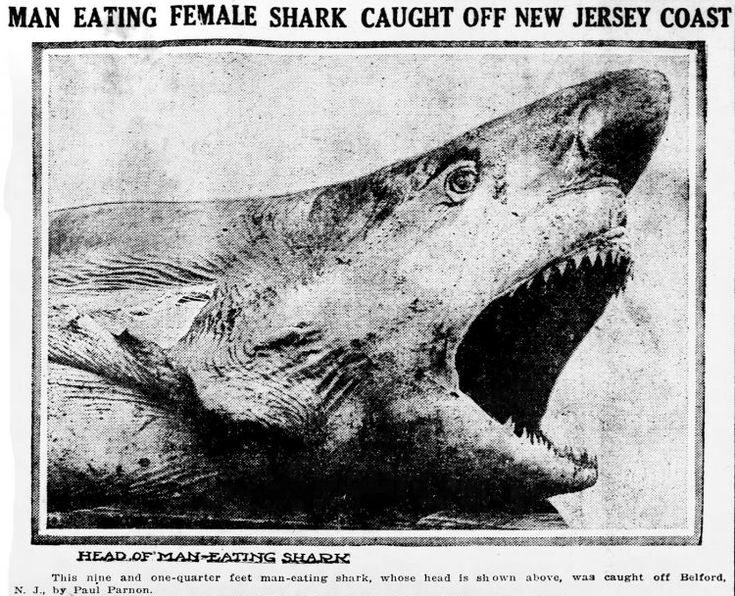
July 1, 1916: Charles Vansant, a 23-year-old Philadelphia native, is attacked by a shark in the Atlantic Ocean, off Beach Haven, on Long Beach Island on the New Jersey Shore. A lifeguard and a bystander tried to rescue him, but he had lost too much blood, and died.

Over the next few days, 3 other people would be killed and another badly injured in shark attacks on the Jersey Shore. The incidents occurred while there was both a Summer heat wave and a polio epidemic, causing people to flee steaming hot New York City, Philadelphia, and the cities of New Jersey for the Shore. The bigger crowds on the beaches gave the sharks an unexpected food source.

The second major attack occurred on July 6, further north in Spring Lake. Charles Bruder, 27, was a bell captain at the Essex & Sussex Hotel. Lifeguards reached him, but his legs had been severed, and he died before they reached shore. Guests and workers at the Essex & Sussex and neighboring hotels raised money for Bruder's mother, in Switzerland.

Further north still, on July 12, a shark got into Raritan Bay, and then into Matawan Creek near the towns of Matawan and Keyport, attacking 3 boys, killing 2 of them. The water shouldn't have been deep enough for a shark to swim in.

There were no further attacks, but their happening so close to the New York media blew the story out of proportion. By the time Jaws was filmed in 1974, sharks had been the Atlantic's boogeymen for over half a century. As Murray Hamilton, playing Mayor Larry Vaughn, put it, "It's all psychological. You yell, 'Barracuda!' Everybody says, 'Huh? What?' You yell, 'Shark!' We've got a panic on our hands on the Fourth of July."

*

July 1, 1916 was a Saturday. Actress Olivia de Havilland was born on this day. And the Battle of the Somme, the biggest bloodbath of World War I, began. I have a separate entry for this event.

These baseball games were played:

* The New York Yankees beat the Philadelphia Athletics, 5-4 at Shibe Park (later renamed Connie Mack Stadium) in Philadelphia. Les Nunamaker doubled home the winning run in the top of the 9th inning.

* The New York Giants lost to the Philadelphia Phillies, 9-2 at the Polo Grounds. Al Demaree went the distance for the Phils, allowing only 5 hits, 3 of them to Dave Robertson. He appears not to have been related to the later Yankee pitcher David Robertson.

* The Brooklyn Dodgers were swept in a doubleheader by the Boston Braves, 7-4 and 2-0 at Braves Field in Boston. Pat Ragan pitched a 2-hit shutout in the 2n game, outpitching future Hall-of-Famer Rube Marquard. The Dodgers -- or, more accurately, the Brooklyn Robins, as they were known from 1914 to 1931, as Wilbert Robinson was their manager -- won the National League Pennant, anyway.

* The Washington Senators beat the Boston Red Sox, 4-2 at American League Park (later renamed Griffith Stadium) in Washington. Walter Johnson pitched the last 2 innings for the Senators, and got the save, not that anyone knew what a "save" was at the time. Babe Ruth started for the Red Sox, pitched 3 1/3rd innings, and got the loss. He had no official at-bats, but had an RBI on a sacrifice fly. The Red Sox went on to beat the Dodgers/Robins in the World Series.

* The Cleveland Indians beat the St. Louis Browns, 5-4 at League Park in Cleveland. The game went 11 innings, although I can't find how the winning run was scored. Stan Coveleski was the winning pitcher, Eddie Plank the losing pitcher. Neither started the game. Both made the Baseball Hall of Fame. Tris Speaker went 2-for-3 with 2 walks. George Sisler went 1-for-4.

* The Pittsburgh Pirates beat the Cincinnati Reds, 2-1 at Redland Field (later renamed Crosley Field) in Cincinnati. Honus Wagner hit a home run.

* The Chicago White Sox beat the Detroit Tigers, 6-0 at Comiskey Park in Chicago. Eddie Collins went 3-for-4 with an RBI. Shoeless Joe Jackson went 1-for-3 with an RBI. Ty Cobb went 1-for-4.

* And a doubleheader between arch-rivals was played at Robison Field in St. Louis. The Chicago Cubs won the opener, 9-2. The St. Louis Cardinals won the nightcap, 4-3. This was another game that went 11 innings, without Baseball-Reference or Retrosheet having a record of how the winning run was scored. 

July 1, 1916: The Battle of the Somme

British "Tommies" emerging from the trenches
and "going over the top"

July 1, 1916: The Battle of the Somme breaks out, along the River Somme, outside Ovillers-la-Boisselle, 100 miles north of Paris. It becomes the 2nd-longest battle of World War I, behind the Battle of Verdun -- which started earlier in the year, and finished after the Somme -- and is the war's largest battle in terms of manpower.

On one side: Imperial Germany, with 1 million men, commanded by Rupprecht, Crown Prince of Bavaria. On the other side: France, defending their homeland with 1.3 million men, commanded by Marshal Ferdinand Foch; and Britain, assisting their ally with 1.2 million men, commanded by General Douglas Haig.
Douglas Haig

The 1st day at the Somme was one of the few days on which the Allies made significant progress in World War I. But it was also one of the bloodiest: In one day, the British lost 19,240 men. To put that in perspective: America lost its mind when nearly 60,000 men were lost in the 8 years of the Vietnam War. The British lost nearly 20,000 men in one day, the worst day in terms of losses that their army has ever had, since there has been a nation of England to keep records. The Germans lost 12,000. The French, 1,590.

But that battle continued. In September, the British used tanks in battle for the 1st time. It was also one of the earliest battles in which air power was used. Hostilities finally ceased on November 18, at which point the British and French had gained... 6 miles.

Among the British soldiers -- known as "Tommies," derived from "Tommy Atkins," a long-standing name for them, not from "Thompson submachine guns," as the term "tommy-guns" was -- was Lieutenant John Ronald Ruel Tolkien, later the author of the Lord of the Rings books. He arrived early in July, and suffered all the horrors of the trenches, including lice, which led to trench fever, which led to him being evacuated in early November. After that, everyone in his platoon was killed in action. People who thought his books were allegories for World War II were way off: They were allegories for World War I.
J.R.R. Tolkien, 1916

When the battle was over, the Germans claimed losses of 440,000 men, plus 73,000 prisoners of war; the French, 200,000 dead; the British, 420,000. Add it up: 1,060,000 soldiers killed. That's right: One battle, over one million men dead. And for what? Six miles.

It was a "Pyrrhic victory." The phrase originates from a quote from Pyrrhus of Epirus, whose triumph against the Romans in the Battle of Asculum, in what is now Southern Italy, in 279 BC destroyed much of his forces, forcing the end of his campaign. According to legend, he said, "If we are victorious in one more battle with the Romans, we shall be utterly ruined." The more common translation is, "Another such victory, and I am undone."

Haig was promoted to Field Marshal in 1917, given the title The Earl Haig in 1919, and lived until 1928. His grandson is Alexander, the 3rd Earl Haig. Despite the name and the shared profession, former U.S. Army General and Secretary of State Alexander Haig was not closely related.

For many years thereafter, the 1st Earl Haig was considered one of the most effective commanders of the war. But, in the words of the Canadian War Museum, "His epic but costly offensives at the Somme (1916) and Passchendaele (1917) have become nearly synonymous with the carnage and futility of First World War battles."

Marshal Foch became France's greatest military hero of the modern era, and accepted the German surrender on November 11, 1918. He lived until 1929.
Ferdinand Foch

With the Bavarian monarchy, as well as the larger German one, abolished by the Weimar Republic, Crown Prince Rupprecht tried and failed to establish a constitutional monarchy for Bavaria. The Nazis never asked him to be a part of their movement. He fled to Italy, then to Hungary, and was captured by the Nazis, and held at the Dachau concentration camp (which, at the absolute least, was in Bavaria). The postwar American occupation allowed him to return home, and he lived until 1955.

*

July 1, 1916 was a Saturday. Actress Olivia de Havilland was born on this day. And a series of shark attacks along the Jersey Shore began. I have a separate entry for this event.

These baseball games were played:

* The New York Yankees beat the Philadelphia Athletics, 5-4 at Shibe Park (later renamed Connie Mack Stadium) in Philadelphia. Les Nunamaker doubled home the winning run in the top of the 9th inning.

* The New York Giants lost to the Philadelphia Phillies, 9-2 at the Polo Grounds. Al Demaree went the distance for the Phils, allowing only 5 hits, 3 of them to Dave Robertson. He appears not to have been related to the later Yankee pitcher David Robertson.

* The Brooklyn Dodgers were swept in a doubleheader by the Boston Braves, 7-4 and 2-0 at Braves Field in Boston. Pat Ragan pitched a 2-hit shutout in the 2n game, outpitching future Hall-of-Famer Rube Marquard. The Dodgers -- or, more accurately, the Brooklyn Robins, as they were known from 1914 to 1931, as Wilbert Robinson was their manager -- won the National League Pennant, anyway.

* The Washington Senators beat the Boston Red Sox, 4-2 at American League Park (later renamed Griffith Stadium) in Washington. Walter Johnson pitched the last 2 innings for the Senators, and got the save, not that anyone knew what a "save" was at the time. Babe Ruth started for the Red Sox, pitched 3 1/3rd innings, and got the loss. He had no official at-bats, but had an RBI on a sacrifice fly. The Red Sox went on to beat the Dodgers/Robins in the World Series.

* The Cleveland Indians beat the St. Louis Browns, 5-4 at League Park in Cleveland. The game went 11 innings, although I can't find how the winning run was scored. Stan Coveleski was the winning pitcher, Eddie Plank the losing pitcher. Neither started the game. Both made the Baseball Hall of Fame. Tris Speaker went 2-for-3 with 2 walks. George Sisler went 1-for-4.

* The Pittsburgh Pirates beat the Cincinnati Reds, 2-1 at Redland Field (later renamed Crosley Field) in Cincinnati. Honus Wagner hit a home run.

* The Chicago White Sox beat the Detroit Tigers, 6-0 at Comiskey Park in Chicago. Eddie Collins went 3-for-4 with an RBI. Shoeless Joe Jackson went 1-for-3 with an RBI. Ty Cobb went 1-for-4.

* And a doubleheader between arch-rivals was played at Robison Field in St. Louis. The Chicago Cubs won the opener, 9-2. The St. Louis Cardinals won the nightcap, 4-3. This was another game that went 11 innings, without Baseball-Reference or Retrosheet having a record of how the winning run was scored.

July 1, 1910: Comiskey Park Opens

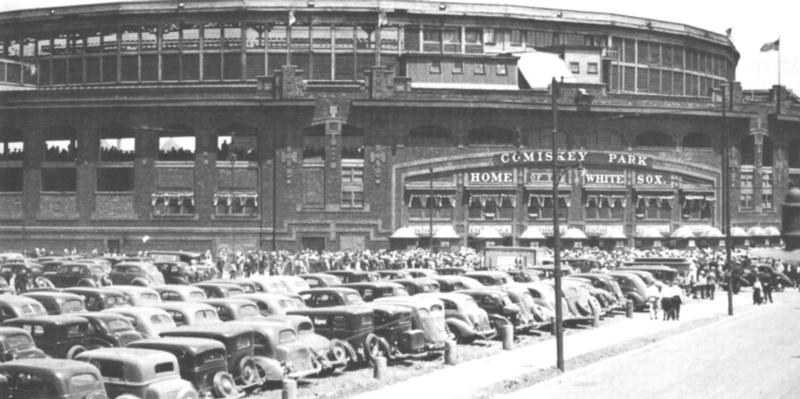
July 1, 1910: Comiskey Park opens, at 324 West 35th Street and Shields Avenue, in the Bridgeport section of the South Side of Chicago, about 4 miles south of The Loop. It doesn't go so well for the home team: The Chicago White Sox lose to the St. Louis Browns, 2-0. Barney Pelty of the Browns pitches a 5-hit shutout, defeating the White Sox' ace, Big Ed Walsh.

It was a pitcher's park: Supposedly, Zachary Taylor Davis, the architect who designed both it and the Cubs' Wrigley Field, asked White Sox pitcher Ed Walsh for suggestions in setting the dimensions. The field was always symmetrical. When it opened in 1910, the foul lines were a large 363 feet from home plate, the power alleys a long 382, and center field 420, which was actually shorter than most ballparks at the time. The final distances, from 1986 to 1990, were 347 to the poles, 382 to the alleys, and 409 to center.
As a result, the White Sox were perennially a team built around pitching, defense, contact hitting and speed. It wasn't until 1971, with Bill Melton, that they had a player lead the American League in home runs. Most of their career leaders in home runs played for them after the move across the street.

Officially, it was named White Sox Park through the 1912 season. But everyone kept calling it "Comiskey Park," for the team's owner, Charles A. Comiskey, formerly a great 1st baseman in the 1880s. Having played at South Side Park, a few blocks aware, and won the American League Pennant in its 1st season, 1901, and the World Series in 1906, the White Sox won the 1917 World Series while playing at Comiskey, and lost it in 1919, dubiously.

They also let the Chicago Cubs use it for their games in the 1918 World Series, as it seated more than the ballpark that would later be expanded and become Wrigley Field.

Bill Veeck bought the White Sox in 1959, and won an American League Pennant with them that 1st season. But ill health forced him to sell the team in 1961. Comiskey Park became White Sox Park again from 1962 to 1975, but the name never stuck. And so, when Veeck bought the team back in 1975, he restored the Comiskey name, which lasted until the end.

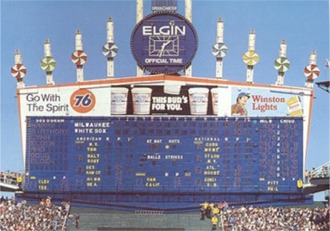
Charlie Comiskey called his park "The Baseball Palace of the World." Bill Veeck called it "The World's Largest Saloon." He was closer to being correct. After the 1959 Pennant season, he installed what he called an "exploding scoreboard," which lit up, spun pinwheels, and shot off fireworks.
The original Exploding Scoreboard, late 1970s

Legend has it that, upset by the "unprofessionalism" of the original 1960 board, Casey Stengel brought sparklers into the Yankee dugout, and when a Yankee homered, he had the sparklers lit, and the Yankees jumped up and down in the dugout in mock celebration. Nevertheless, that board remained in place until 1982, when it was replaced as part of a minor renovation.

Comiskey Park hosted baseball's 1st official All-Star Game in 1933, another in 1950, and a 50th Anniversary All-Star Game in 1983. The Chicago American Giants of the Negro Leagues played there from 1941 to 1952.

The NFL's Chicago Cardinals played there from 1922 to 1959, and the franchise, now the Arizona Cardinals, won what remains their only NFL Championship Game (they didn't call 'em Super Bowls back then) there in 1947. The Chicago Sting of the old North American Soccer League played there from 1980 to 1982, won the league title in 1981 and 1984, and hosted the 1st leg of Soccer Bowl '84.
Football setup, before the "exploding scoreboard"

Comiskey Park hosted 3 fights for the Heavyweight Championship of the World: Joe Louis winning the title by knocking out "Cinderella Man" Jim Braddock on June 22, 1937; Ezzard Charles defeating Jersey Joe Walcott for the title vacated by Louis' retirement on June 22, 1949; and Sonny Liston knocking out Floyd Patterson to take the title on September 25, 1962.

With the closing in 1970 of Crosley Field in Cincinnati, Forbes Field in Pittsburgh and Connie Mack Stadium in Philadelphia -- Crosley opened in 1912, the other 2 in 1909 -- Comiskey Park became the oldest stadium in Major League Baseball. And yet, from 1969 to 1975, there was an experiment with an artificial turf infield, keeping the outfield natural grass. This was known as "Sox Sod," and it looked ridiculous. Getting rid of it was one of the changes Veeck made when he bought the team back after the 1975 season.

When Veeck returned as owner for the 1976 season, his sense of promotions went into overdrive. He had a shower installed in the center field bleachers, the only part of the seating area not protected from the Sun, for fans who wanted to cool off. He increased the variety of concessions, giving Comiskey Park the best food selection of any ballpark ever. On-field contests were a big hit. Then again, there were those uniforms, including the version with shorts. And there was Disco Demolition Night in 1979...

Veeck sold the White Sox to Jerry Reinsdorf and Eddie Einhorn in 1980. He simply couldn't afford to keep the team running, saying, "It's not the high price of talent, it's the high price of mediocrity."

The Wrigley family, owners of the Cubs, were able to keep Wrigley Field standing and in good shape by spending big money on it. The White Sox' owners -- the Comiskeys, the Allyns, and Veeck -- never had enough money to pay for proper maintenance. I got to see one game there, on September 13, 1990, shortly before it closed. I noticed that the outside brick wall had white paint so thick, you could have driven a chisel into it, 4 inches deep, and hit nothing but paint. (The White Sox won my game, 9-6 over the Boston Red Sox.)

The condition of the stadium, and of the neighborhood, both deteriorated. In 1988, "The Reinsdorf Twins" told the Illinois legislature that they would move to the Tampa Bay area for the next season if they didn't get funding for a new ballpark. They got it, and the old Comiskey Park closed on September 30, 1990, with a 2-1 White Sox win over the Seattle Mariners. Demolition began the following April.
Two Comiskey Parks, 1990

The replacement park opened across the street, at 333 W. 35th Street, on April 18, 1991. It didn't go so well for the Pale Hose: They lost 16-0 to the Detroit Tigers. The new park was named Comiskey Park as well, but became U.S. Cellular Field in 2003, and Guaranteed Rate Field for 2017. The site of the old park is now a parking lot, with its infield painted in.

The area around the park, isn't as bad as it was in the 1960s, '70s, '80s and early '90s. It was in 1973 that Jim Croce, in "Bad, Bad Leroy Brown," called the South Side "the baddest part of town." But things have improved significantly.

UPDATE: For the 2025 season, New Comiskey is now simply "Rate Field."

*

July 1, 1910 was a Friday. Glenn "Slats" Hardin, winner of the Gold Medal for America in the 400-meter hurdles at the 1936 Olympics in Berlin, was born.

These other baseball games were played:

* The New York Highlanders were swept in a doubleheader by the Philadelphia Athletics, 2-0 and 4-3 at Shibe Park in Philadelphia. In the opener, Jack Coombs pitched a 7-hit shutout to beat Russ Ford. In the nightcap, Albert "Chief" Bender was backed by a home run and a triple by Frank Baker -- not yet nicknamed "Home Run" Baker -- to beat Jack Quinn. The Highlanders were renamed the Yankees in 1913.

* The New York Giants beat their arch-rivals, the Brooklyn Superbas, 5-4 at the Polo Grounds. The Giants scored 2 runs in the bottom of the 9th to win it. The following year, the Brooklyn team would adopt the name by which they would be forever known: The Dodgers.

* The Philadelphia Phillies swept a doubleheader from the Boston Doves, 6-2 and 6-5 at the South End Grounds in Boston. Named for their owners, the brothers George and John Dovey, the Doves were bought by William H. Russell in 1911, and he renamed them for himself: The Boston Rustlers. He died after 1 season, and they were bought by James Gaffney, an official in the New York political organization of Tammany Hall, a "Brave." He renamed them the Boston Braves.

* The Washington Senators beat the Boston Red Sox, 2-1 at American League Park in Washington. Walter Johnson went the distance on the win. Tris Speaker went 1-for-4 with an RBI.

* The Cincinnati Reds beat the Pittsburgh Pirates, 4-1 at Forbes Field in Pittsburgh. Honus Wagner went 0-for-2 with a walk.

* The Cleveland Naps beat the Detroit Tigers, 8-3 at League Park in Cleveland. Napoleon "Nap" Lajoie, the slugger, 2nd baseman and manager for whom the team that became the Indians in 1915 and the Guardians in 2022 were then named, went 3-for-3 with a walk and an RBI. Ty Cobb, uncharacteristically, went 0-for-4.

* And the Chicago Cubs beat the St. Louis Cardinals, 2-0 at Robison Field in St. Louis. (That's not a typo: The Cards were then owned by the Robison brothers, not "Robinson.") At the time, the Cards were not the Cubs' arch-rivals, the Giants were.

December 31, 1999 & January 1, 2000: The Millennium

December 31, 1999:  The Millennium arrives. The people of planet Earth survived. At a terrible cost. But we hadn't destroyed ourselves. ...