Showing posts with label would-be monarch. Show all posts

Wednesday, November 9, 2022

November 9, 1918: Kaiser Wilhelm II Abdicates

November 9, 1918: Kaiser Wilhelm II of Germany abdicates his imperial throne, ending the German Empire. This "Second Reich" had lasted not quite 53 years.

He started life with so much promise on January 27, 1859, at the Kronprinzen Palais (Crown Prince's Palace), in Berlin, as Friedrich Wilhelm Viktor Albert Hohenzollern. His great-uncle was King Frederick William IV of Prussia, but was incapacitated by strokes. The child's grandfather, Wilhelm, was Prince Regent until his brother's death in 1861. That made him König Wilhelm I -- in English, King William I.

In 1871, after defeating France in the Franco-Prussian War, the elder Wilhelm declared the German Empire, unifying all the German principalities under his crown, and became Deutscher Kaiser, Emperor of Germany. (As with the Russian title "Czar" or "Tsar," "Kaiser" comes from the Roman title "Caesar.") Wilhelm I ruled until his death in 1888. Unfortunately, his son was already dying of cancer, and only reigned as Kaiser Friedrich III for 3 months. He died on June 15, 1888, and his son became Kaiser Wilhelm II.

Because of various intermarriages between the royal houses of Europe, Wilhelm was connected to most of them. His mother, Victoria, was a daughter of Queen Victoria of Britain. He was a 1st cousin of both King George V of Britain and Czar Nicholas II of Russia. He and Nicholas would correspond, signing their names "Willy" and "Nicky."

They were friendly. Their governments were not. Wilhelm alienated a lot of Germans by dismissing the man who really won the Franco-Prussian War and united the empire, Chancellor Otto von Bismarck, and making himself a virtual dictator with what he called the "New Course." He alienated Britain and France with a major naval buildup, by taking new colonies in Africa and Asia, and by building a railroad through their Middle East colonies. Soon, his only allies were the Austro-Hungarian Empire, also German-speaking; and the Ottoman Empire. And both of those were in serious decline.

In 1914, Archduke Franz Ferdinand, the heir to the Austrian throne, was assassinated in Serbia. Austria declared war on Serbia. The alliances kicked in, and the dominoes fell: To stand up for Serbia, Russia declared war on Austria; to stand up for Austria, Germany declared war on Russia; and to stand up for Russia, Britain and France declared war on Germany. It became known as the Great War. It would end up being known as the World War, and, eventually, World War I. It would also be called -- first with hope, then with mockery -- "The War to End All Wars."

Fighting on 2 fronts -- against Britain and France to the West, and against Russia to the East -- plus on the high seas stretched even Germany, the strongest nation on the European Continent, to the limit. They were about to lose the war when Russia broke out into revolution, and left. This allowed Germany to concentrate on the Western Front. But the United States got into the war, with a seemingly endless supply of fresh troops, in 1918, and Germany, physically and mentally exhausted, was doomed.

Wilhelm was at the Imperial Army headquarters in Spa, Belgium, when the uprisings in Berlin and other centres took him by surprise in late October 1918. Mutiny among the ranks of his beloved Imperial Navy profoundly shocked him.

He accepted that he would likely have to give up the imperial crown, but still hoped to retain the Prussian kingship. He believed that, with this status, making him the ruler of 2/3rds of Germany as it then stood, he would still be a key player in any new system. However, this was impossible under the imperial constitution. Wilhelm thought he ruled as emperor in a personal union with Prussia. In truth, the constitution defined the empire as a confederation of states under the permanent presidency of Prussia. The imperial crown was thus tied to the Prussian crown, meaning that Wilhelm could not renounce one crown without renouncing the other.

General Wilhelm Groener told Wilhelm that the Army would march back in good order under the command of Field Marshal Paul von Hindenburg, but would not fight for Wilhelm's throne. The monarchy's last and strongest support had been broken, and finally even Hindenburg, himself a lifelong monarchist, was obliged, after polling his generals, to advise the Emperor to give up the crown. Wilhelm crossed the border by train, and went into exile in the Netherlands, which stayed neutral. The Weimar Republic was proclaimed.

The war resulted in the deaths of about 10 million military men, and probably at least that many civilians. And that doesn't count the deaths from the Spanish Flu epidemic that arrived in the last year of the war. In the words of a German nobleman, Count Henry Kessler:

This rabbit roaring like a lion would be history's most ridiculous monster if his performance had not resulted in such suffering and rivers of blood. The mendacity of his behavior undermined policy and the state, substituted sham and show for sound Prussian tradition, and distorted the perspective of almost the entire nation.

He had a point: Before the World Wars, when people outside Germany thought of things that were "German," they tended to think of things that were Prussian: The militarism, but also the efficiency, the scientific know-how, and literature like that of Johann Wolfgang von Goethe. Between 1914 and 1945, outsiders still tended to think of things that were Prussian, but remade in Wilhelm's self-broadcast image: Still the militarism, but also the certitude, the stubbornness, and the sense of invincibility that was, admittedly, partly due at times to spectacularly good luck. 

Since the World Wars, when people outside Germany think of things that are "German," they tend to think of things that are Bavarian, from the south of the country: Men in lederhosen, women in drindl dresses, beer, bratwurst, "oom-pah" music, and Oktoberfest.

Millions of people all over the world wanted the Kaiser prosecuted as a war criminal. But both President Woodrow Wilson and Prime Minister David Lloyd George of Britain thought this might destabilize the peace. So Wilhelm was allowed to live out his life in exile in the Dutch city of Doorn.
He died on June 4, 1941, at the age of 82. Despite losing his crown and his country, he actually outlived most of his opponents: President Wilson; Canada's Prime Minister Robert Borden; Britain's King George and Marshal Douglas Haig; Russia's Czar Nicholas and their main military commander, his 2nd cousin, Grand Duke Nicholas; and France's President Raymond Poincaré, Prime Minister Georges Clemenceau, and Marshals Joseph Joffre and Ferdinand Foch. And his allies: Hindenburg, Austria's Emperor Franz Joseph, and the Ottoman Empire's Sultan Mehmed V. He did not outlive Lloyd George, but he did live Herbert H. Asquith, who was Prime Minister of Britain when the war began.

He also lived long enough to see Germany rise again, and conquer Europe, including France. He did not, however, get along with Adolf Hitler, or think much of him. The Chancellor of the Third Reich, recognizing the potential propaganda value, wanted to give the Kaiser a state funeral with full military honors, but he turned it down: He refused to be buried in Germany unless the monarchy was restored. So he was buried at Huis Doorn, where he lived, and his remains have never been repatriated.

His wife, Augusta Viktoria of Schleswig-Holstein, died in 1921, in exile with him. Their eldest son, Kronprinz Wilhelm, fought for the Nazis, and died in 1951, having never become Kaiser Wilhelm III -- perhaps lucky for Germany, because he was an incompetent alcoholic.

His son, Louis Ferdinand, Prince of Prussia, was the head of the House of Hohenzollern until his death in 1994. His son, also Louis Ferdinand, was killed in an accident in 1977. So, his son, Georg Friedrich, Prince of Prussia, is the head of the House as of November 9, 2022, at age 46.
A marketing executive living in the suburbs of Berlin, the great-great-grandson of the last Kaiser has made no effort to restore the monarchy of either Germany or Prussia; but he has strenuously tried, with some success, to regain much of his family's lost property, including artworks.

November 9 has become Germany's "Day of Destiny": On that date, in 1918, the Kaiser abdicated and the 1st German Republic was proclaimed; in 1923, the Beer Hall Putsch failed; in 1938, Kristallnacht was carried out by the Nazis; and in 1989, the Berlin Wall was rendered legally moot.

*

November 9, 1918 was a Saturday. Spiro Agnew, who would be elected Vice President of the United States in 1968 and 1972, but resign the office in disgrace in 1973, was born on this day.

For most of the world, competitive sports was on hold. In North America, baseball season was cut short due to the war, the NHL season didn't start until December 21, professional basketball barely existed, and professional football was only on a regional, minor-league level.

But there were some notable college football games:

* The team at the U.S. Naval Academy beat the team from Hampton Roads Naval Training Station (now Naval Station Norfolk), 37-6 at Worden Field in Annapolis, Maryland. The team at the U.S. Military Academy, at West Point, New York, played only 1 game that season, and it wasn't that week. World War I meant that 1917 and 1918 are the only seasons since 1898 that there has not been an Army-Navy Game.

* Notre Dame played to a 7-7 tie, at Cartier Field in South Bend, Indiana, with the Great Lakes Navy team. They were based at Naval Station Great Lakes, in North Chicago, Illinois. They went on to play another military base team, the Vallejo, California-based Mare Island Marines, in the Rose Bowl. Great Lakes' best player was former University of Illinois end George Halas. A year and a half later, Halas and some friends founded the NFL.

* Michigan beat the University of Chicago, 13-0 at Stagg Field in Chicago.

* In a rivalry that would become bigger in the years to come, Iowa beat Minnesota, 6-0 at Iowa Field in Iowa City.

* Vanderbilt beat Tennessee, 76-0 at the original Dudley Field in Nashville. Vanderbilt clobbering arch-rival Tennessee was not a big deal at the time.

* The University of California beat fellow East Bay school St. Mary's, 40-14 at California Field in Berkeley.

* Rutgers beat Penn State, 26-3 at Beaver Field in State College, Pennsylvania. This was the 1st time these 2 teams ever played. They didn't play each other again until 1950, and didn't start playing each other regularly until 1977. From 1918 to 2021, Penn State is 30-2 against Rutgers. RU's only other win has been in 1988. Princeton played only 3 times that season, and this week was not one of them. 

Tuesday, October 4, 2022

October 5, 1910: The Fall of the Portuguese Monarchy

King Manuel II

October 5, 1910: The 5th of October Revolution occurs in Portugal. With the nation in financial crisis, the Portuguese Republican Party stages a coup, and King Manuel II flees to England, and lives there until his death in 1932.

He had reigned only 2 years, since the assassination of his father, King Carlos I, and his brother, Crown Prince Luis Felipe. The House of Braganza had ruled the country since 1604, but now, it was all over.

The First Portuguese Republic is proclaimed, and lasts until a military coup in 1926. This fascist National Dictatorship evolved in 1933 to the Estado Novo (New State), falsely named the Second Republic, and lasted until the Carnation Revolution in 1974. Portugal remains free, and the monarchy has never been restored, even ceremonially.

As of October 5, 2022, the claimant to the throne is Duarte Pio, Duke of Braganza. He is 77, and, like Manuel II, is a direct descendant of King João VI, who reigned from 1816 to 1825.
Duarte Pio, Duke of Braganza

*

October 5, 1910 was a Wednesday. There were 4 other baseball games that day:

* The New York Highlanders beat the Philadelphia Athletics, 7-4 at Shibe Park in Philadelphia. A's manager/co-owner Connie Mack inserted his son Earle Mack behind the plate in the game, hitting a single and a triple in the game. This is the 1st time that a manager has put his son in a major league game as a player. I have a separate entry for this event.

* The Boston Red Sox led the Washington Senators, 5-1 going into the bottom of the 9th at American League Park in Washington. The Senators tied the game. But they couldn't find the winning run, and the umpires called the game due to darkness.

* And a doubleheader was played at Bennett Park in Detroit. The Detroit Tigers lost the opener to the Cleveland Naps, 8-3, allowing 5 runs in the top of the 10th inning. The nightcap was called due to darkness after 5 innings, with the Tigers leading, 4-2. The Naps were named for their manager, 2nd baseman and best hitter, Napoleon "Nap" Lajoie. They would be renamed the Indians in 1915 and the Guardians in 2022.

This was the last week of the regular season, and Lajoie and the Tigers' Ty Cobb were in a feverish race for the American League battle title, with the Chalmers Auto Company offering a new car to the winner. Over the 2 games, Cobb went 3-for-6 with a walk, 3 stolen bases and 2 RBIs, while Lajoie went 3-for-6 with an RBI. "Shoeless" Joe Jackson went 3-for-7. Cobb ended up winning the batting title, but there were shenanigans (not his doing), and so Chalmers gave both men cars. (Cobb didn't mind: He got what he wanted.)

Bennett Park was torn down in 1911, and a new park opened on the site the next year, known as Navin Field from 1912 to 1937, Briggs Stadium from 1938 to 1960, and Tiger Stadium from 1961 to 1999.

Despite it being a Monday, there were 5 college football games played that day:

* Yale beat Tufts, 17-0 at Yale Field in New Haven, Connecticut.

* The University of Pennsylvania beat Franklin & Marshall University, 17-0 at the original Franklin Field in Philadelphia.

* The Carlisle Indian School, with a sophomore two-way back named Jim Thorpe, beat Dickinson College, 24-0 at Biddle Field in Carlisle, Pennsylvania.

* VPI -- the Virginia Polytechnic Institute, usually known as "Virginia Tech" now -- beat Davidson University, 16-0 at Miles Field in Blacksburg, Virginia.

* And the University of Mississippi, a.k.a. Ole Miss, beat Tennessee Medical College, now the University of Memphis, 2-0 in Oxford, Mississippi. 

Thursday, September 1, 2022

September 2, 1870: The Battle of Sedan

Wilhelm Camphausen's painting of Napoleon III (left) and Bismarck after the battle

September 2, 1870: The Battle of Sedan is fought, in the Ardennes Forest, near France's border with Belgium. It is an utter disaster for the French Second Empire. It is the beginning of the German Second Reich.

Since the final fall of Napoleon Bonaparte in 1815, France went through the monarchies of Louis XVIII, Charles X and Louis Philippe. Louis-Napoléon Bonaparte, son of Napoleon's brother Louis, was elected President following the Revolution of 1848, then seized full power in 1851, proclaiming himself Emperor Napoleon III. (Napoleon's son died in 1832, at age 21, without ever having reigned as Napoleon II.)

Napoleon III was popular among his people for several years. He modernized the French economy, focusing on railways. He reconstructed Paris with new boulevards and parks, and the architectural style that became known as "Second Empire Style," which would also become popular in America.

In foreign policy, he led the building of the Suez Canal in Egypt, assisted the unification of Italy to win their alliance, and negotiated a free trade agreement with Britain, bringing the old enemy nations closer together than ever before. So, unlike Le Petit Corporal, one of the greatest enemies Britain has ever had, Napoleon III is well-regarded by British people today.
Emperor Napoleon III

But he made 2 great mistakes in foreign policy: The attempted annexation of Mexico ended in disaster in 1867, and the Franco-Prussian War. Nervous about Chancellor Otto von Bismarck's maneuvering to unify the various small German states into a single country, Napoleon III attacked on July 19, 1870.
Chancellor Otto von Bismarck

A story which may be apocryphal tells of a German-owned firm in New York receiving a large order for arms from France. They wired Bismarck, and asked them how they should handle it. He replied that they should sell the French all the weapons they could afford, because his army would have them soon enough. 

The French were no match for the German troops. Finally, at Sedan, on September 2, with Napoleon III himself on hand, a German force commanded by Helmuth von Moltke, with King Wilhelm I of Prussia on hand, encircled the French troops, capturing 104,000 men, including the Emperor. Napoleon III personally surrendered to Wilhelm I, and sent word of his abdication as Emperor to Paris.

A Government of National Defense was formed on September 4. They considered having Henri, Comte de Chambord and Duke of Bordeaux, the grandson of the last legitimate King, Charles X, as a parliamentary monarch, Henri V, but he wanted to get rid of all symbols of the French Revolution of 1789-94, including the Tricolor Flag. The French people had grown too attached to the flag, and so he refused to take the throne. France has never had a monarchy again, no matter how powerless.

The Government of National Defense turned out to be useless. On September 19, Bismarck entered Paris. On January 18, 1871, at the Palace of Versailles, built by the most legendary of all French Kings, Louis XIV, the German Second Reich was proclaimed, with Wilhelm I as Emperor, or Kaiser. (Like the Russian title "Czar," the German title "Kaiser" comes from the Roman title "Caesar.")
Kaiser Wilhelm I

Taken into the German Empire were the eastern French territories of Alsace and Lorraine. France would take them back in World War I, then Germany would take the entirety of France in World War II, before Allied troops liberated the country. Unlike his grandson Wilhelm II, the great villain of World War I, and Adolf Hitler, that of World War II, Wilhelm I is still admired in Germany, as is Bismarck, the father of the nation, their George Washington.

Later in 1871, the Government of National Defense fell to the Paris Commune, but that didn't last long, either. A series of weak governments under the Third Republic led to France suffering terribly in both World Wars.

Napoleon III died in exile in London in 1873, after years of ill health, at the age of 64. His son, Prince Imperial Louis-Napoléon, never reigned as Emperor Napoleon IV, enlisted in the British Army, and died a hero's death in the Anglo-Zulu War in 1879, just 23. With him died the last serious hope for a return to monarchy in France.

In 2022, there are 3 pretenders to the French throne, none of whom has made much effort to reclaim it. The Legitimist claimant is Louis Alphonse de Bourbon, Duc d'Anjou, age 48, the would-be Louis XX, a direct descendant of Louis XV (but not XVI, XVII, XVIII or XIX), and also descended from Queen Victoria of Britain, Kings of Spain, and (through his mother) Spanish dictator Francisco Franco.
The Orléanist claimant is Jean, Comte de Paris, 57, the would-be Jean IV, a direct descendant of Louis-Phillippe.
And the Bonapartist claimant is Jean-Christophe, Prince Napoléon, 36, the would-be Napoleon VIII, a direct descendant of the original Napoleon's brother, Jérôme-Napoléon Bonaparte.
Like George Washington, Charles de Gaulle probably could have had himself proclaimed King if he'd wanted it. Certainly, there were times when he acted more like a king than Washington ever did. His son, Philippe, served in the French Senate from 1986 to 2004. As of September 2, 2022, he is still alive, age 98.

UPDATE: Philippe de Gaulle died in 2024, at 102. His eldest son and heir, named Charles de Gaulle, turned 77 on September 25, 2025. From 1994 to 2004, he served in the European Parliament. In 1999, he switched to the National Front, a since-dissolved far-right party that often seemed to resemble Germany's Nazis, which would have horrified his grandfather and namesake, not to mention Napoleon III. "It was like hearing the Pope had converted to Islam," a family member said.

*

September 2, 1870 was a Friday. This was the dawn of professional baseball, but before the 1st professional league. The biggest rivalry in the sport at the time was between the top team in what was then considered the West, the Cincinnati Red Stockings; and the top team in the East, the Brooklyn Atlantics.

On this day, the Red Stockings beat the Atlantics, 14-3. The Red Stockings finished the season 67-6, with 2 of their losses -- June 14, the 1st game they'd ever lost since their founding the preceding hear, and October 26 -- being dealt by the Atlantics.

Saturday, July 23, 2022

July 23, 1974: The Restoration of Greek Democracy

Konstantinos G. Karamanlis

July 23, 1974: After 7 years of a right-wing military dictatorship, democracy is restored to the birthplace of the concept, Greece.

On April 21, 1967, a group of colonels in the Greek Army overthrew the caretaker government, a month before scheduled elections which Georgios Papandreou's Centre Union party was favored to win. King Constantine II and his family fled to England, and the monarchy was never restored.
King Constantine II, 2019

The military dictatorship was led by Georgios Papadopoulos, and was characterized by policies such as anti-communism, restrictions on civil liberties, and the imprisonment, torture and exile of political opponents. In other words, the kind of things the Greek people had fought so hard against in World War II, only a generation before. The coup is believed to have been heavily influenced by America's CIA, in a bid to ward off Communist influence, spilling over from neighboring Albania and Bulgaria.

As internal dissatisfaction grew in the early 1970s, and especially after an abortive coup by the Navy in early 1973, Papadopoulos attempted to legitimize the regime by beginning a gradual "democratization." On June 1, 1973, he formally abolished the monarchy, and declared Greece a republic, with himself as President. He was confirmed in office via a controversial referendum. He furthermore sought the support of the old political establishment, but secured only the cooperation of Spiro Markezinis, who became Prime Minister.

Concurrently, many restrictions were lifted, and the Army's role significantly reduced. An interim Constitution created a presidential republic, which vested sweeping, almost dictatorial, powers in the hands of the President. The decision to return to at least nominal civilian rule, and the restriction of the Army's role, was resented by many of the regime's supporters, whose dissatisfaction with Papadopoulos would become evident a few months later.

On November 14, 1973, students at the Athens Polytechnic University went on strike, and started protesting against the junta. An assembly formed spontaneously, and decided to occupy the Polytechnic. On the 15th, thousands of people from Athens poured in to support the students. On the 16th, the demonstrators proclaimed that the students were aiming to bring down the junta. During the afternoon, demonstrations and attacks against neighboring ministries took place. Central roads closed, fires erupted, and Molotov cocktails were thrown.

In the early hours of November 17, the transitional government sent a tank crashing through the gates of the Polytechnic. Soon after that, Prime Minister Markezinis asked President Papadopoulos to reimpose martial law.

An official investigation undertaken after the fall of the junta declared that no students of the Athens Polytechnic were killed during the incident. However, 24 civilians were killed outside the campus, including a 5-year-old boy caught in crossfire.

It was the end of the line for Papadopoulos: On November 25, he was overthrown by a hardliner, Dimitrios Ioannidis. This began a string of events that would culminate in the fall of the regime, sparked by Ioannidis' ill-advised invasion, on July 15, 1974, of the island nation of Cyprus, which inflamed tensions with neighboring Turkey, which invaded on July 20.

Ioannidis could not survive such a humiliation, and was pushed out by "The Coup of the Generals" on July 23. They invited Konstantinos Karamanlis, who had served as Prime Minister 3 times between 1955 and 1963, to return from exile, and end the military rule.

Papadopoulos was sentenced to death, but this was commuted to life imprisonment. He died in prison in 1999, at the age of 80. Ioannidis was sentenced to life, and died in prison in 2010, at 87. Karamanlis served as Prime Minister until the election of 1980, making him President, holding the office until his resignation in 1985. Despite being 81 years old, he was elected again in 1990, and retired again in 1995. He died in 1998, at 91. His nephew, Konstantinos A. "Kostas" Karamanlis, served as Prime Minister from 2004 to 2009.

King Constantine II, as his opponents reminded him, was not ethnically Greek. He was German and Danish. He was a grandson of Kaiser Wilhelm II of Germany, and a great-grandson of both Queen Victoria of Britain and King Christian IX of Denmark -- which made him a 3rd cousin of Queen Elizabeth II, who allowed him and his family to settle in London after the 1967 coup.

He married another 3rd cousin, Princess Anne-Marie of Denmark. They were permitted to return to Greece in 2013, although there was no chance of the monarchy ever being legally restored.

UPDATE: The King died in 2023. The former Queen is still alive. The current head of the royal family, the House of Glücksburg, is Crown Prince Pavlos, 57, who runs an investment firm in London, and would be King Paul II in the incredibly unlikely event that the monarchy was restored. He is a 4th cousin of King Charles III of Britain, and a 1st cousin of King Felipe VI of Spain (who had been his roommate at Georgetown University in Washington, D.C.) and King Frederik X of Denmark.

*

July 23, 1974 was a Tuesday. Maurice Greene was born on this day, a sprinter who won the Gold Medals in the 100 meters and the 4-by-100-meter relay in the 2000 Olympics in Sydney, Australia; and would win the Silver Medal in the 4-by-100 and the Bronze Medal in 2004 in... Athens, Greece. Actresses Kathryn Hahn and Stephanie March were also born on this day.

There was only 1 score on this historic day: Major League Baseball held its All-Star Game, at Three Rivers Stadium in Pittsburgh. The National League beat the American League, 7-2. The starting pitchers were Andy Messersmith of the Los Angeles Dodgers and Gaylord Perry of the Cleveland Indians. Ken Brett of the host Pittsburgh Pirates was the winning pitcher, and Luis Tiant of the Boston Red Sox was the losing pitcher. The only home run was hit by Reggie Smith of the St. Louis Cardinals, off Jim "Catfish" Hunter of the Oakland Athletics.

Sunday, July 17, 2022

July 17, 1918: The Execution of the Russian Imperial Family

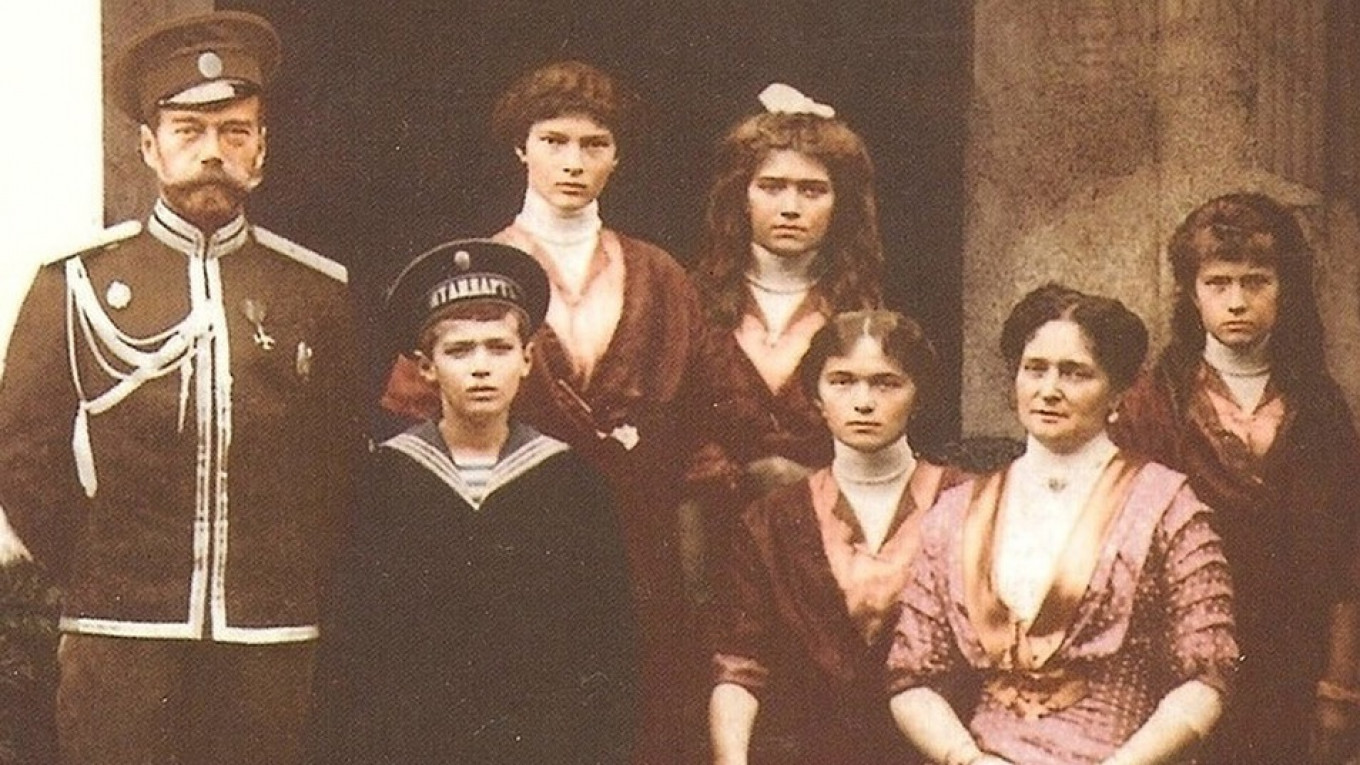
July 17, 1918: The Bolshevik Revolution executes Czar Nicholas II and his entire immediate family, in Ekaterinburg, Russia, about 1,100 miles east of Moscow.

World War I went very badly for the Russian Empire, and the biggest reason was that the Czar took personal control of the Army. He proved to be completely inept as a commander, and by early 1917, both the Army and the home front were on the brink of collapse. The Army forced him to abdicate the throne on March 15.

A provisional government was set up, with Alexander Kerensky as President. But it could not feed the country, get it out of the war, or free the farmers from the owners of their land fast enough, and the people turned to others for hope.

Those others turned out to be the Bolsheviks, Communists led by Vladimir Lenin. He promised the people "Peace, land and bread." It is a bit ironic to say of the most successful exponent that Communism has ever had, "They bought what he was selling." But they did.

On November 7, 1917, the Czar's former residence, the Winter Palace in Petrograd, was stormed by Bolshevik troops, and the Bolshevik Revolution was complete. It is also known as the October Revolution, since Russia was still using the Julian Calendar, and they thought it was October 25. Lenin switched the vast country to the Gregorian Calendar.

Lenin also moved the capital to Moscow, and after his death in 1924, Petrograd was renamed Leningrad. After the end of the Soviet Union in 1991, that city's name was restored to what it was before the failed Russian Revolution of 1905: St. Petersburg. As was said at the time, "Better to name it for a saint than for a monster."

For Lenin was a monster. He kept his promise of peace, producing the Treaty of Brest-Litovsk that pulled Russia out of the war on March 3, 1918. Well, actually, he kept half of his promise of peace, because the Kerensky forces and the Czarist forces launched a civil war against the Bolsheviks. So there was still fighting. And there was no land, as the federal government took it all over. And there were precious little bread: People were still starving.

Lenin knew that, as long as the Czar was still alive, as long as any potential Czar was still alive, the Czarist forces would have someone to rally around. The House of Romanov -- the Czar, his wife, and their 5 children -- had been moved around, first by the provisional government, then by the Bolsheviks, but were still available.

Finally, Lenin made the decision that the Romanovs had to go, as a psychological blow to the Czarist forces. They were taken to Ipatiev House in Ekaterinburg. And they were all shot:

* Czar Nicholas II, 50 years old.
* His wife, Czarina Alexandria, a.k.a. Alix, 46. And their children:
* Grand Duchess Olga, 22. 
* Grand Duchess Tatiana, 21. As nurses in the war, she and Olga had each fallen in love with at least 2 soldiers, but, despite having reached adulthood, neither was ever engaged to be married.
* Grand Duchess Maria, 19. Although renowned in her lifetime for her beauty, and having expressed a desire to have a large family of her own, she is not known to have had any romances, much less come close to being married.
* Grand Duchess Anastasia, 17. While there were impostors claiming to be her in the decades to come, the discovery of the Romanov mass grave led to DNA testing that proved that none of them escaped. And the rumor that Grigori Rasputin, assassinated by relatives of the Czar at the end of 1916, had seduced the Czarina and all 4 Grand Duchesses was completely false.
* Czarevich Alexei, 14, who stood to become Czar Alexander IV.

Had things worked out differently, and both he and his father had lived to be 70, Nicholas would have remained on the throne until 1938, and Alexei until 1974. But, Alexei having hemophilia, that would have been unlikely in any case. Any child of his would be a 3rd cousin of Britain's Queen Elizabeth II, and could have still been on the Russian throne today.

Also shot: Alexei Trupp, 62, the Romanovs' lead servant; Ivan Kharitonov, 46, their family cook; Eugene Botkin, 53, their family doctor; Anna Demidova, 40, Alexandra's lady-in-waiting; and even a dog that belonged to Tatiana. Their executions may seem pointless, but the Bolsheviks wanted to make the point to any other Romanovs, or Romanov-affiliated people remaining: No one was safe.

Nicholas' brother, Grand Duke Michael, whom he had named as heir after his abdication, since Alexandra had convinced Nicholas that the strain of being Czar would be too much for Alexei's health, had already been executed, in Perm, on June 13. He was 39.

Alexandra's sister, and fellow granddaughter of Queen Victoria of Britain, Princess Elisabeth, widow of Nicholas' brother Grand Duke Sergei, one of the few popular members of the family due to her status as the founder of Russia's modern nursing system, revered as a living saint, was murdered on July 18, by being flung down a mineshaft. She was 53.

The execution -- really, the mass murder -- of the Romanovs was mentioned as one of the actions claimed by the Devil, played by Mick Jagger, in The Rolling Stones' 1968 song "Sympathy for the Devil." He said, "Anastasia screamed in vain." The phony story of the youngest daughter escaping, as told in the 1956 film Anastasia, starring Ingrid Bergman, made the reference familiar to listeners. Of course, by the time the song came out, the former capital of the Russian Empire had been named Leningrad since 1924, confusing people who wondered why Mick was singing about St. Petersburg, which they thought was in Florida.

The bodies were buried in a forest near Ipatiev House. They were found in 1979, and DNA testing identified them in 1998. On July 17, the 80th Anniversary of their execution, and 7 years after the fall of the Soviet Union, they were buried at Saints Peter and Paul Cathedral in St. Petersburg, with their ancestors. The Church of the Blood was built on the site of Ipatiev House, and the Russian Orthodox Church has canonized the imperial couple and their 5 children as saints within their Church. This, despite Nicholas' terrible neglect of the people over whom he reigned. When you're a Martyr, it tops everything, and absolves all sins.

The Czarist forces, now demoralized, did collapse, and the White forces (the republicans supporting Kerensky) eventually fell to the Red forces (Lenin's Communists). The Soviet Union was founded in 1922, and would last until 1991.

Alexander Kerensky fled Russia after the Bolshevik Revolution, living in Paris and later New York, and died in exile in New York in 1970. He outlived the Czar and his family, Lenin (1924), Leon Trotsky (1940) and Joseph Stalin (1953), and very nearly Nikita Khrushchev (1971).

After the executions, Grand Duchess Xenia Alexandrovna was the only surviving sibling of Nicholas. The current pretense to the Russian throne is through her descendants: She lived until 1960, and the meaningless title passed to her son, Prince Alexei, who lived in London until his death in 1981. His son, Prince Andrew Romanov, was born in London in 1923, moved to California, and became an artist. He died in 2021.

In 2022, the heir is Andrew's son, Prince Alexis Andreevich Romanov, 69, who runs a fiduciary services company in San Francisco. (It is interesting that so many would-be European monarchs got involved in banking.) He is married, to a woman named Zoey, but has had no children. So his heir is his half-brother, Prince Peter, 61, who runs a car business in San Francisco. No word on whether this wing of the Romanov family lives in the city's Russian Hill neighborhood.
Alexis & Zoey Romanoff

*

July 17, 1918 was a Wednesday. These baseball games were played that day:

* The New York Giants and the Cincinnati Reds played a doubleheader at Redland Field in Cincinnati. (It was renamed Crosley Field in 1934.) The Reds won the 1st game, 2-1. The Giants won the 2nd game, 4-1.

* The Boston Red Sox swept a doubleheader from the St. Louis Browns at Fenway Park in Boston, 7-0 and 4-0. Bullet Joe Bush pitched a 7-hit shutout, and Babe Ruth pitched a 4-hit shutout, in a game called after 5 innings due to darkness. Over the 2 games, Ruth went 3-for-6 with 2 RBIs.

* The Washington Senators beat the Cleveland Indians, 5-4 at National Park in Washington Park. (It was renamed Griffith Stadium in 1922.)

* The Pittsburgh Pirates beat the Brooklyn Robins, 5-4 at Forbes Field in Pittsburgh. George Cutshaw drove in the winning run with a single in the bottom of the 11th inning. (The Brooklyn team became the Dodgers in 1911, then the Robins in 1914 in honor of manager Wilbert Robinson, and then the Dodgers again after he was fired after the 1931 season.)

* The Chicago Cubs beat the Philadelphia Phillies, 2-1 at Weeghman Park in Chicago. (It was renamed Cubs Park in 1920, and Wrigley Field in 1926.) The game lasted 21 innings. Max Flack went 5-for-8 with an RBI for the Cubs, and Emil "Irish" Meusel went 0-for-9.

* The St. Louis Cardinals beat the Boston Braves, 4-3 at Robison Field in St. Louis.

* The New York Yankees and the Detroit Tigers were supposed to play at the Polo Grounds, but were rained out. It was made up as part of a doubleheader the next day. The Tigers won the opener, 4-1. Ty Cobb went 0-for-2, but drew a walk and had an RBI on a groundout. He left the game with an injury, and didn't play in the nightcap, which the Yankees won, 3-2.

* And the Chicago White Sox and the Philadelphia Athletics were supposed to play at Shibe Park in Philadelphia, but were also rained out. This one was also made up as part of a doubleheader the next day. The White Sox won the 1st game, 3-1. The A's won the 2nd game, 4-3. Shoeless Joe Jackson didn't play in either game: He was working in a shipyard as World War I duty.

Tuesday, June 28, 2022

June 28, 1914: The Assassination of Archduke Franz Ferdinand

June 28, 1914: Archduke Franz Ferdinand and his wife, Sophie, Duchess of Hohenberg, are assassinated in Sarajevo, then a part of the Austro-Hungarian Empire, to whose throne the Archduke was the immediate heir.

The Empire then stretched from the Alps to the Black Sea, but had so many different ethnicities under its domain that it was hard to keep it together. Franz Ferdinand, 50, was the heir presumptive to the throne, the nephew of the Emperor, Franz Josef, 83. Franz Ferdinand was no friend to the Serbs: At various times, he called them "pigs," "thieves," "murderers" and "scoundrels." (Imagine if he had seen what the Serbs did to the Bosnians in the 1990s.)

Sophie, 46, was a German princess, but not of dynastic rank, and so the Emperor refused to permit the marriage. A compromise was worked out: Franz Ferdinand could marry Sophie only if he renounced the right of succession to any of their descendants.

In 1913, Franz Ferdinand had been named inspector-general of the imperial military. He was visiting Sarajevo, with Sophie, to inspect Austrian troops there. Six members of the Black Hand, terrorists trying to establish an independent "Greater Serbia," prepared to assassinate him to make their point.

At 10:15 AM local time, Nedeljko Čabrinović threw a bomb that bounced off the Archduke's car, a 1911 Gräf & Stift 28/32 PS Double Phaeton. The car behind it ran over it as it exploded, wounding 20 people, but killing none.

(A similar thing happened with the assassination of Czar Alexander II of Russia in 1881. That also required a 2nd attempt by the conspirators, which, in that case, came immediately after.)

The Archduke and Archduchess arrived at the Town Hall for a reception with the Mayor, Fehim Čurčić. In his speech at the reception, the Archduke thanked the people of Sarajevo "as I see in them an expression of their joy at the failure of the attempt at assassination."

Gavrilo Princip, a Bosnian Serb a few weeks short of his 20th birthday, learned that the 1st attempt had failed. He was determined to make a 2nd attempt. Knowing the route of the motorcade would be on the Appel Quay, along the Miljacka River, he stood in front of Moritz Schiller's delicatessen, adjacent to the Latin Bridge.
The site of the assassination in 2007. Schiller's Delicatessen
is now the Museum of Sarajevo 1878-1918.

The Archduke's driver, Leopold Lojka, made a right turn, and was told that he should have turned left. He stopped, and began to turn the car around -- right in front of Princip. At 11:00 AM -- the time throughout most of Europe, 10 AM in London, 5 AM on the U.S. East Coast -- the would-be assassin had his chance, lunged forward, and fired 2 shots. Franz Ferdinand was hit in the neck, Sophie in the abdomen.

Franz Ferdinand knew he was doomed, and called out to his wife, "Sophie, Sophie! Don't die! Live for our children!" But she was already dead. Asked about his own condition, he said, "It is nothing." It wasn't: He was pronounced dead at 11:30.

Princip was unrepentant. At his trial, he said, "I am a Yugoslav nationalist, aiming for the unification of all Yugoslavs, and I do not care what form of state, but it must be freed from Austria."
Princip's mug shot

On July 23, the imperial government issued the "July Ultimatum": If, within 48 hours, the semi-autonomous Serbian government did not crack down on the Black Hand, Austrian troops would come in and do so. The Serbian government did not crack down on the Black Hand, and on July 28, Austria declared war on Serbia. If that had been the end of it, Austria would have won what would have remained an internal uprising.

That was not the end of it. The Serbs appealed to their allies, the Russian Empire. On July 31, Czar Nicholas II ordered mobilization. Had that been the end of it, Russia likely would have won the war, the Austro-Hungarian Empire would have been broken up, a united Slavic nation would have been formed in the Balkans, and Russia would have emerged as perhaps the strongest nation on the European continent, on a level with France and Germany.

That was not the end of it. The German Empire came to the aid of their neighbor and linguistic brother Austria. On August 1, Kaiser Wilhelm II -- a cousin of Czar Nicholas -- declared war on Russia. If that had been the end of it, Germany vs. Russia would have been a brutal war, but Russia's superior numbers would not have saved them against Germany's more advanced military, and the German Empire would have taken big parts of the Russian one, including Poland, and emerged as perhaps the strongest nation in the world, at the very least on the same level as the British Empire and the United States of America.

That was not the end of it. Also on August 1, France mobilized in support of its ally, Russia. On August 3, Germany declared war on France. If that had been the end of it, it would have been a two-front war, but Germany would probably have beaten France, as it had in 1870, and as its predecessor nation, the Holy Roman Empire, had in 1815.

That was not the end of it. On August 4, in support of allies France and Russia, the British Empire declared war on Germany. Britain's King George V was a cousin of both the Kaiser and the Czar: All 3 were grandsons of Queen Victoria, whose 9 children had married into several royal families, to the point where her son, George's father, King Edward VII, was known as "The Uncle of Europe." (He was married to Princess Alexandra of Denmark, and her father, King Christian IX, was called "The Father-in-Law of Europe.")

Everyone thought "The Great War" would be over by Christmas. Instead, in September, because the British were there to support the French, a stalemate developed on the Western Front, and Germany couldn't redirect troops to assist those on the Eastern Front.

Emperor Franz Joseph died on November 21, 1916. He was succeeded by a grandnephew, who took the throne as Charles I, Emperor of Austria, and Karl IV, King of Hungary, in the "Dual Monarchy."

America entered the war on April 6, 1917, after Germany began attacking American ships aiding the Allies, and after it attempted to get Mexico into the war on its side. (This failed.) Russia collapsed, and there were 2 revolutions in 1917. The 1st, in March, overthrew the Czar, and attempted to establish a republic. The 2nd, in November, overthrew that, and the new government of Vladimir Lenin was Communist. It took the Czar and his family prisoner, and executed them all on July 17, 1918.

Lenin took Russia out of the war on March 3, 1918. With the Eastern Front rendered unnecessary, the Germans, themselves on the verge of collapse, could throw everything onto the Western Front, and were about to win, a great come-from-behind victory, when American troops were finally able to enter combat on June 1.

On November 11, 1918, 2 days after the Kaiser admitted the inevitable, and abdicated, fleeing to the Netherlands, the Germans surrendered. The Great War, the World War, "The War to End All Wars," was over. There were over 10 million military personnel killed, and at least that many civilians. New nations were created, including an independent Poland, and the combined Slavic nation the conspirators of June 1914 wanted, named Yugoslavia.

Most of them were not around to appreciate this. 
Most of the conspirators were under age 20, and considered minors, and not executed, but that didn't necessarily keep them alive long enough to see the war's end. Veljko Čubrilović, Danilo Ilić and Mihajlo "Miško" Jovanović were executed by hanging on February 3, 1915. Čabrinović died in prison of tuberculosis on January 20, 1916, age 20. Just 23 days later, Mayor Čurčić also died of tuberculosis, at 50. 

Trifun Grabež also died in prison of tuberculosis, on October 21, 1916. Princip would also die in prison of tuberculosis, on April 28, 1918. A prison psychiatrist who examined Princip wrote he believed the World War was bound to happen, independent of his actions, and that he "cannot feel himself responsible for the catastrophe."

Lojka died in 1926, at 39, but I can't find a cause of death. To the end of his life, he claimed to still hear the voices telling him he had made a wrong turn.

Vaso Čubrilović, Veljko's brother, at 17 the youngest of the conspirators, lived to see the end of World War I. and was then released. So was Cvjetko PopovićWhen Nazi Germany invaded Yugoslavia in 1941, Vaso was arrested, and sent to a concentration camp. He survived that, too. Popović lived until 1980. Vaso was the last survivor of the events, dying on June 11, 1990 -- not quite living to see the breakup of Yugoslavia and the awful multi-front civil war that followed.

Both the death car and Princip's pistol are now in the Museum of Military History in Vienna, the capital of the Republic of Austria. The museum on the site of Schiller's Delicatessen includes a replica of that pistol, and has placed brass footprints where Princip stood as he fired. They had to be replaced in 1945 after the Nazis broke them up, and again in 1995 after the Serbs bombed it.

The day after the Armistice, November 12, 1918, the Republic of Austria was proclaimed, abolishing the monarchy. Emperor Charles I, a.k.a. King Karl IV, died in exile in Portugal in 1922. His son, Crown Prince Otto, only 9 years old, became the head of the House of Habsburg-Lorraine, and held that title until his death in 2011, at 98. He never attempted to re-establish the monarchy of either Austria or Hungary, or to claim a reign over any other country that once had land occupied by the Empire. He did, however, lead the Austrian Resistance to the Nazis in World War II. And he won a seat in the European Parliament in 1979, holding it for 20 years.

As of June 28, 2022, his son, Karl von Habsburg, a.k.a. Karl Habsburg-Lothringen, 61, is the head of the House of Habsburg-Lorraine. He is a broadcast executive, and has even hosted a game show on Austrian TV.  
And now, ladies and gentlemen:
Heeeeeeeere's Charlie! I mean, His Majesty, the Emperor!

In 2014, the BBC began its commemorations of the Centennial of World War I. Among its productions was something unimaginable in 1914: Actors playing the leading figures in the buildup to the war, engaging in a rap battle: Princip, Franz Joseph, Nicholas II, Wilhelm II and George V. A figure playing Field Marshal Joseph Joffre represented France, but, oddly, had no lines in the battle.

Except for the Czar, played by a much larger, scarier-looking man -- one commenter said he looked more like Nicholas' father, Czar Alexander III -- the actors looked the part and had the right accents. But I'm still not sure if the actor playing Franz Joseph was an actual old man, or a younger guy in makeup. There was also nobody representing the other countries that got in: No Wilson for America, no Robert Borden for Canada, no Andrew Fisher for Australia, no King Victor Emmanuel III for Italy, and no Sultan Mehmed V or General Mustafa Kemal Atatürk for the Ottoman Empire.

*

June 28, 1914 was a Sunday. This was before the founding of the NFL, the NBA or the NHL. There was a National Hockey Association and a Pacific Coast Hockey Association, the former with a roster of teams entirely in Canada, the latter with teams in Seattle and Portland, but this was the off-season for both leagues. There were Major League Baseball games played that day, including in the upstart Federal League:

* The Detroit Tigers beat the Cleveland Naps, 6-4 at Navin Field in Detroit. When Napoleon "Nap" Lajoie, the Cleveland manager and 2nd baseman, requested a trade after the season, the Naps changed their name to the Cleveland Indians. Navin Field would be renamed Briggs Stadium in 1938 and Tiger Stadium in 1961.

* The Chicago White Sox swept a doubleheader from the St. Louis Browns at Comiskey Park in Chicago, winning both games in 10 innings. The Pale Hose won the opener 2-1, and the nightcap 3-2.

* The following American League teams did not play on the day: The New York Yankees, the Boston Red Sox, the Philadelphia Athletics and the Washington Senators.

* The Cincinnati Reds swept a doubleheader from the Pittsburgh Pirates at Redland Field in Cincinnati, which was renamed Crosley Field in 1934. The Reds won the 1st game 7-6, and the 2nd game 1-0.

* A doubleheader was split at Robison Field in St. Louis. The St. Louis Cardinals won the 1st game 6-0. The Chicago Cubs won the 2nd game, 8-5.

* The following National League teams did not play on the day: The New York Giants, the Brooklyn Dodgers, the Boston Braves and the Philadelphia Phillies.

* In the Federal League, a doubleheader was split at Federal Park in Indianapolis. The Kansas City Packers won the 1st game 2-0. The Indianapolis Hoosiers won the 2nd game 8-7.

* The Chicago Whales beat the St. Louis Terriers, 7-3 at Handlan's Park in St. Louis.

* The following Federal League teams did not play on the day: The Brooklyn Tip-Tops, the Baltimore Terrapins, the Buffalo Blues and the Pittsburgh Rebels.

Saturday, January 1, 2022

January 1, 1912: The Republic of China Is Established

Sun Yat-sen

January 1, 1912: The Republic of China is proclaimed, ending the 1911 Revolution and the last imperial dynasty of China, the Qing Dynasty.

The Revolution, also known as the Xinhai Revolution or the Hsinhai Revolution, ended the monarchy after 2,132 years, and 276 years of the Qing Dynasty.

That dynasty had struggled for a long time to reform the government and resist foreign aggression, but the program of reforms after the Boxer Rebellion of 1899-1901 was opposed by conservatives in the Qing court, as conservatives tend to do, as too radical, and by reformers, as reformers tend to do, as too slow. Several factions, including underground anti-Qing groups, revolutionaries in exile, reformers who wanted to save the monarchy by modernizing it, and activists across the country debated how or whether to overthrow the Qing dynasty.

The flash-point came on October 10, 1911, with the Wuchang Uprising, an armed rebellion among members of the New Army. Similar revolts then broke out spontaneously around the country, and revolutionaries in all provinces of the country renounced the Qing dynasty. On November 1, 1911, the Qing court appointed Yuan Shikai, leader of the powerful Beiyang Army, as Prime Minister, and he began negotiations with the revolutionaries.

On January 1, 1912, the National Assembly declared the establishment of the Republic of China, with Dr. Sun Yat-sen, a 45-year-old physician and leader of the Tongmegnhui (United League), as President. A brief civil war between the North and the South ended in compromise: Sun would resign in favor of Yuan Shikai, who would become President of the new national government, if Yuan could secure the abdication of the Qing emperor. The edict of abdication of the 6-year-old Xuantong Emperor was promulgated on February 12. Yuan was sworn in as president on March 10.

The revolution is named Xinhai because it occurred in 1911, the year of the Xinhai (辛亥) stem-branch in the sexagenary cycle of the traditional Chinese calendar. Since the Communist revolution of 1949, both the mainland People's Republic of China and Taiwan, the Republic of China, celebrate the 1911 Revolution. Dr. Sun, who lived until 1925, is considered "The Father of the Nation" by Taiwan.

Emperor Puyi, monarch at age 2, overthrown at 5, lived on until 1967. The abolished throne passed to his brother, Pujie, who lived until 1994. With some irony, he married a member of the Japanese Imperial family. He had 2 daughters, 1 of whom is Aisin-Gioro Husheng. She married a Japanese nobleman, and is now known as Kosei Fukunaga. She has 2 daughters and 3 sons, the eldest of whom would inherit the throne.

Therefore, in the astronomically unlikely event that the Chinese monarchy is restored, the current Emperor of China would be a man who is three-quarters Japanese, and goes by the name Tsuneaki Fukunaga. I can't find a photograph of him.

*

January 1, 1912 was a Monday. On this day, Kim Philby, British intelligence officer turned traitor for the Soviet Union, was born in in Ambala, British India. He died in 1988.

Baseball was out of season. This was before college football began regularly playing "bowl games" on New Year's Day. Professional basketball barely existed. And while there were 2 professional hockey leagues in Canada, the National Hockey Association in the east and the Pacific Coast Hockey Association in the west, neither played any games. So there were no scores on this historic day.

December 31, 1999 & January 1, 2000: The Millennium

December 31, 1999:  The Millennium arrives. The people of planet Earth survived. At a terrible cost. But we hadn't destroyed ourselves. ...