Tuesday, May 31, 2022

May 31, 1964: The Mets' Longest Day

May 31, 1964: For the New York Mets, to borrow the title of a 1962 movie about the D-Day invasion, this was The Longest Day. For one of their players, to borrow the title of a 1945 movie about alcoholism, it was The Lost Weekend.

The day before, the Mets' top farm team, the Buffalo Bisons of the Class AAA International League, had played a doubleheader. This team had several players from the original Met team of 2 years earlier, which had gone 40-120, suggesting that these players weren't even ready for the major leagues at this point, and might never be: Craig Anderson, Larry Burright, Elio Chacon, Cliff Cook, Sammy Drake, and the man who became the unwilling symbol of Met ineptitude, Marv Throneberry.

But the '64 Bisons also had 3 players who turned out to be not only good enough to make the major leagues, but good enough to help the Mets find glory in 1969: Cleon Jones, Ron Swoboda, and one player who fell into both categories, '62 and '69: Ed Kranepool.

Kranepool had graduated from James Monroe High School in The Bronx, as had Hall-of-Famer Hank Greenberg. He debuted with the Mets while still only 17 years old. It was soon clear that he wasn't ready. He was sent down to Class A. Then he was sent down to Class D, equivalent to today's "Rookie Leagues." A banner appeared at the Polo Grounds, reading, "Is Kranepool over the hill?"

He then bounced up and down between Buffalo and the Polo Grounds over the next 2 years, before the Mets moved to the new Shea Stadium in Flushing Meadow-Corona Park, in Queens. After the 2nd game of his May 30 doubleheader in Buffalo, he got the call again, and flew to New York, to play in the Mets' Sunday doubleheader with the San Francisco Giants. Attendance was 57,037 -- not because it was Memorial Day weekend and the weather was nice, but because the Giants still had former New York baseball hero Willie Mays.

For the opener, manager Casey Stengel put Kranepool at 1st base, and batted him 6th. Al Jackson, probably the Mets' ace at this point, started against future Hall-of-Famer Juan Marichal. The Mets got a home run from Jim Hickman in the 2nd inning, and the Mets led 3-0 after 3. But Harvey Kuenn and Orlando Cepeda each got 3 hits, and the Giants won, 5-3. Kranepool went 1-for-4.

For the nightcap, a term that didn't seem to fit at the time, since the game started in daylight, the Giants started Bobby Bolin, and the Mets started Bill Wakefield. At first, it looked like a wipeout: The Giants led 6-1 after 3 innings, and held that lead going into the bottom of the 6th. But the Mets scored 2 in that inning, and 3 in the 7th, on a home run by Joe Christopher, to tie it.

What followed was one of the longest scoreless stretches in baseball history. The game went to extra innings. Many, many extra innings. In the top of the 10th, Tom Haller tripled with 2 out, but was stranded. In the bottom of the 10th, Charley Smith led off with a single, but was caught stealing 2nd. Larry Bearnarth walked Jim Davenport and Kuenn in the top of the 11th, but got out of it. Amando Samuel led off the bottom of the 11th with an infield single, but the Mets couldn't get him home.

Cepeda led off the top of the 12th with a double, but the Giants couldn't get him home. With 2 out in the bottom of the 13th, Samuel singled, and so did Roy McMillan, but Samuel was thrown out at 3rd. Jesús Alou led off the top of the 14th with a single, and Mays drew a walk. But Cepeda grounded to short. McMillan tagged Alou, stepped on 2nd to eliminate Mays, and threw Cepeda out at 1st. It was a triple play.

Haller led off the top of the 15th with a single. Chuck Hiller bunted him over to 2nd. Matty Alou grounded out, putting Haller on 3rd. Davenport drew a walk. But Cap Peterson struck out. Hickman led off the bottom of the 15th with a single. Smith bunted him over to 2nd. Chris Cannizzaro drew a walk. But, by this point, the Mets were out of pinch-hitters, and their pitchers had to bat, and Galen Cisco grounded into a double play.

Christopher led off the bottom of the 17th inning with a single, but Kranepool grounded into a double play. With 1 out in the bottom of the 18th, Cannizzaro reached on an error, and Cisco bunted him over to 2nd, but Samuel grounded out. Christopher singled with 2 out in the bottom of the 19th, but in right field, Jesús Alou made a great catch to rob Kranepool and end the inning.

With 1 out in the top of the 20th, Haller singled, but Hiller grounded into a double play. With 1 out in the bottom of the 20th, Smith singled, but Cannizzaro and Cisco struck out. Frank Thomas singled with 2 out in the bottom of the 21st, but Christopher popped up. Cisco's error at the start of the 22nd inning led to the opposing pitcher, Gaylord Perry, reaching 1st base. Cisco got Jesús Alou and Mays out, but hit Cepeda with a pitch to move Perry to 2nd. But he got Haller to fly out.

Cisco got the 1st 2 outs in the top of the 23rd inning. But Jim Davenport hit a triple to right field. Using his last pinch-hitter, Giants manager Alvin Dark sent former Milwaukee Braves catcher Del Crandall up to bat for Perry, and he doubled to right, and Davenport scored. Jesús Alou singled Crandall home. In the bottom of the 23rd, Bob Hendley came in to pitch for the Giants, and struck out Cannizzaro and John Stephenson, and finally ended the proceedings by getting Samuel to fly to right. Giants 8, Mets 6.

The 2nd game was 3 innings short of the longest in Major League Baseball history by innings, but it set a new record for the longest by time: 7 hours and 23 minutes. Combined, the 2 games lasted 9 hours and 52 minutes, and 32 innings. Over the 2 games, Mays went 2-for-13, but had 2 walks and 2 RBIs. Kuenn, Cepeda and Jesús Alou each got 6 hits. Haller didn't play in the 1st game, but got 4 hits in the 2nd. Matty Alou did not bat in the 1st game, and went 0-for-6 in the 2nd. The 3rd Alou brother, Felipe, had been traded to the Milwaukee Braves.

Ed Kranepool went 4-for-14 with an RBI. He had played 50 innings in 2 days. But he was up for good: He made the National League All-Star Team in 1965 (at only 20 years old), and was a member of the Mets' 1969 "Miracle" World Championship team, and their 1973 National League Pennant team.

On April 15, 1968, the Mets lost to the Houston Astros, 1-0 in 24 innings at the Astrodome. Kranepool went 2-for-8 with a walk. On September 11, 1974, the Mets lost to the St. Louis Cardinals, 4-3 in 25 innings at Shea Stadium. Kranepool only appeared as a pinch-hitter in that game, and did not reach base.

*

May 31, 1964 was a Sunday. These other games were played that day:

* The New York Yankees lost to the Kansas City Athletics, 4-2 at Kansas City Municipal Stadium. So, between them, the New York teams played 41 innings, and came away with a record of 0-3. Mickey Mantle singled in 2 runs as a pinch-hitter.

* The Philadelphia Phillies beat the Houston Colt .45s, 4-1 at Connie Mack Stadium (formerly Shibe Park) in Philadelphia. The Colts became the Astros the next season.

* The Cleveland Indians swept a doubleheader from the Washington Senators, 9-6 and 8-3 at District of Columbia Stadium (later Robert F. Kennedy Memorial Stadium) in Washington.

* The Los Angeles Dodgers beat Pittsburgh Pirates, 6-4 at Forbes Field in Pittsburgh. Sandy Koufax was the winning pitcher, but Roberto Clemente hit a home run off him.

* The Chicago White Sox swept the Detroit Tigers, 5-3 and 8-3 at Tiger Stadium in Detroit. Al Kaline went 3-for-8 with an RBI.

* The Chicago Cubs beat the Milwaukee Braves, 4-3 at Wrigley Field in Chicago. Billy Williams won the game with a home run in the bottom of the 10th inning. Ernie Banks went 1-for-4. Hank Aaron went 3-for-4 with an RBI, although those 3 hits did not include a home run.

* The Boston Red Sox beat the Minnesota Twins, 4-3 at Metropolitan Stadium in the Minneapolis suburb of Bloomington, Minnesota. Carl Yastrzemski went 0-for-5. Hamon Killebrew went 0-for-2 with 2 walks.

* A doubleheader was split at the 1st Busch Stadium (formerly the last Sportsman's Park) in St. Louis. The Cincinnati Reds won the 1st game, 6-0. Bob Purkey pitched a 6-hit shutout. The St. Louis Cardinals won the 2nd game, 2-1. Bob Gibson went the distance for the win. Over the 2 games, Frank Robinson went 2-for-5 with 3 walks and an RBI, and Pete Rose went 0-for-8 with a walk.

* And the Baltimore Orioles beat the Los Angeles Angels, 2-1 at Dodger Stadium in Los Angeles, where the Angels groundshared with the Dodgers until their stadium in suburban Anaheim could be built. Brooks Robinson went 0-for-3 with an RBI.

May 31, 1921: The Tulsa Race Massacre

May 31, 1921: The Tulsa Race Massacre begins, and continues into the next day. Mobs of White residents, some of them deputized and given weapons by city officials, attacked Black residents and destroyed homes and businesses of the Greenwood District in Tulsa, Oklahoma. The attacks burned and destroyed more than 35 square blocks of the neighborhood – at the time one of the wealthiest Black communities in the United States, known as "Black Wall Street."

More than 800 people were admitted to hospitals, and as many as 6,000 Black residents of Tulsa were interned in large facilities, many of them were interned for several days. The Oklahoma Bureau of Vital Statistics officially recorded 36 dead. The actual death toll may have been as high as 300.

The massacre began when 19-year-old Dick Rowland, a Black shoeshiner, was accused of assaulting Sarah Page, the 17-year-old White elevator operator in the nearby Drexel Building. He was taken into custody. After he was arrested, rumors which stated that he was going to be lynched were spread throughout the city.

Upon hearing reports that a mob of hundreds of White men had gathered around the jail where Rowland was being held, a group of 75 Black men, some of whom were armed, arrived at the jail in order to ensure that Rowland would not be lynched. The sheriff persuaded the group to leave the jail, assuring them that he had the situation under control.

An old white man approached O.B. Mann, a Black man, and demanded that he hand over his pistol. Mann refused, and the old man attempted to disarm him. Mann shot him, and then, according to the sheriff's reports, "all hell broke loose." At the end of the exchange of gunfire, 12 people were dead, 10 White and 2 Black. Subsequently the militants fled back into Greenwood shooting as they went. White rioters invaded Greenwood that night and the next morning, killing men and burning and looting stores and homes. Around noon on June 1, the Oklahoma National Guard imposed martial law, ending the massacre.

About 10,000 Black people were left homeless, and property damage amounted to more than $1.5 million in real estate and $750,000 in personal property, equivalent to $32.7 million today. Many survivors left Tulsa, while Black and White residents who stayed in the city largely kept silent about the terror, violence, and resulting losses for decades.

The massacre was largely omitted from local, state and national histories. Growing up white in a mostly-white suburb in the 1970s and '80s, I didn't learn about it until around 2000 or so. With the growth of the Black Lives Matter movement in the early 21st Century, the event has re-entered the national consciousness, including as a plot point in the 2017 TV miniseries version of Watchmen.

*

May 31, 1921 was a Tuesday. It was the off-season for the NFL and the NHL. The NBA had not yet been founded. But a full slate of Major League Baseball games was played that day:

* The New York Yankees lost to the Washington Senators, 12-5 at Griffith Stadium. Waite Hoyt did not have good stuff, and allowed 7 runs in the 2nd inning. Tom Zachary went the distance for the Senators, despite giving up a home run to Babe Ruth in the 9th. In 1927, Ruth would hit a much more significant home run off Zachary, his 60th of the season.

* The New York Giants lost to the Philadelphia Phillies, 10-5 at the Polo Grounds.

* The Brooklyn Dodgers beat the Boston Braves, 4-2 at Braves Field in Boston.

* The Boston Red Sox swept a doubleheader from the Philadelphia Athletics, at Shibe Park in Philadelphia. The Sox won the opener 5-3, and the nightcap 8-4.

* The Chicago Cubs beat the Pittsburgh Pirates, 7-6 in 12 innings, at Forbes Field in Pittsburgh.

* The Cincinnati Reds beat the St. Louis Cardinals, 6-5 in 10 innings, at Redland Field (later renamed Crosley Field) in Cincinnati.

* The Cleveland Indians beat the Detroit Tigers, 7-4 at Navin Field in Detroit. This ballpark would be renamed Briggs Stadium in 1938 and Tiger Stadium in 1961.

* And the St. Louis Browns beat the Chicago White Sox, 8-7 at Comiskey Park in Chicago. 

May 31, 1902: The Boer War Ends

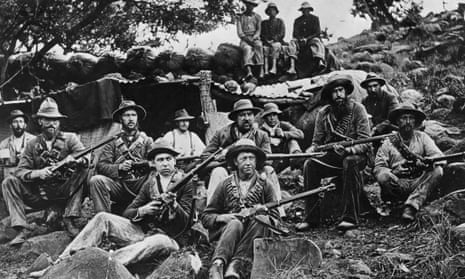
May 31, 1902: Treaty of Vereeniging is signed in Pretoria, South Africa, ending the Boer War in a British victory.

What is usually now referred to as "The Boer War" was actually the Second Boer War. The First Boer War, also known as the Transvaal Rebellion, was fought from December 16, 1880 to March 23, 1881, and resulted in a Boer victory, and the eventual independence of the South African Republic.

The Second Boer War was the 2nd war to be captured on film, after the Spanish-American War in 1898. It was a conflict fought between the British Empire and the 2 Boer Republics: The South African Republic and the Orange Free State. The Boers were, and are, the descendants of the Dutch-speaking Free Burghers of the Eastern Cape Frontier in southern Africa during the 17th, 18th and 19th Centuries. The word "Boer" means "farmer" in Dutch and its offshoot language, Afrikaans.

Following the discovery of gold in the Boer republics, there was a gold rush. These incoming "foreigners," mostly British from the Cape Colony, were regarded as unwelcome visitors. The Boers protested to the British authorities in the Cape, things broke down, and war broke out on October 11, 1899.

The Boers won some early minor victories, including the Battle of Spion Kop on January 24, 1900. Spion Kop was a hill near the town of Ladysmith, and while the British fought hard to defend it, they had to retreat. The name "Spion Kop" would soon be given to steeply-graded end stands at soccer stadiums. Few of these survive, although the southwest stand at Liverpool Football Club's Anfield stadium is still known as simply "The Kop."

Soon enough, the British overwhelmed them, and occupied the republics. The Boers turned to guerrilla warfare, and that led the British to turn to scorched-earth policies, including perhaps the first concentration camps in the modern world. This ultimately led to the Boers coming to the negotiating table, and surrendering.

The Boer War was the last of the British "wars of adventure" in Africa and Asia. Tales of heroism spread throughout the Empire, including a firsthand account of a soldier, a 25-year-old son of a prominent political family, being captured by the Boers, and escaping, leading to his winning a seat in the House of Commons. The young man's name was Winston Churchill.

So when British troops went off to World War I in August 1914, the sense of adventure, the idea that war could be romantic, was still there. Soon, it was shattered forever. They should have paid more attention to the fact that it took 2 1/2 years to overcome the Boers, who were not as well equipped as the Germans turned out to be in 1914.

*

May 31, 1902 was a Saturday. In America, the only team sport in season was baseball:

* The Brooklyn Superbas swept a doubleheader from the Boston Beaneaters at Washington Park in Brooklyn. The Superbas -- managed by Ned Hanlon, so named for a famous circus troupe, Hanlon's Superbas -- won both games by a 2-1 score, with the nightcap taking 10 innings.

In 1911, the Superbas became the Dodgers. The Beaneaters would go through a few name changes, finding a keeper in 1912: The Boston Braves.

* The New York Giants lost to the Philadelphia Phillies, 3-0 at the Polo Grounds.

* The Detroit Tigers beat the Boston Americans, 13-7 at the Huntington Avenue Grounds in Boston. The Americans became the Boston Red Sox in 1908.

* The Philadelphia Athletics beat the St. Louis Browns, 7-6 at Columbia Park in Philadelphia.

* The Cleveland Bronchos beat the Baltimore Orioles, 6-3 at Oriole Park in Baltimore. At the end of the season, the Baltimore franchise was revoked, and a new one was created in New York, which would become the Yankees.

The Bronchos were renamed for their star 2nd baseman and manager, Napoleon Lajoie: The Cleveland Naps. He did not play in this game, but the winning pitcher was another Hall-of-Famer, Addie Joss. After Lajoie left in 1914, they became the Cleveland Indians. In 2022, they became the Cleveland Guardians.

* The Chicago White Sox beat the Washington Senators, 4-1 at American League Park in Washington.

* The St. Louis Cardinals beat the Cincinnati Reds, 9-3 at Robison Field in St. Louis.

* And the Pittsburgh Pirates and the Chicago Orphans were rained out at Exposition Park in Pittsburgh. The game was made up on July 18, and the Orphans won, 2-0. Honus Wagner went 1-for-4 fort he Pirates.

"Orphans"? For 22 years, the Chicago club's 1st baseman was Adrian Constantine Anson. He became their team captain, and was known as Cap. For most of that time, their team name was the Chicago White Stockings. Eventually, Anson became their manager, and got to be so old -- he was 45 in his final season, 1897 -- that they started calling him Pop. When he left, the team became known as the Orphans, "because they missed their Pop." In 1903, because they had such a youthful roster, they changed their name to the Chicago Cubs.

Monday, May 30, 2022

May 31, 1889: The Johnstown Flood

May 31, 1889: The Johnstown Flood kills 2,208 people, one of the worst man-made disasters in history.

Johnstown, Pennsylvania is 67 miles east of Pittsburgh. It sits at the confluence of the Little Conemaugh River and the Stonycreek River, as they form the Conemaugh River. That river eventually flows into the Kiskiminetas River, which flows into the Allegheny River, which combines with the Monongahela River at Pittsburgh to form the Ohio River.

Like so many other Pennsylvania towns in the 19th Century, Johnstown became a producer of iron, coal and steel. But it flooded pretty much every year. On May 30, 1889, they had a Memorial Day parade, and got it done before the rain came. But the rain kept coming, and coming.

The next day, at 2:55 PM, the South Fork Dam, which had formed Lake Conemaugh, burst. The City of Johnstown, 14 miles downriver, never had a chance: It was hit with over 14 million cubic meters of water, about the average annual flow of the Mississippi River, coming at 40 miles per hour. It hit at 3:52, and in 10 minutes, Johnstown was ruined.

There were 1,600 homes destroyed. The 2,208 deaths included 396 children. Bodies of Johnstown residents were carried westward, past Pittsburgh. One was found as far down the Ohio River as Cincinnati. One person listed as missing wasn't found until 1911.

Frank Shomo, the last known person to have been living in Johnstown in 1889, lived until March 20, 1997, age 108.

Remarkably, the Pennsylvania Railroad was able to restore service in only 3 days. On June 5, Clara Barton, founder and President of the American Red Cross, arrived to lead their 1st major disaster relief effort. She stayed for 5 months, and it made the Red Cross the country's defining relief organization. Donations for relief amounted to over $3.7 million -- about $113 million in 2022 money.

Within a month, the mills were operating again. The city grew. By the turn of the 20th Century, Johnstown was home to 67,000 people. But on March 17, 1936, the city was stricken again, with the St. Patrick's Day Flood. This time, they were comparatively lucky, with just 25 deaths.

From 1938 to 1943, the U.S. Army Corps of Engineers altered the river channels, with the idea of making the city "flood-free." When Hurricane Agnes hit the Northeast in 1972, Johnstown was pretty much the only riverside town in Pennsylvania that didn't get flooded.

In 1926, Point Stadium opened, as a minor-league ballpark, right where the two rivers come together to form one. The Johnstown Johnnies had won the Middle Atlantic League Pennant the year before, and got a new ballpark as a reward. They won the Pennant again that 1st season, and won it again in 1930. But the team played until 1961, and never won another.

The ballpark was torn down and replaced in 2005, and they have since had teams in "independent" leagues. A a renovated 7,500-seat Sargent's Stadium at The Point became home Johnstown Mill Rats of the Prospect League in 2021.

The city became the home of a minor-league hockey team, the Johnstown Jets, starting in 1950. The 4,000-seat Cambria County War Memorial Arena opened that year. In 1976, the hockey movie Slap Shot was filmed in the city, including inside the Arena and outside the steel mills, even though it was said to be taking place in the Charlestown section of Boston.

Life imitated art: Like the movie's Charlestown Chiefs, the Johnstown Jets were moved after the 1976-77 season. But new teams have come and gone, including the Johnstown Chiefs, in honor of the movie, from 1988 to 2010. Since 2012, the Arena has been home to the Johnstown Tomahawks of the North American Hockey League.

But like Pennsylvania as a whole, the decline of industry in the 1970s clobbered Johnstown. And then, on July 19, 1977, they found out they weren't flood-proof. The Laurel Run Dam failed, and 84 people were killed. By the recession of the early 1990s, steel was out of Johnstown. In 2003, a survey rated Johnstown the least likely city in American to attract newcomers.

Today, Johnstown is a small city of about 19,000 people. The University of Pittsburgh opened a campus there, and that helped. Some of the abandoned mills have been turned into low-income housing, and studios for artists and dancers. But the city will never be what it was between the floods of 1889 and 1977.

*

May 31, 1889 was a Friday. There were three games played in what would later be called Major League Baseball.

Two of them were a National League doubleheader, at the Philadelphia Base Ball Grounds. The Philadelphia Quakers swept the Indianapolis Hoosiers, winning the 1st game 11-8, and the 2nd game 11-4.

The Hoosiers folded at the end of the season. The Quakers would change their name to the Philadelphia Phillies the next season. The Base Ball Grounds would burn down in 1894, and be replaced on the same site the next season by the ballpark eventually known as Baker Bowl.

And in the American Association, the Columbus Solons beat the Louisville Colonels, 7-2 at Recreation Park in Columbus, Ohio. The Solons folded with the AA in 1891, while the Colonels joined the NL, only to fold after the 1899 season.

May 30, 2009: The Earliest FA Cup Final Goal Ends Up Not Mattering

Louis Saha (left) and Steven Pienaar

May 30, 2009: For the 1st time, I watch the FA Cup Final, played at the new Wembley Stadium in London. At least, it's the 1st time I can remember watching it. It's possible that, when I was a boy, I might have seen it broadcast on ABC Wide World of Sports, but I don't think I did.

Both teams traditionally wear blue: Everton, the blue team in Liverpool, gets to wear their usual blue shirts with white shorts; while Chelsea, of West London, wear an all-yellow kit. Everton were managed by Scotsman David Moyes, and, through the 2021-22 season, this is the closest he's ever come to managing a team to a major trophy.

Chelsea were managed by Guus Hiddink, who had won 6 Eredivise (Dutch league) titles and the 1988 European Cup (now known as the UEFA Champions League) with PSV Eindhoven, and had just guided Russia to 3rd place at Euro 2008. He had taken over on February 11, after the team's owner, Russian energy billionaire Roman Abramovich, fired manager Luis Felipe Scolari, despite a good record.

Louis Saha, Everton's French forward, scores 25 seconds into the match, the fastest Cup Final goal ever. In 1895, Bob Chatt of Birmingham team Aston Villa had scored 30 seconds into the match, and Villa went on to win. Saha had beaten his record, and had beaten Chelsea goalkeeper Petr Čech.

But Didier Drogba, Chelsea's big forward from the African nation of Côte d'Ivoire (the Ivory Coast), ends their momentum with a goal in the 21st minute. He is known for his diving for penalties: Earlier in the month, he had executed 5 dives in the Champions League Semifinal against Barcelona, but didn't find it necessary this time. Frank Lampard scores in the 72nd, and Chelsea win, 2-1.

It was the 8th time that Everton had lost the FA Cup Final, a record. They have won it 5 times, most recently in 1995. It was Chelsea's 5th win, and they received the FA Cup from the honorary chairman of the Football Association, Prince William, Duke of Cambridge. (Through the 2021-22 season, they have now won it 8 times, most recently in 2018.)

I watched the game at the first great American soccer bar, Nevada Smith's, at 74 3rd Avenue in New York's East Village, now closed. Two weeks earlier, I had seen Manchester United clinch the Premier League title there, with a draw against North London's Arsenal, the team I support. The United fans trashed the place.

Despite Chelsea's fans in London having a reputation for despicable violence, the "New York Blues" celebrated like human beings. Also unlike the United fans, they seemed to understand the Champagne Difference: The cheap stuff is for spraying, the good stuff is for drinking.

One more note: At the time, Arsenal had a forward from Mexico, Carlos Vela. Big things were expected of him, and their fans sang, to the tune of "Que Sera Sera," a common song for English soccer chants:

Carlos Vela, Vela!
The Mexican superstar!
He's better than Lou Saha!
Carlos Vela, Vela!

Vela would star for his national team, and later for Los Angeles F.C. in Major League Soccer. But he was not better than Louis Saha, who had helped Manchester United win the Premier League in 2007, and both that and the Champions League in 2008.

*

May 30, 2009 was a Saturday. The Stanley Cup Finals began, a rematch of the previous season's Finals, in which the Detroit Red Wings had beaten the Pittsburgh Penguins. The Wings won Game 1, 3-1 at the Joe Louis Arena in Detroit. But the Penguins went on to win in 6 games.

Game 6 of the NBA Eastern Conference Finals was played, at what was then named the Amway Arena in Orlando. The Orlando Magic beat the Cleveland Cavaliers, 103-90, and clinched a berth in the NBA Finals. Dwight Howard scored 40 for the Magic, while LeBron James scored 25 for the Cavs. The Los Angeles Lakers beat the Magic in Finals in 5 games.

Football was out of season. These games were played in Major League Baseball:

* The New York Yankees beat the Cleveland Indians, 10-5 at Progressive Field in Cleveland. CC Sabathia defeated his former team. Jorge Posada and Nick Swisher hit home runs. Derek Jeter went 2-for-5 with 2 RBIs. Robinson Canó went 2-for-5 with 3 RBIs. Alex Rodriguez went 1-for-3 with 2 walks.

* The New York Mets lost to the Florida Marlins, 7-3 at Shea Stadium. Josh Johnson outpitched Tim Redding.

* The Philadelphia Phillies beat the Washington Nationals, 9-6 at Citizens Bank Park. Cole Hamels was the winning pitcher. Ryan Howard hit 2 home runs.

* The Detroit Tigers beat the Baltimore Orioles, 6-3 at Camden Yards in Baltimore.

* The Tampa Bay Rays beat the Minnesota Twins, 5-2 at Tropicana Field in St. Petersburg, Florida.

* The Toronto Blue Jays beat the Boston Red Sox, 5-3 at the Rogers Centre in Toronto. David Ortiz went 0-for-4.

* The Pittsburgh Pirates beat the Houston Astros, 7-4 at PNC Park in Pittsburgh.

* The Chicago Cubs beat the Los Angeles Dodgers, 7-0 at Wrigley Field in Chicago. Ryan Dempster pitched 7 innings of 3-hit shutout ball, and Ángel Guzmán and Aaron Heilman completed the 5-hit shutout.

* The Milwaukee Brewers beat the Cincinnati Reds, 9-5 at at Miller Park (now American Family Field) in Milwaukee.

* The Chicago White Sox beat the Kansas City Royals, 5-3 at Kauffman Stadium in Kansas City.

* The Texas Rangers beat the Oakland Athletics, 14-1 at Rangers Ballpark in the Dallas suburb of Arlington, Texas.

* The Colorado Rockies beat the San Diego Padres, 8-7 at Coors Field in Denver.

* The Arizona Diamondbacks beat the Atlanta Braves, 3-2 at Chase Field in Phoenix. Eric Byrnes singled Mark Reynolds home with the winning run in the bottom of the 11th inning. 

* The Seattle Mariners beat the Los Angeles Angels, 4-3 at Angel Stadium of Anaheim. Yuniesky Betancourt hit a sacrifice fly to score Wladimir Balentien with the winning run in the top of the 10th inning.

* And the St. Louis Cardinals beat the San Francisco Giants, 6-2 at AT&T Park (now Oracle Park) in San Francisco. Albert Pujols hit 2 home runs.

May 30, 1996: The Rise of Benjamin Netanyahu

May 30, 1996: Likud (meaning "Consolidation"), the main conservative party in Israel, wins the general election, ending the Labor Party's run of power after 4 years. Shimon Peres, interim Prime Minister following the assassination of Yitzhak Rabin, is out. Benjamin Netanyahu is in.

Although born in Tel Aviv, "Bibi" and his brother, Yonatan "Yoni" Netanyahu grew up outside Philadelphia in Cheltenham, Pennsylvania. Both graduated from Cheltenham High School, Yoni graduating in the Class of 1964 alongside future Baseball Hall-of-Famer Reggie Jackson.

Both brothers detested what they saw as the permissiveness in 1960s American culture, and went back to Israel. Yoni served in the 1967 Six-Day War, which happened right before Bibi graduated, but he moved back and enlisted shortly thereafter. Yoni would be killed in the 1976 rescue of Israeli citizens on a hijacked plane at Entebbe Airport in Uganda.

Benjamin Netanyahu was first elected to Israel's Parliament, the Knesset, in 1988, and was named Likud’s chairman in 1993. He became the country’s youngest Prime Minister, 46. But after only 3 years, the country tired of his belligerence, his corruption, and his womanizing – it was like electing a Jewish version of Newt Gingrich – and he was defeated in the next election, and resigned his seat, expecting never to return to politics.

When Likud returned to power in 2001, he was brought back by Prime Minister Ariel Sharon. In 2003, they split, and Sharon founded a new party. Sharon's 2006 stroke gave Likud their next chance, and Netanyahu formed a new coalition after the 2009 election. He has now become the country's longest-lasting Prime Minister.

But he couldn't stop his warmongering or his corruption. He has been indicted, but the case has never been resolved.

UPDATE: Netanyahu has basically stayed in power by claiming that only he can protect Israel from its enemies, who want to wipe the country off the map: Their slogan is, "From the River to the Sea, Palestine will be free." (The Jordan River, and the Mediterranean Sea.) Except the Palestinians have proven that they don't believe in freedom for anybody.

But on October 7, 2023, Hamas proved that Netanyahu couldn't protect Israel from its enemies. He should have resigned in disgrace, or been removed by his own party. Instead, like George W. Bush after 9/11, he used his greatest failure (so far) as the reason why he should stay on.

*

May 30, 1996 was a Thursday. In the NBA Playoffs, Game 6 of the Western Conference Finals was played at the Delta Center in Salt Lake City. The Utah Jazz beat the Seattle SueprSonics, 118-83. But the Sonics won Game 7 in Seattle, before losing the NBA Finals to the Chicago Bulls.

Game 6 was also played in the NHL Eastern Conference Finals. The Florida Panthers beat the Pittsburgh Penguins, 4-3 at the Miami Arena, to force a Game 7 in Pittsburgh. The Panthers won that, but were swept in the Stanley Cup Finals by the Colorado Avalanche.

Football was out of season. There were 5 games played in Major League Baseball:

* The New York Mets beat the San Francisco Giants, 1-0 at Shea Stadium. Paul Wilson pitched 8 innings of 3-hit shutout ball, and John Franco completed the 4-hit shutout. The only run came in the bottom of the 8th, when José Vizcaíno singled Rey Ordóñez home.

* The Philadelphia Phillies beat the Los Angeles Dodgers, 3-2 at Veterans Stadium in Philadelphia. The Dodgers led 3-0 before the Phillies scored a run in the 8th on a home run by Mike Lieberthal, and 2 in the 9th on a home run by Mark Whiten, a single by Mickey Morandini, a walk by Benito Santiago, and a single by Pete Incaviglia.

* The Chicago White Sox beat the Detroit Tigers, 8-2 at the new Comiskey Park (now Rate Field) in Chicago.

* The Cleveland Indians beat the Milwaukee Brewers, 2-0 at Milwaukee County Stadium. Charles Nagy pitched 7 innings of 6-hit shutout ball. Three relievers finished a 7-hit shutout.

* And the Boston Red Sox beat the Seattle Mariners, 10-1 at the Kingdome in Seattle. Milt Cuyler hit 2 home runs for the Sox, and Jose Canseco hit a grand slam. The Mariners' only run came on a home run by Paul Sorrento, while Ken Griffey Jr. went 0-for-2 with a walk. 

May 30, 1982: Cal Ripken's Streak Begins


May 30, 1982: The Toronto Blue Jays beat the Baltimore Orioles, 6-0 at Memorial Stadium in Baltimore. The Jays get a 1-hit shutout from Jim Gott (6 innings) and Roy Lee Jackson (3). The only hit is a single by Rick Dempsey in the 5th inning.

Playing shortstop for the Orioles, and batting 8th, is Cal Ripken Jr., the 20-year-old son of a team coach. He goes 0-for-2, but does draw a walk. Although he had been featured on the Orioles' "Future Stars" card in the 1982 Topps baseball card set -- along with shortstop Bob Bonner and pitcher Jeff Schneider -- he had, to this point, appeared in a grand total of 65 major league games. And the Orioles' most recent one hadn't been one of them.

He must have impressed manager Earl Weaver, because Earl put Cal in the next game as well. And the next. And so on. By the time Ripken next missed a game (for reasons other than a strike), he was 38, and had played in 2,632 in a row, breaking the record of 2,130 set from 1925 to 1939 by Lou Gehrig.

Oh, those other two guys? Since Ripken was moved to shortstop on July 1, and stayed there before being moved back to 3rd base in 1996, Bonner was doomed. He appeared in 61 major league games, all with the Orioles, the last in 1983. Moving him to 2nd base didn't help. He is now a Baptist missionary.

Schneider had appeared in 11 major league games, all for the Orioles, by the time he appeared on that card, and never appeared in another game, being traded to the California Angels and then the Blue Jays, being released in 1983 and never being signed by another team. All I can determine about him as of May 30, 2022 is that he's still alive.

*

May 30, 1982 was a Sunday. These other Major League Baseball games were played that day:

* The New York Yankees beat the Minnesota Twins, 8-6 at the Metrodome in Minneapolis. Willie Randolph singled and Oscar Gamble doubled home runs in the top of the 10th inning. Gamble and John Mayberry, the former Kansas City Royals slugger playing out the string with the Yankees, hit home runs. Bobby Murcer went 2-for-6 with 3 RBIs.

* The New York Mets beat the Houston Astros, 9-5 at Shea Stadium. Mike Scott was the winning pitcher for the Mets. He would later bedevil them for the Astros.

* The Philadelphia Phillies beat the Atlanta Braves, 6-2 at Veterans Stadium in Philadelphia. Steve Carlton helped his own cause by going 2-for-3. Mike Schmidt had to leave the game in the 2nd inning, due to an injury.

* The Cincinnati Reds beat the Montreal Expos, 7-3 at the Olympic Stadium in Montreal.

* The Pittsburgh Pirates beat the San Francisco Giants, 7-6 at Three Rivers Stadium in Pittsburgh. Johnny Ray won it with a homer in the bottom of the 13th inning.

* The Cleveland Indians beat the Chicago White Sox, 4-2 at Cleveland Municipal Stadium.

* The Los Angeles Dodgers beat the Chicago Cubs, 7-0 at Wrigley Field in Chicago. Fernando Valenzuela pitched an 8-hit shutout, defeating Fergie Jenkins.

* The St. Louis Cardinals beat the San Diego Padres, 6-5 at Busch Memorial Stadium. The Padres scored 2 runs in the top of the 10th inning, but the Cards scored 3 in the bottom of the 10th, winning it on a single by Dane Iorg.

* The Texas Rangers beat the Kansas City Royals, 8-1 at Arlington Stadium in the Dallas suburb of Arlington, Texas. George Brett went 0-for-4.

* The Milwaukee Brewers beat the California Angels, 7-3 at Anaheim Stadium. (It was renamed Edison International Field in 1997, and Angel Stadium of Anaheim in 2004.) Robin Yount and Paul Molitor both went 0-for-4 for the Brew Crew, but Cecil Cooper, Ted Simmons and Ben Oglivie hit home runs. For the Angels, Fred Lynn and Doug DeCinces homered, Reggie Jackson went 1-for-4, and Rod Carew went 2-for-3.

* A doubleheader was split at the Oakland Coliseum. The Detroit Tigers won the opener, 5-2. The Oakland Athletics won the nightcap, 6-2. Between the 2 games, Rickey Henderson went 5-for-8 with 4 stolen bases and an RBI.

* And the Seattle Mariners beat the Boston Red Sox, 2-1 at the Kingdome in Seattle. Carl Yastrzemski went 0-for-4. The BoSox led 1-0 going into the bottom of the 9th, but the Mariners won it on a walk to Bobby Brown (the recent former Yankee center fielder, not the long-retired former Yankee 3rd baseman) and back-to-back doubles by Richie Zisk and Gary Gray.

Football was out of season. The hockey season ended 2 weeks earlier, when the New York Islanders swept the Vancouver Canucks for the Stanley Cup. Game 2 of the NBA Finals was played, and the Philadelphia 76ers beat the Los Angeles Lakers, 110-94 at The Spectrum in Philadelphia. Julius Erving, "Dr. J," scored 24 points and had 14 rebounds. But the Lakers won 4 of the next 5, and won the title.

December 31, 1999 & January 1, 2000: The Millennium

December 31, 1999:  The Millennium arrives. The people of planet Earth survived. At a terrible cost. But we hadn't destroyed ourselves. ...