Monday, May 2, 2022

May 2, 1945: The Fall of Berlin

May 2, 1945: Nazi Generals Hans Krebs (47 years old) and Wilhelm Burgdorf (50) commit suicide in the Bunker of Chancellor Adolf Hitler, who had done so there 2 days earlier (56). Martin Bormann (44), Hitler's private secretary, tries to escape, but doesn't get far, and also kills himself.

It's all over. Berlin has fallen. The Soviet Red Army raises the Red Flag over the Reichstag, the home of the German national legislature. It's just a matter of what remains of the Nazi government surrendering. What Hitler called "The Thousand-Year Reich" was dead after 12 years.

Soviet dictator Joseph Stalin had seen the photograph of the U.S. Marines raising the American flag on the Japanese island of Iwo Jima, and wanted a similar picture of the Soviet red banner with the yellow hammer and sickle over Berlin. He got it. The photographer was Yevgeny Khaldei. The soldier was 18-year-old Aleksei Kovalov -- no relation to the later hockey player of the same name. He later became a fireman in Kiev. Both men were Ukrainians, and both lived until 1997.

In late 1941, the Soviets were, perhaps, a mile away from losing the Eastern Front of the European Theater of World War II. Now, they had won what they called The Great Patriotic War.

*

May 2, 1945 was a Wednesday. Football was out of season. The NBA hadn't been founded yet. The NHL season had ended 10 days earlier, when the Toronto Maple Leafs beat the Detroit Red Wings in Game 7 of the Stanley Cup Finals.

These baseball games were played:

* The New York Yankees beat the Philadelphia Athletics, 6-4 at Yankee Stadium.

* The New York Giants beat the Philadelphia Phillies, 9-8 at Shibe Park in Philadelphia.

* The Brooklyn Dodgers lost to the Boston Braves, 3-1 at Ebbets Field.

* The Boston Red Sox beat the Washington Senators, 4-0 at Fenway Park in Boston. Jim Wilson pitched a 4-hit shutout.

* A doubleheader was split at Forbes Field in Pittsburgh. The St. Louis Cardinals won the opener, 4-2. The Pittsburgh Pirates won the nightcap, 11-1.

* The Detroit Tigers beat the Chicago White Sox, 2-1 at Briggs Stadium (later Tiger Stadium) in Detroit.

* The Cleveland Indians beat the St. Louis Browns, 2-1 at Sportsman's Park in St. Louis.

* And the Chicago Cubs and the Cincinnati Reds were rained out at Wrigley Field in Chicago. The game was made up on June 8. The Cubs won, 7-3.

May 2, 1939: Lou Gehrig's Streak Ends

Lou Gehrig at Briggs Stadium, May 2, 1939

May 2, 1939: The New York Yankees do something they haven't done since May 31, 1925: They played a regular-season game without Lou Gehrig in it.

In between, he had batted .346, collected 2,750 hits, hit 492 home runs, had 1,983 RBIs, appeared in baseball's 1st 6 All-Star Games, won 7 American League Pennants and 6 World Series.

But he had slown down a bit in 1938. Early in the 1939 season, he looked terrible. And so, on this day, as the Yankees were about to start a series against the Detroit Tigers at Briggs Stadium in Detroit (renamed Tiger Stadium in 1961), he told manager Joe McCarthy he should be taken out of the lineup.

He performed his duty as team Captain, and presented the lineup card to the umpires. When the Tigers' public-address announcer listed the Yankees' lineup, he concluded by announcing that Gehrig would not be playing, ending his streak at 2,130 consecutive games.

When Gehrig's consecutive-games-played streak began on June 1, 1925, hardly anybody noticed. When it ended, everybody noticed. But the way he handled the end was pure class: He took himself out, in his own words, "for the good of the team," and there was no self-aggrandizement.

Playing 1st base for the Yankees that day would be Ellsworth Tenney "Babe" Dahlgren. He had a Ruthian nickname, and put up a Gehrigesque performance, going 2-for-5 with a home run and 2 RBIs. All 3 outfielders also hit home runs: Charlie Keller, Tommy Henrich and George Selkirk. Oddly, another superstar, Joe DiMaggio, also didn't play that day, due to an ankle injury.

Red Ruffing went the distance for the Yankees. Tiger starter Vern Kennedy did not get out of the 1st inning. Hank Greenberg, the Tigers' biggest star, went 0-for-3. The Yankees won, 22-2, and it remains the biggest margin of victory in franchise history.

By a weird twist of fate, Wally Pipp, the man that Gehrig replaced as the regular Yankee 1st baseman in 1925, was in Detroit, in his new business. He went to the game. (He was 44, and, with Hank Greenberg at 1st base, there was no reason for the Tigers to offer him a contract.)

Pipp was a decent player: He led the American League in home runs in 1916 and 1917, and helped the Yankees win their 1st 3 Pennants: 1921, 1922 and 1923, including the 1923 World Series. But he lost his batting stroke in 1925, and that, and Gehrig's rise, made him expendable. He lived until 1965.

Gehrig finished his career with a .340 batting average, 493 home runs, and 1,995 RBIs. Had he not been stricken, he could have had over 600 home runs. The record for most RBIs in a career is 2,297, by Hank Aaron. Gehrig could have surpassed that.

And given the manpower shortage of World War II, and his being too old to be drafted, he could still have been playing through the 1945 season. He would have been 42, and his streak would have reached 3,200. Cal Ripken Jr. never would have caught him.

And before you say that that's outrageous, okay, maybe he wouldn't have kept the streak going that long. But Willie Mays, Hank Aaron and Frank Robinson were all still playing at 42, and all were still All-Star caliber when they were 40. It's hardly outrageous to imagine a 40-year-old Gehrig leading the Yankees to victory in the 1943 World Series, instead of the man who unofficially replaced him as captain, his best friend on the team, Bill Dickey, doing that. (Dickey then did go into the U.S. Navy.)

Soon, Gehrig would go to the Mayo Clinic in Rochester, Minnesota, to find out what was wrong with him. He was told: Amyotrophic lateral sclerosis. It became known as "Lou Gehrig's Disease."

On July 4, the Yankees held Lou Gehrig Appreciation Day. It was already known that Gehrig had been forced to retire. It was not yet widely known that he was dying. That day, he told the crowd, "Today, I consider myself the luckiest man on the face of the Earth," and, "I might have been given a bad break, but I've got an awful lot to live for." Two years later, he was dead.

*

May 2, 1939 was a Tuesday. Football, basketball and hockey were all out of season. These other games were played in baseball that day:

* The New York Giants beat the Cincinnati Reds, 8-7 at the Polo Grounds. The Reds led 7-5 going to the bottom of the 9th, but Mel Ott hit what we would now call a walkoff home run.

* The Brooklyn Dodgers lost to the Pittsburgh Pirates, 3-2 at Ebbets Field.

* The St. Louis Cardinals beat the Boston Bees, 2-1 at National League Park in Boston. This was the 4th of 5 seasons in which the Boston Braves and Braves Field were operating under new names, before going back to the old names in 1941.

* The Philadelphia Phillies beat the Chicago Cubs, 6-1 at Shibe Park in Philadelphia.

* The Chicago White Sox beat the Philadelphia Athletics, 4-1 at Comiskey Park in Chicago.

* The Washington Senators beat the St. Louis Browns, 9-7 at Sportsman's Park in St. Louis.

* And the Boston Red Sox and the Cleveland Indians were supposed to play each other at Fenway Park in Boston, but the game was postponed due to cold weather. It was rescheduled as part of a doubleheader on August 27. The Indians swept that doubleheader, 1-0 and 5-3. Bob Feller won the opener. Rookie Ted Williams went 1-for-8 in the 2 games.

May 2, 1932: “The Jack Benny Program” Premieres

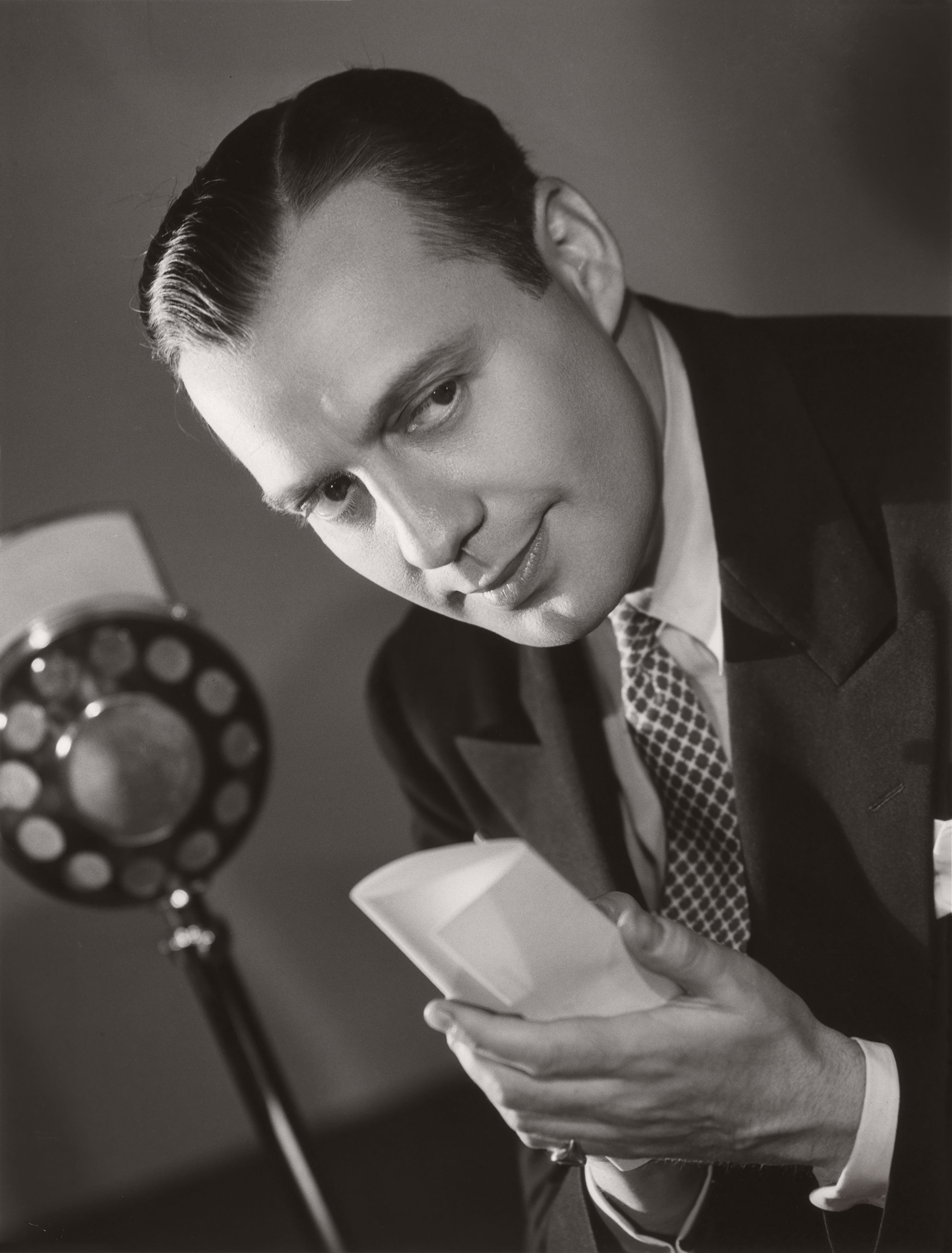
May 2, 1932: The Jack Benny Program -- always officially titled a "Program," not a "Show" -- first airs on NBC radio. It would remain on NBC until 1948, before switching to CBS and running until 1955. The television version ran on CBS from 1949 to 1965.

He was born on February 14, 1894, as Benjamin Kubelsky, in Chicago, and grew up in nearby Waukegan, Illinois. He learned to play the violin, and one of his teachers was Otto Graham Sr., father of future quarterbacking legend Otto Graham. At 17, he was playing his violin in Chicago's vaudeville theaters, where he met and became lifelong friends with the Marx Brothers.

As he became better-known, an established violinist with a similar name, Jan Kubelik, told him to change his name. He became Ben K. Benny, and then Jack Benny. In 1922, at a Passover seder in Vancouver, Zeppo Marx introduced her to Sadie Marks (no relation), and they were married in 1926. Sadie became an actress, taking the stage named Mary Livingstone.

Jack made his 1st film appearance in 1929. In 1932, he was a guest on a radio show hosted by the Broadway columnist for the New York Daily News, Ed Sullivan. He introduced himself by saying, "This is Jack Benny talking. There will be a slight pause while you say, 'Who cares?'" He was a hit, and NBC signed him to do a radio show, which eventually led to a television show.

In real life, Jack was very generous. In 1954, after Marilyn Monroe appeared on his show, and mentioned to him (offstage) that she wanted to get a new Cadillac convertible, he bought one for her. But, in character, Jack's defining feature was cheapness. He wouldn't pay for a new car for himself, continually making reference to his established car, a 1932 Maxwell. His most famous moment was when a mugger told him, "Your money or your life!" Dead silence for about 5 seconds. The mugger said, "Didn't you hear me? I said, 'Your money or your life!'" And Jack said, "I'm thinking it over!"

Indeed, 40 years before the TV show Seinfeld, Jack Benny played an alternate version of himself as a famous comedian, very alternate: Not just cheap, but vain (always claiming to be 39 years old, which he hadn't been since February 1934), arrogant (describing himself as "star of stage, screen and radio"), and mean. Despite being a celebrity within the world of the show, he was largely disliked by most of the other stars in Hollywood, notably his next-door neighbors, actors Ronald and Bonita Colman. He was easily annoyed, did not suffer fools gladly, and was unsuccessful with women: While Mary was married to him in real life, on the show, she was one of several girlfriends, but the only one that kept coming back to him. He played down his violin skills, often playing very badly on the air.

Aside from Mary and the Colemans, there were other regular guest stars. Bandleader Phil Harris was the music director for the show, and he, his wife, actress Alice Faye, and singer Dennis Day played friends of Jack's. Phil left the show in 1952, and was replaced as bandleader by Bob Crosby, Bing's brother.

Eddie Anderson, a black actor, played his butler, Rochester, who would call him "Boss" but could get away with saying things to him that most black men of the time could not get away with saying to a white man. (If Anderson ever got hate mail for this, it has never been publicly revealed.) As Jackie Gleason's Ralph Kramden would later do with Art Carney's Ed Norton on The Honeymooners, Jack sometimes involved Rochester in get-rich-quick schemes that always failed to comedic effect.

Frank Nelson, introduced to Jack by the Marx Brothers, was a frequent guest star. He never played the same character, but always the same type of character. Jack would need help with something at a store, or at a restaurant, and say, "Excuse me, buddy," and Frank would turn around and say, "Ee-yes?" dragging out the E and the S. And they would banter back and forth, sometimes about the price of an item. But Nelson's character would always be polite with every other character, further frustrating Jack.

Also a frequent guest star was Mel Blanc, proving himself a master of funny voices before he became known as the voice of cartoon character Bugs Bunny. Mel had gotten his start with Spike Jones & His City Slickers, and continued to work with Spike while working with Jack and playing Bugs. A familiar bit was Mel playing a Mexican, and answering, "Si." When Jack asked him his name, he said, "Sy." Sy? "Si." Do you have a girlfriend? "Si." What's her name? "Sue." Sue? "Si."

Jack tried to keep up with the times. He often had singers on his show, never rock-and-rollers, but he would have folksingers: He had The Smothers Brothers, and he had Peter, Paul & Mary, who sang "Blowin' in the Wind," which Jack recognized was "a very important song."

The program was cancelled in 1965, due to a dispute over money -- not between Jack and the network, but between Jack and the advertisers, as he charged twice as much as most programs.

Jack died in 1974, Eddie Anderson in 1977, Mary Livingstone in 1983, Frank Nelson in 1986, Dennis Day in 1988, Mel Blanc in 1989, Bob Crosby in 1993, Phil Harris in 1995, and Alice Faye in 1998.

Jack and Mary didn't have any natural children. In 1934, they adopted a newborn girl named Joanie. Joan Benny appeared on her parent's show a few times, but not as their daughter, as the Jack and Mary characters never got married. Joan became a panelist on TV game shows like I've Got a Secret and Password, wrote a biography of her father, and lived until 2021.

*

May 2, 1932 was a Monday. When the Program went to TV, it was famously on Sunday nights at 7:00, followed at 8:00 by The Ed Sullivan Show. Joan Benny titled her book about her father Sunday Nights at Seven.

These baseball games were played that day:

* The New York Yankees lost to the Washington Senators, 10-3 at Griffith Stadium in Washington. Carl Fisher outpitched Lefty Gomez. Joe Cronin hit a home run, and would become the Senators' manager the next season, taking them to the American League Pennant. All of the Yankees' runs came on a home run by Lou Gehrig. Babe Ruth went 0-for-3 with 2 walks.

* The Brooklyn Dodgers beat their arch-rivals, the New York Giants, 3-1 at the Polo Grounds. Dazzy Vance outpitched Carl Hubbell. Bill Terry went 1-for-4, and Mel Ott went 0-for-3 with a walk.

* The Philadelphia Athletics beat the Boston Red Sox, 3-2 at Fenway Park in Boston. Jimmie Foxx won the game with a home run in the top of the 11th inning. Lefty Grove pitched the last 2 innings to get the win.

* The Philadelphia Phillies beat the Boston Braves, 7-2 at Baker Bowl in Philadelphia.

* The Pittsburgh Pirates beat the Chicago Cubs, 2-0 at Forbes Field in Pittsburgh. Steve Swetonic pitched a 3-hit shutout. Paul Waner went 2-for-4, and Lloyd Waner went 1-for-4.

* The Cleveland Indians beat the St. Louis Browns, 6-5 at League Park in Cleveland.

* The Detroit Tigers beat the Chicago White Sox, 5-3 at Comiskey Park in Chicago.

* And the St. Louis Cardinals beat the Cincinnati Reds, 2-1 at Sportsman's Park in St. Louis.

Sunday, May 1, 2022

May 2, 1917: Baseball's Only Double No-Hitter

Fred Toney

May 2, 1917: For what remains the only time in the history of Major League Baseball, both starting pitchers in a game pitch no-hitters.

The game was played at Weeghman Park in Chicago, renamed Cubs Park in 1920 and Wrigley Field in 1926. The Chicago Cubs hosted the Cincinnati Reds. The opposing pitchers were Jim Vaughn, at 6-foot-4 and 215 pounds known as "Hippo," for Chicago; and Fred Toney for Cincinnati.
Weeghman Park, later known as Wrigley Field

Vaughn had already won 21 games in 1914, and 20 in 1915. Toney was also a good pitcher, going 17-6 in 1915 before slumping to 14-17 in 1916.

There were several good hitters in this game, including the Cubs' Cy Williams; and the Reds' Hal Chase and Heinie Groh. Edd Roush would make the Baseball Hall of Fame, as a .323 lifetime hitter and perhaps the best defensive outfielder of his generation, but did not play in this game.

Two Reds who did play in this game would go on to make their mark in football: Right fielder Jim Thorpe, also the 1912 Olympic decathlon Gold Medalist; and center fielder Earle "Greasy" Neale, who would coach the Philadelphia Eagles to the 1948 and '49 NFL Championships.

The home plate umpire was Al Orth, a former major league pitcher, including for the New York Highlanders, the team that became the Yankees. Despite being known as "The Curveless Wonder," he led the major leagues in wins in 1906 with 27, and went 204-189 for his career.

Vaughn began the game by striking Groh out. In the 2nd, Toney walked Williams, but stranded him. Groh led off the 4th with a walk, but was erased on a double play. Then Neale reached on an error, but was caught trying to steal 2nd. Vaughn struck out the side in the 5th. In that inning, Toney again walked and stranded Williams. Vaughn walked Gus Getz to start the 7th, but got a double play.

In the top of the 9th, Vaughn got Manny Cueto to line out to 2nd, and struck out Emil Huhn and Toney. He had his no-hitter. But the Cubs still hadn't gotten a hit of their own. More importantly, they hadn't scored a run, which doesn't necessarily need a hit. He led off the bottom of the 9th, so he could have helped his own cause, but popped up to 3rd. Rollie Zeider grounded to 3rd, and Harry Wolter popped up to 3rd.
Toney had his no-hitter. But the Reds still hadn't gotten a hit, or a run, of their own. For the 1st time, both pitchers had thrown no-hitters. The game went on.

Vaughn began the 10th by getting Getz to pop up to his catcher, Art Wilson. Then, Hippo's luck ran out, as Kopf hit a line drive to right field, for a base hit. He got Neale to fly to center fielder Williams. But Williams misplayed the next ball that came his way, hit there by Chase. Now, there were men on 2nd and 3rd with 2 outs.

Up to bat came Jim Thorpe, the Native American known for his 1912 heroics as "The World's Greatest Athlete." Baseball wasn't his best sport (track & field was), or his 2nd (football was), and might not even have been his 3rd (he was also one of the earliest professional basketball stars). But, over 6 major league seasons, he batted .252, and topped out at .327 in 1919 -- and then quit the game, to concentrate on football.
Thorpe hit the ball up the middle, and Vaughn proved too big to bend over and pick it up. With his great speed, Thorpe got to 1st base, and Kopf scored. The ball got into center field, and Chase tried to score as well. Williams threw him out at the plate, for the last out of the inning, but it was too late: The Reds were ahead.

Toney finished the job. He struck out Larry Doyle, the man who once said, "It's great to be young and a Giant," but was no longer young, and no longer a Giant. The next batter was another ex-Giant, still with the disgrace of a 1908 late-season baserunning "boner" and a 1912 World Series fielding blunder: Fred Merkle. He flew out to left. Finally, Toney struck Williams out.

Reds 1, Cubs 0. Toney had pitched 10 innings and kept a no-hitter. It had only been done once before: On July 4, 1908, George "Hooks" Wiltse did it for the New York Giants against the Philadelphia Phillies.

Vaughn bounced back from the experience, winning a career-high 23 games in 1917, a National League-leading 22 in 1918 to help the Cubs win the Pennant, 21 in 1919, and 19 in 1920. But he hurt his arm in 1921, and had to retire, with a career record of 178-137. He died in 1966.

Toney went on to win 24 games in 1917, but was traded before the Reds could win the 1919 World Series. He won 21 for the New York Giants in 1920, and pitched for them in the 1921 World Series, which they won. He also had to retire too soon due to injury, finishing at 139-102. He died in 1953, just 17 days before Thorpe did.

In 1965, another Reds pitcher, Jim Maloney, pitched a no-hitter for 10 innings against the New York Mets, but lost it and the game in the 11th. Later in the season, he pitched another 10-inning no-hitter, and kept it. Like Toney, he did it against the Cubs at Wrigley Field.

In 1959, Harvey Haddix of the Pittsburgh Pirates pitched not just a no-hitter, but a perfect game against the Milwaukee Braves for 12 innings, but lost all of it -- perfect game, no-hitter, shutout and win -- in the bottom of the 13th inning.

In 1991, Major League Baseball changed the rules so that only no-hitters that were completed would count as no-hitters. In other words, if you pitched a perfect game for 9 innings, allowed a hit in the 10th, and were still on the mound in the 19th inning (Brian Cashman is going to have a stroke if he reads this), and hadn't allowed another damn baserunner, basically having pitched 2 perfect games in 1 night, you still would get credit only for a one-hitter.

For this reason, the aforementioned achievements of Hippo Vaughn, Harvey Haddix, and (in 1 of the 2 cases) Jim Maloney do not count as "no-hitters." But the other achievement of Maloney, and the achievement of Toney, do count.

In 1981, baseball historian John Thorn published Baseball's 10 Greatest Games. He included this game as one of them.

*

May 2, 1917 was a Wednesday. Football, basketball and hockey were out of season. These other games were played in baseball that day:

* The New York Yankees beat the Washington Senators, 2-0 at National Park in Washington. (It was renamed Griffith Stadium in 1922.) Ray Fisher pitched a 4-hit shutout to defeat Walter Johnson.

* The New York Giants and the Brooklyn Dodgers played at the Polo Grounds, and it was tied 2-2 when it was called due to darkness after 14 innings.

* The Philadelphia Phillies beat the Boston Braves, 2-1 at Baker Bowl in Philadelphia.

* The St. Louis Cardinals beat the Pittsburgh Pirates, 4-0 at Forbes Field in Pittsburgh. In his 1st season, Rogers Hornsby went 1-for-4 with an RBI for the Cardinals. In his last season, Honus Wagner did not appear in this game for the Pirates.

* The Chicago White Sox beat the Cleveland Indians, 8-3 at League Park in Cleveland. Shoeless Joe Jackson was replaced due to injury after going 0-for-2. Tris Speaker did not appear in this game for the Indians.

* The Detroit Tigers beat the St. Louis Browns, 2-0 at Sportsman's Park in St. Louis. Ty Cobb went 1-for-4 for the Tigers, while George Sisler went 3-for-4, but with no RBIs, for the Browns.

* The Boston Red Sox and the Philadelphia Athletics were supposed to play at Fenway Park in Boston, but the game was postponed for being too cold. It was made up as part of a doubleheader on July 5. The Red Sox won both games, 4-3 and 4-2. Babe Ruth was eligible to play for the Red Sox in either game, but played in neither of them.

May 1, 2011: Osama bin Laden Is Killed

May 1, 2011: U.S. Navy SEALs conduct a raid on a compound in Abbottabad, Pakistan that kills Osama bin Laden, the leader of terrorist organization al-Qaeda.

It had been 9 years, 7 months and 21 days since the terrorist attacks of September 11, 2001, destroying the World Trade Center in New York, and attacking the Pentagon outside Washington, killing nearly 3,000 people.

President George W. Bush promised to get justice for the victims. But he took his eyes off the prize, and turned them toward his invasion of Iraq.

When Senator Barack Obama ran for President in 2008, he made finding and killing bin Laden a priority. He won the election. It took another 2 1/2 years for America's national security apparatus to find bin Laden. It did.

Usama bin Mohammed bin Awad bin Laden -- as close as the English alphabet comes to correctly translating his Arabic name -- was born on March 10, 1957 in Riyadh, Saudi Arabia, to a family heavily engaged in construction on the Arabian peninsula. From 1984 until 1990, the U.S. government, concerned with the encroachment of the Soviet Union on the Muslim world, considered bin Laden and his groups -- first the Maktab al-Khidamat, the Afghan Services Bureau; then al-Qaeda, "The Foundation" -- to be allies.

That changed in 1990, when President George H.W. Bush put U.S. troops in Saudi Arabia in preparation for the Persian Gulf War. bin Laden didn't want "unbelievers" on "holy soil," which he considered the entire Arabian Peninsula to be. By 1996, his supporters were carrying out attacks on American interests on his orders. On September 11, 2001, they carried out his most audacious plan yet.

On December 14, 2001, the President of the United States promised that bin Laden would be taken, "dead or alive, no matter how long it takes." On March 13, 2002, the President said, "I truly am not that concerned about him."

On October 7, 2008, during a Presidential debate with Senator John McCain, who had already told a campaign rally, "I know how to get bin Laden," Senator Barack Obama said, "We will kill bin Laden. We will crush al-Qaida. That has to be our biggest national security priority." On May 1, 2011, the President of the United States kept his promise.

President Obama was given the details of a plan that would kill bin Laden. He knew that if it failed, and any of the SEALs were killed, it would feel like the 1980 "Desert One" operation that not only failed to rescue the American citizens held hostage in Iran, but led to the accidental deaths of 8 American soldiers. It pretty much ended President Jimmy Carter's chances of re-election.

Obama knew that his re-election in 2012 could very well hang on the result of his decision. If the mission failed, he would get blamed. If he said don't do it, and word reached the public that there was such an idea and he turned it down, it would be a public relations nightmare.

Vice President Joe Biden and Secretary of State Hillary Clinton -- each of whom had run for the Presidency before, and would again -- said he should go for it. He went for it. It worked. bin Laden was dead, and every American who participated got out alive.

The raid happened at about 1:00 AM, local time, on May 2. But Obama announced it to America at 11:35 PM, U.S. Eastern Time, on May 1, so I'm using May 1 as the date.
Earlier, during the ESPN Sunday Night Baseball broadcast, word filtered through social media to reach the crowd at Citizens Bank Park in Philadelphia, and the fans began to chant, "U.S.A.! U.S.A.! U.S.A.!"

There's both a prologue and an epilogue to this story. In the world of the TV show The West Wing, bin Laden and al-Qaeda were mentioned by name. But instead of al-Qaeda successfully destroying the World Trade Center, the fictional nation of Qumar had its Defense Minister, the brother of the ruling Sultan, plan to destroy the Golden Gate Bridge in San Francisco.

This plan was thwarted, but the Minister was recorded as saying he was going to try something else, as yet undetermined. So the President, Josiah "Jed" Bartlet (played by Martin Sheen) approved a plan to have the Minister assassinated.

On the night of a debate in his re-election campaign, Bartlet's White House Chief of Staff, Leo McGarry (John Spencer), one of the few people who knows the truth, meets with Ali Nassir (Tony Amendola), the Qumari Ambassador to the United States, who has accused Israel of carrying out the assassination, and so Qumar has threatened Israel. He knows that the only way to clear Israel is for the President to admit the truth, and he tells Leo that the President is afraid to do so, because it might cost him the election.

Leo laughs at this, and says, "To sweep all 50 States, the President would only have to do two things: Blow the Sultan's brains out in the middle of Times Square, and then walk across the street to Nathan's and buy a hot dog!" In other words, the hot dog would be unnecessary. Qumar dropped its threat, the assassination remained a secret, and Bartlet won in a landslide. It did not remain a secret for much longer, with serious personal consequences for Bartlet.

Obama killed bin Laden about a year and a half before he had to face the voters. And when Election Day came, the country's casualties in Iraq and Afghanistan had slowed to a trickle, the economy was doing well, and he had no scandal. And yet, Obama won just 26 States. Of the 24 States he lost, only 1 (North Carolina) was close; in the rest, he got an average of less than 39 percent.

Some States just wouldn't vote for a Democrat, especially a black one, no matter what he'd done. Even if he had personally pulled the trigger and killed bin Laden, they wouldn't have voted for him. So The West Wing's creator, Aaron Sorkin, and his co-writer for the episode, Paul Redford, were wrong.

*

May 1, 2011 was, as I said, a Sunday. There was a full slate of MLB games that day:

* In that ESPN Sunday night game, the New York Mets beat the Philadelphia Phillies, 2-1. Ronny Paulino won it with an RBI double in the top of the 14th inning.

* The New York Yankees beat the Toronto Blue Jays, 5-2 at the new Yankee Stadium. Mark Teixeira and Curtis Granderson hit home runs, and Iván Nova was the winning pitcher.

* The Boston Red Sox beat the Seattle Mariners, 3-2 at Fenway Park In Boston.

* The Washington Nationals beat the San Francisco Giants, 5-2 at Nationals Park in Washington.

* The Atlanta Braves beat the St. Louis Cardinals, 6-5 at Turner Field in Atlanta.

* The Los Angeles Angels beat the Tampa Bay Rays, 6-5 at Tropicana Field in St. Petersburg.

* The Cleveland Indians beat the Detroit Tigers, 5-4 at Progressive Field in Cleveland.

* The Florida Marlins beat the Cincinnati Reds, 9-5 at Great American Ball Park in Cincinnati.

* The Baltimore Orioles beat the Chicago White Sox, 6-4 at U.S. Cellular Field (now Rate Field) in Chicago.

* The Kansas City Royals beat the Minnesota Twins, 10-3 at Kauffman Stadium in Kansas City.

* The Houston Astros beat the Milwaukee Brewers, 5-0 at Minute Maid Park (now Daikin Park) in Houston.

* The Pittsburgh Pirates beat the Colorado Rockies, 8-4 at Coors Field in Denver.

* The Arizona Diamondbacks beat the Chicago Cubs, 4-3 at Chase Field in Phoenix.

* The San Diego Padres beat the Los Angeles Dodgers, 7-0 at Dodger Stadium in Los Angeles.

* And the Oakland Athletics beat the Texas Rangers, 7-2 at the Oakland Coliseum (then named the Overstock Coliseum).

There were 2 NBA Playoff games played on that day:

* The Miami Heat beat the Boston Celtics, 99-90 at the American Airlines Arena (now the Kaseya Center) in Miami. Dwyane Wade scored 38 points.

* The Memphis Grizzlies beat the Oklahoma City Thunder, 114-101 at what's now named the Chesapeake Energy Arena in Oklahoma City. Zach Randolph scored 34 for Memphis, Kevin Durant 33 for OKC.

There were 2 Stanley Cup Playoff games played on that day:

* The Tampa Bay Lightning beat the Washington Capitals, 3-2 at what's now named the Capital One Arena in Washington. Vincent Lecavalier scores the winning goal, 6:19 into overtime.

* The San Jose Sharks beat the Detroit Red Wings, 2-1 at what's now named the SAP Center in San Jose.

Also, Arsenal beat Manchester United, 1-0 at the Emirates Stadium in North London, on a 56th minute goal by Aaron Ramsey. This was part of a pattern: When Ramsey scored, famous people died within a day or two. Some could be explained by already being sick, as with Ted Kennedy, Stephen Hawking, Steve Jobs, David Bowie and Roger Moore. But that didn't cover Whitney Houston, Paul Walker and Robin Williams.

May 1, 2003: "Mission Accomplished" In Iraq

May 1, 2003: Just 41 days after sending American troops into Iraq to remove the government of dictator Saddam Hussein, President George W. Bush announces, "Major combat operations in Iraq have ended. In the battle of Iraq, the United States and our allies have prevailed."

At the time, it was a justifiable statement. What was not justified was the hoopla around it.

Bush had flown with the Texas Air National Guard in the closing months of the Vietnam War. On this day, Bush became the 1st sitting President to arrive in an "arrested landing" in a "fixed-wing aircraft" on an aircraft carrier, when he was flown (not as the pilot) onto the USS Abraham Lincoln in a Lockheed S-3 Viking, dubbed Navy One, as the carrier lay just off the coast of San Diego, having returned from combat operations in the Persian Gulf.

(Ordinarily, any plane bearing the President of the United States carries the designation Air Force One, not just the jumbo jet that usually flies him where he needs to go. And any helicopter that carries the President is Marine One. This time, because it was a Navy jet, it got the designation Navy One.)

Bush posed for photographs with pilots and members of the ship's crew, while still wearing a flight suit that was necessary for travel aboard the fighter jet. A few hours later, he gave a speech announcing the end of major combat operations in the Iraq War. Behind and above him hung a banner that said "MISSION ACCOMPLISHED."

Bush was criticized for the historic jet landing on the carrier, as an overly theatrical and expensive stunt. For instance, it was pointed out that the carrier was well within range of Bush's helicopter, and that a jet landing was not needed. Originally, the White House had stated that the carrier was too far off the California coast for a helicopter landing, and a jet would be needed to reach it. On the day of the speech, the Lincoln was only 30 miles from shore, but the Administration still decided to go ahead with the jet landing.

The "MISSION ACCOMPLISHED" banner was a focal point of controversy and criticism. Navy Commander and Pentagon spokesman Conrad Chun said the banner referred specifically to the aircraft carrier's 10-month deployment, which was the longest deployment of a carrier since the Vietnam War, 30 years earlier; and not the war itself. Chun said, "It truly did signify a mission accomplished for the crew."

The White House claimed that the banner was requested by the crew of the ship, who did not have the facilities for producing such a banner. Afterward, the Administration and Navy sources stated that the banner was the Navy's idea, White House staff members made the banner, and it was hung by the U.S. Navy personnel.

Whether meant for the crew or not, the general impression created by the image of Bush under the banner was criticized as premature, especially later as the guerrilla war began. Subsequently, the White House released a statement saying that the sign and Bush's visit referred to the initial invasion of Iraq.

Secretary of Defense Donald Rumsfeld ordered any mention of "Mission Accomplished" removed from Bush's speech. Later, Rumsfeld told journalist Bob Woodward, "I was in Baghdad, and I was given a draft of that thing to look at. And I just died, and I said, 'My God, it's too conclusive.' And I fixed it, and sent it back... They fixed the speech, but not the sign."

As it had in 1950, during the Korean War, Time magazine named American soldiers "People of the Year" for 2003.

Bush ran for re-election in 2004, in part, on the Iraq War. He won. The Republican Party went into the 2006 elections, in part, on the Iraq War. They lost both houses of Congress, and Rumsfeld resigned. 

Senator John McCain ran as the Republicans' nominee for President in 2008, with winning the Iraq War as a major part of his platform. He lost, because the American people didn't want to do what it would take to win the war. They just wanted it to be over.

Senator Barack Obama promised voters that, if they elected him, he would end the war, and they elected him. On December 31, 2011, President Barack Obama pulled the last remaining combat troops out of Iraq. A year later, he ran for re-election partly on that basis, and he won.

The "MISSION ACCOMPLISHED" banner is now in the collection of the George W. Bush Presidential Library and Museum, at Southern Methodist University in Dallas. It is not, however, on display in the museum. Other Presidential Libraries have displays of their subjects' policy failures, but Bush's does not.

*

May 1, 2003 was a Thursday. These games were played in Major League Baseball that day:

* The New York Yankees beat the Seattle Mariners, 2-1 at Yankee Stadium. Mike Mussina won with solo home runs from Jorge Posada and Alfonso Soriano.

* The New York Mets lost to the St. Louis Cardinals, 6-5 at Busch Memorial Stadium in St. Louis. Jim Edmonds hit a walkoff home run in the bottom of the 10th inning.

* The Boston Red Sox beat the Kansas City Royals, 6-5 at Fenway Park.

* The Atlanta Braves beat the Houston Astros, 8-7 at Minute Maid Park (now Daikin Park) in Houston.

* The Toronto Blue Jays beat the Texas Rangers, 7-6 at the SkyDome in Toronto. (It's now named the Rogers Centre.)

* The Baltimore Orioles swept a doubleheader from the Detroit Tigers at Comerica Park (now Fifth Third Park) in Detroit, winning the opener, 5-2; and the nightcap, 6-4.

* The Chicago White Sox beat the Oakland Athletics, 7-5 at U.S. Cellular Field in Chicago. (It's now named Rate Field.)

* The Montreal Expos beat the Milwaukee Brewers, 5-0 at Miller Park in Milwaukee. (It's now named American Family Field.) Zach Day pitched a 3-hit shutout.

* The Minnesota Twins beat the Tampa Bay Devil Rays, 6-5 at the Metrodome in Minneapolis. Cristian Guzman won it with a double in the bottom of the 13th inning.

* The Cincinnati Reds beat the Colorado Rockies, 7-2 at Coors Field in Denver.

* The Florida Marlins beat the Arizona Diamondbacks, 4-3 at Bank One Ballpark in Phoenix. (It's now named Chase Field.)

* The Pittsburgh Pirates beat the San Diego Padres, 5-2 at Qualcomm Stadium in San Diego.

* The Philadelphia Phillies beat the Los Angeles Dodgers, 4-1 at Dodger Stadium in Los Angeles.

* And the Chicago Cubs beat the San Francisco Giants, 5-1 at Pacific Bell Park in San Francisco. (It's now named Oracle Park.) Alex Gonzalez hit 2 home runs for the Cubs, 1 of them in the top of the 10th inning, which was followed by a home run by Sammy Sosa. Barry Bonds went 0-for-1 with 3 walks, 2 of them intentional.

The NBA Playoffs were in the 1st Round. Each of these was a Game 6, and turned out to be a series-clincher for the winners:

* The New Jersey Nets beat the Milwaukee Bucks, 113-101 at the Bradley Center in Milwaukee.

* The Boston Celtics beat the Indiana Pacers, 110-90 at the FleetCenter in Boston. (It's now named the TD Garden.)

* The San Antonio Spurs beat the Phoenix Suns, 87-85 at the America West Arena in Phoenix. (It's now named the Mortgage Matchup Center.)

* And the Los Angeles Lakers beat the Minnesota Timberwolves, 101-85 at the Staples Center in Los Angeles. (It's now named the Crypto.com Arena.)

The Stanley Cup Playoffs were in the Conference Semifinals, but only 1 game was played that day: The Philadelphia Flyers beat the Ottawa Senators, 1-0 at the Wachovia Center (now the Xfinity Mobile Arena) in Philadelphia. But the Senators would win the series.

May 1, 1997: Tony Blair's New Labour

May 1, 1997: The Labour Party wins a solid majority in Britain's national election. It is their 1st election win in 23 years, and leads to their 1st time in power in 18 years. The new Prime Minister will be their Leader, Tony Blair.

Anthony Charles Lynton Blair was born on May 6, 1953 in Edinburgh, Scotland -- on the same day as another polarizing figure from Scotland, soccer star and manager Graeme Souness. With the Labour Party having been tainted by accusations of Socialism, and ridiculed through 18 years of Conservative Party government -- 11 1/2 under Margaret Thatcher, and 6 1/2 under John Major -- Blair looked at the success of America's President, Bill Clinton, a member of the Democratic Party, but a master of "Third Way" or "triangulation" politics.

So Blair, succeeding as Leader of Labour, changed its direction. "New Labour" would embrace free-market reforms, as the Conservatives, or "Tories," did under Thatcher, while maintaining Labour's previous standards of fighting for working people and the National Health Service. He even titled his campaign pamphlet New Britain. (The citizens of New Britain, Connecticut were not contacted for comment, by the media of either country.)

He was Prime Minister of Great Britain from 1997 to 2007, winning a slightly reduced majority in the 2001 election, and taking a hit but maintaining his majority in 2005. He was an icon for the Labour Party, although the Tories called him "Tony Blur," because his New Labour had blurred the lines between Labour's traditional socialism and Thatcher's sadistic Tory economics, which the Tories actually liked about him.

But the entire country turned on him when he supported the Iraq War in 2003. Now, both major parties hate him. His actions since, including cozying up to American corporations, have further smeared his image. He could have been a great man. Instead, he let his friendship with George W. Bush take him down a terrible path.

UPDATE: In 1997, Tony Blair looked like the Scottish Bill Clinton: A political wizard who would fix everything right-wingers broke. In 2003, he looked like a "9/11 Democrat": Too scared of terrorism to oppose Bush and Dick Cheney. In 2026, with his demands that Labour move right and align with Donald Trump, he looks like a posh Zell Miller: A turncoat asshole.

*

May 1, 1997 was a Thursday. Football was out of season. The Stanley Cup Playoffs were in progress, but no games were scheduled. There were 2 games in the NBA Playoffs. The Orlando Magic beat their arch-rivals, the Miami Heat, 99-91 at the Orlando Arena. Anfernee "Penny" Hardaway scored 41 points. And the Seattle SuperSonics beat the Phoenix Suns, 122-115 in overtime at the America West Arena in Phoenix.

And these Major League Baseball games were played:

* The New York Mets lost to the San Diego Padres, 7-3 at Shea Stadium. Andy Ashby outpitch Dave Mlicki. John Flaherty, later a catcher and broadcaster for the Yankees, went 3-for-4 with 2 home runs. Tony Gwynn went 3-for-4 with an RBI. Rickey Henderson was with the Padres at the time, but did not get into this game.

* The Montreal Expos beat the Houston Astros, 4-0 at the Olympic Stadium in Montreal. Pedro Martínez pitched a 3-hit shutout. Darrin Fletcher hit a home run.

* The Los Angeles Dodgers beat the Philadelphia Phillies, 5-0 at Veterans Stadium in Philadelphia. Pedro Astacio allowed 9 hits, but kept a shutout. Derrick May got 4 of them. Todd Zeile hit a home run for the Dodgers.

* The Pittsburgh Pirates beat the San Francisco Giants, 3-2 at Three Rivers Stadium in Pittsburgh. Barry Bonds went 0-for-4 with 3 strikeouts against his former team.

* The Cleveland Indians beat the Oakland Athletics, 7-1 at Jacobs Field (now Progressive Field) in Cleveland. David Justice went 3-for-4 with 2 home runs and 3 RBIs. Manny Ramirez and Omar Vizquel also homered for the Tribe. 

* The Atlanta Braves beat the Cincinnati Reds, 4-2 at Cinergy Field (formerly Riverfront Stadium) in Cincinnati. John Smoltz outpitched Dave Burba.

* The Baltimore Orioles beat the Minnesota Twins, 3-2 at the Metrodome in Minneapolis. Scott Erickson outpitched Scott Aldred. Cal Ripken went 0-for-3 with a walk.

* The St. Louis Cardinals beat the Florida Marlins, 3-2 at Busch Memorial Stadium.

* The Kansas City Royals beat the Toronto Blue Jays, 8-0 at Kauffman Stadium in Kansas City. José Rosado had a 3-hit shutout going after 7 2/3rds innings, Mitch Williams finished the 8th, and Jim Converse finished the 4-hit shutout. Chili Davis hit a home run, and Jay Bell went 3-for-5 with 3 RBIs.

* The Colorado Rockies beat the Chicago Cubs, 5-4 at Coors Field in Denver.

* The Boston Red Sox and the Anaheim Angels were rained out at Edison International Field of Anaheim (now Angel Stadium of Anaheim). The game was made up as part of a doubleheader on July 25. The Angels swept, 5-4 and 8-5.

* And the New York Yankees, the Chicago White Sox, the Detroit Tigers, the Milwaukee Brewers, the Seattle Mariners and the Texas Rangers were not scheduled.

December 31, 1999 & January 1, 2000: The Millennium

December 31, 1999:  The Millennium arrives. The people of planet Earth survived. At a terrible cost. But we hadn't destroyed ourselves. ...